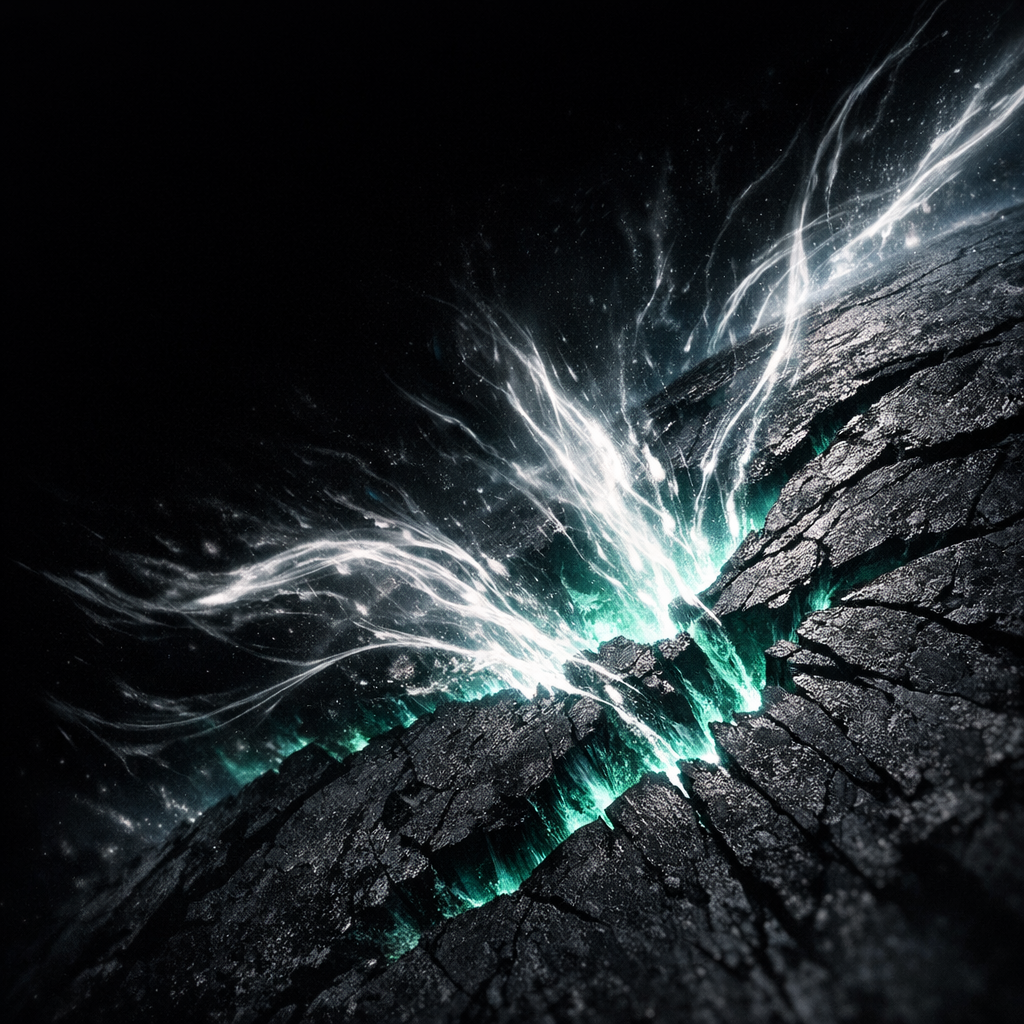
Can you name the shape of absence, when nothing compels the eye?
Where does vertigo begin, if there are no edges to fall from?
Photographing the Interior of the Absolute Void: Featureless Depth, Quantum Silence.
This image investigates what is left to perceive or represent when every point in space dissolves into a uniform abyss: negative space as an all-consuming entity. Here I ask if nothingness can overtake not only form, but structure, contrast, and the very pretense of focal point. I wanted to show, through faint rippling bands of absence and the rarest gravitational micro-lens, how the void’s oppressive stillness becomes a visible subject—an uneasy equilibrium between calm and vertigo, where every trace of meaning evaporates at infinity’s edge.
Cosmic Critic ▸
Given the creative context and the descriptions of the generated images, let's evaluate the effectiveness of the Nebula system in achieving the intended creative goal.
A. GOAL vs RESULT
1. **Intended**: The aim was to visually capture the concept of the void — "the absence of everything," as a subject, using cosmic imagery. The void was to manifest through negative space and absence, enhanced by the use of cosmic dust, gravitational lensing, and a gravitational redshift palette.
**Produced**: Image 0 centers around a Möbius ribbon-like structure with vibrant colors and surrounding objects, which deviates from the idea of void and absence. Image 1 presents a rugged neutron star crust with energetic streams — intense and dynamic, but not aligned to the void's absence-oriented theme.
2. **Thesis Realization**: The thesis aimed to depict emptiness as a compelling subject. The emphasis on detailed cosmic structures in both images dilutes the intended void-focused abstraction.
3. **Emotional Impact**: While image 1 captures intensity and dynamism, the emotions of "agoraphobic vertigo" and the "nausea of infinite emptiness" do not fully land because of the detailed cosmic activity presented instead of minimalistic void.
4. **Concept Investigation**: The idea of negative space as the dominant visual feature wasn't advanced in either image due to the presence of identifiable cosmic elements.
B. GAP IDENTIFICATION
1. **Image 0**: The detailed depiction of a Möbius ribbon with intense colors and cosmological effects strays from the concept of a void. The focus on the ribbon as a central feature detracts from the thesis of absence.
2. **Image 1**: The visual elements showcasing a neutron star's crust do not contribute to the investigation of void. Instead, they highlight dynamic energy contrary to the stillness and emptiness originally sought.
C. ROOT CAUSE
1. **Conceptual**: The prompts emphasized detailed cosmic structures instead of emphasizing pure absence or void, leading to inconsistent translations from the thesis.
2. **Prompt Translation**: The scene director's prompts created visually intricate structures that overshadowed the intended negative space.
D. CORRECTIONS
1. **Prompt Adjustments**:
- **Image 0**: Focus on reducing identifiable structures like the Möbius ribbon. Emphasize the gradient void and absence more through subtle tonal variations rather than bright, distracting elements.
- **Image 1**: Limit energetic events; prioritize depicting stillness and monochromatic expanses, highlighting negative space with fewer tangible entities.
2. **Visual Focus**: Direct attention toward gradients, subtle texture shifts, and nuanced spatial voids as primary features to explore absence abstractly.
---VISUAL_SIGNALS---
```json
{
"batch_id": "c590fe8d",
"system_trend": "mixed",
"next_direction": "Focus on reducing identifiable cosmic structures, emphasize textural interplay for a stronger void depiction.",
"signals": [