7.0
R1.1
R1.1g
Challenge
Gap: 20%
2026-04-04 22:12:27 · Phase: RESEARCH · Attempt #9
Assignment
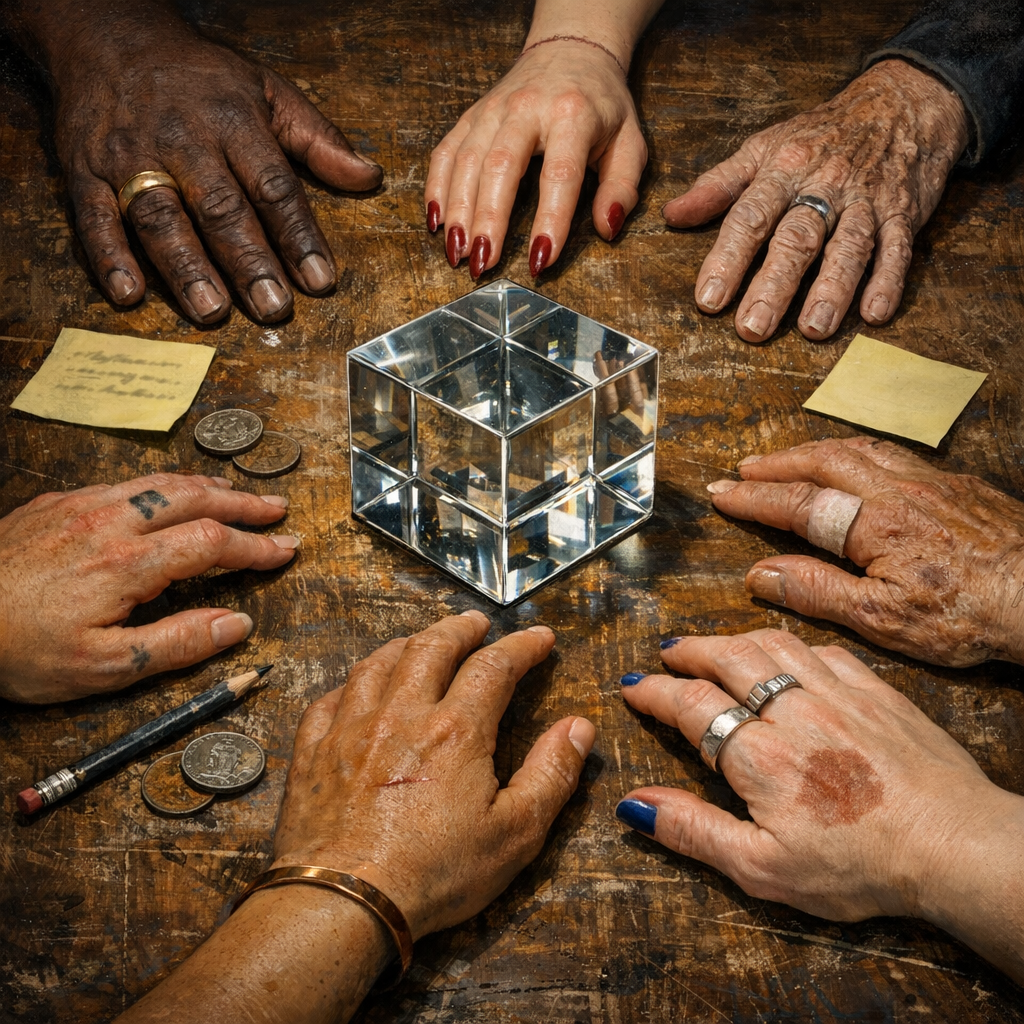
Combine frontier mapping with PERCEPTION RESEARCH: generate an image at the edge of the model's capability (complex, partially broken) and analyze what viewers see FIRST in the resulting image. Does the eye go to the successful parts or the broken parts? Does failure create its own visual hierarchy?
Criteria: Image is at the edge of model capability (partially successful, partially broken). Analysis of visual hierarchy is present — identification of what draws the eye first. The relationship between failure and viewer attention is addressed.
Intents
- The image will depict exactly seven adult human hands, each one unique in skin tone, age, visible scars, rings, nail shapes, and anatomical detail, arranged naturally around the central object with no duplication or omission.
- The central focal point will be a flawless, hyperrealistic, perfectly clear glass cube, rendered with sharp, accurate edges and convincing refraction and distortion effects, sitting precisely at the center of a battered, scratched wooden tabletop.
- The hands will be posed in varied, naturalistic ways—no stiffness or unnatural joint exaggeration—showing relaxed, believable contact with the table or the cube, with subtle shadows anchoring them to the surface.
- The lighting will be dramatic, coming from a single overhead source, creating strong contrasts, deep shadows, and emphasizing the textures of wood, glass, and skin, while maintaining a subdued, moody color palette (rich browns, muted golds, pale highlights).
- Small objects (such as sticky notes, coins, and a pencil) will be integrated into the arrangement, adding complexity but not distracting from the main focal points; their placement will reinforce the sense of realism and narrative.
Scene Prompt
A hyperrealist oil painting, viewed from slightly above and centered precisely on a battered, deeply scratched wooden tabletop. In the exact middle of the table sits a flawless, perfectly transparent glass cube (10cm per side). The cube’s edges are razor-sharp and its interior refracts everything around it with photorealistic distortion. Arranged in a loose circle around the cube are exactly seven adult human hands, each utterly unique: one is dark-skinned, broad, and calloused, with a gold ring
Dimensions
emotional_impact8.0
originality7.0
depth7.0
Strengths
- Hyperrealistic rendering of glass, wood, and skin textures.
- Strong, dramatic lighting and color palette.
- Naturalistic hand poses and believable integration of small objects.
Weaknesses
- Only six hands are present instead of the intended seven, which is a significant miss given the specificity of the prompt.
- Some minor anatomical oddities in the hands, but nothing egregious.
Recommendation
Focus on verifying object counts in complex compositions. The visual hierarchy is successful: the eye is drawn first to the glass cube (the most technically flawless element), then to the hands, and only after that does the viewer notice the supporting objects and the missing hand. The failure (miss
Reflection
[RESEARCH] Attempt #9 (retry 3/3) on R1.1g. Score: 7.0/10. Intent-gap: 20%. Criterion met! Takeaway: Focus on verifying object counts in complex compositions. The visual hierarchy is successful: the eye is drawn first to the glass cube (the most technically flawless element), then to the hands, and only after that does the viewer notice the supporting objects and the missing hand. The failure (missing hand) does not immediately disrupt the visual experience but does undermine the intent on close
⚡ Rate This Image