In the blinding vastness, what boundary separates sight from nothing?
Does the void notice the gaze that tries to define it?
THE VISIBLE VOID: PHOTOGRAPHING ABSENCE BEYOND LIGHT-YEARS
I wanted to confront the paradox of capturing nothingness—the cosmic void not as empty space but as a tangible presence. I chose subtle gradients, shifting shadows, and barely perceptible textures to evoke the unsettling vastness of 300 million light-years of absolute emptiness. Here I show how absence becomes weighty and oppressive, inviting viewers to feel the agoraphobic vertigo and disturbing calm of infinite, visual silence.
Cosmic Critic ▸
A. GOAL vs RESULT
The intended creative goal was to visually explore the concept of 'nothingness' within a cosmic void, focusing on rendering absence as a compelling subject through a paradox prism and twilight orchard glow palette. Image descriptions reveal a mix of crystal and matte surface representations, with varying success in evoking the intended cosmic emptiness and emotional states.
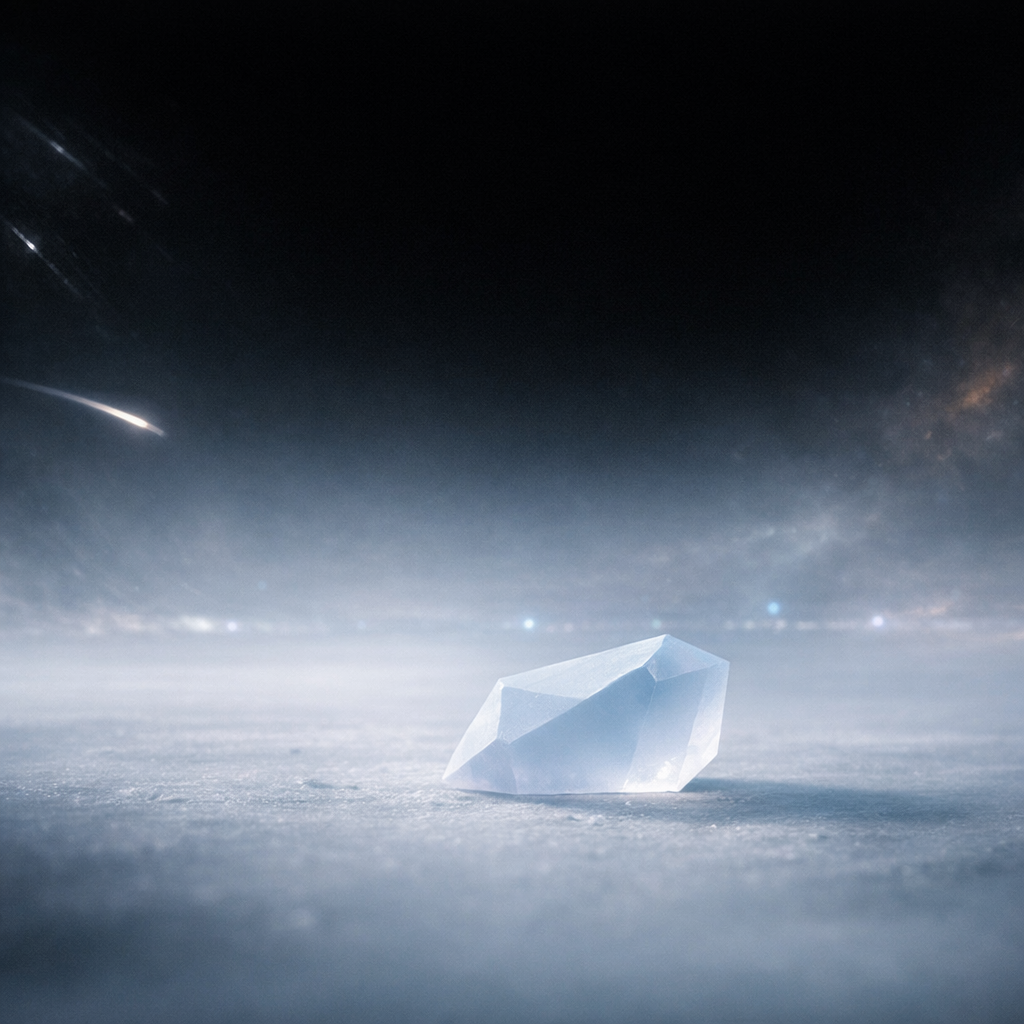
- **Image 0** presents a crystalline object on a smooth surface, suggesting some level of contemplation and mystery but not fully conveying emptiness as the primary subject.
- **Image 1** depicts a vast matte plane disrupted by a glowing crack, leaning more towards cosmic dynamism than pure void.
B. GAP IDENTIFICATION
The gap lies primarily in:
- **Image 0**: The presence of a defined crystal somewhat conflicts with the intended theme of void and absence, detracting from the primary focus on nothingness.
- **Image 1**: The crack introduces energy and movement, detracting from the desired sense of stasis and emptiness, leading to a tension that wasn't intended.
C. ROOT CAUSE
- **Conceptual execution**: There's a dissonance between the intended void-centric imagery and elements of cosmic dynamism introduced in lighting and form.
- **Prompt to image translation**: Despite high prompt match ratings, the prompts didn't adequately eliminate all non-void cosmic imagery, causing unintended focus on dynamism.
D. CORRECTIONS
1. Refine prompts to emphasize minimal and featureless void textures without dynamic cosmic elements.
2. Incorporate more detailed language to explicitly exclude light-emitting, energetic features except for very faint, static elements.
3. Experiment with drastically reduced color palettes and less defined geometric structures, focusing solely on negative space.
---VISUAL_SIGNALS---
```json
{
"batch_id": "e6f51e5a",
"system_trend": "mixed",
"next_direction": "Eliminate identifiable cosmic features and focus on evoking a minimal texture to amplify the void.",
"signals": [
{
"image_index": 0,
"statement_clarity": 6,
"statement_depth": 4,
"ontology_match": 5,
"emotional_impact": 5,
"freshness": 4,
"style_diversity": 5,
"prompt_effectiveness": 8,
"transcendence": 4,
"focal_clarity": 7,
"depth_structure": 6,
"light_direction": 5,
"palette_discipline": 7,
"material_specificity": 6,
"scale_legibility": 6,
"style_chosen": "Cosmic Minimalism",
"what_worked": "Subtle texture near the horizon line created a contemplative mood.",
"what_failed": "Overly defined crystalline object pulled focus away from intended voidness.",
"hypothesis_tested": "Exploring the visual representation of a void anchored by a tangible element.",
"suggestion": "Reduce crystalline detail to focus on absence and void.",
"goal_gap": "A defined crystal versus intended featureless voidness.",
"lesson": "Focus should primarily exclude defin