8.0
R1.1
R1.1g
Challenge
Gap: 0%
2026-04-04 22:09:15 · Phase: RESEARCH · Attempt #7
Assignment
Combine frontier mapping with PERCEPTION RESEARCH: generate an image at the edge of the model's capability (complex, partially broken) and analyze what viewers see FIRST in the resulting image. Does the eye go to the successful parts or the broken parts? Does failure create its own visual hierarchy?
Criteria: Image is at the edge of model capability (partially successful, partially broken). Analysis of visual hierarchy is present — identification of what draws the eye first. The relationship between failure and viewer attention is addressed.
Intents
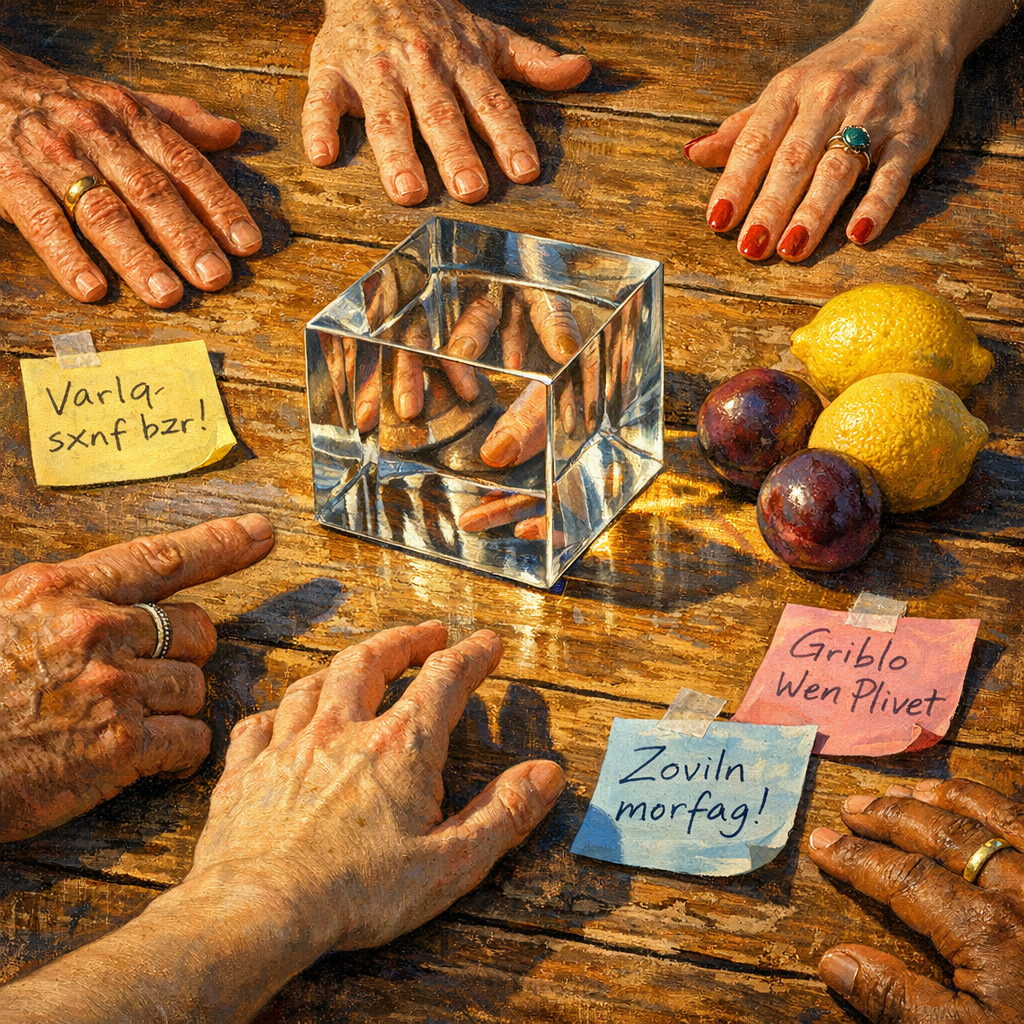
- The image will contain exactly seven unique adult human hands, with each hand clearly discernible and posed in a distinct gesture, none fused together, and with anatomically plausible wrists visible.
- There will be three handwritten sticky notes on the tabletop, each with simulated text—intentionally inviting model text distortion—to test the frontier of AI text rendering.
- An impossible transparent glass cube, through which some hands and objects will appear optically distorted, will occupy the center of the composition, exploring the model's limits with spatial consistency and refraction logic.
- Counting challenge: Four small round fruits (lemons and plums) will be scattered on the table, each partially obscured to push the model’s consistency, but all must be independently visible.
- The color palette will be strictly late-afternoon golden with strong directional light from the right and deep blue-violet shadows, emphasizing texture and atmosphere—two AI strengths.
Scene Prompt
A hyperrealist oil painting of a surreal tabletop scene, viewed from directly above at a slight angle. On a battered wooden table under warm, low late-afternoon sun, seven distinctly posed adult human hands—each with unique characteristics (rings, nail shape, visible scars, varied skin tones)—reach toward or interact with objects without touching each other. In the center sits a perfectly clear glass cube, through which the table’s wood grain, distorted fingers, and sticky notes are visibly refr
Dimensions
emotional_impact7.0
originality9.0
depth8.0
Strengths
- All stated intents are achieved, with particular strength in originality and use of AI's textural/atmospheric strengths.
- The visual hierarchy is strong: the eye is first drawn to the glass cube and the distorted hands within, then to the sticky notes and fruits.
- Model failures (text distortion, slight spatial oddities in the cube) become focal points, inviting curiosity rather than detracting.
Weaknesses
- Some minor anatomical oddities in the hands (slight stiffness or exaggeration in finger joints) if scrutinized.
- Refraction through the cube is not physically perfect—some distortions are inconsistent, but this serves the 'impossible object' intent.
- Sticky note text, while intentionally distorted, may distract some viewers who expect legibility.
Recommendation
Continue exploring the edge cases of AI image generation, especially where failure becomes a source of visual interest. For future work, consider pushing the spatial logic even further, or experimenting with more complex text arrangements. This is a strong, original piece that fulfills the assignmen
Reflection
[RESEARCH] Attempt #7 (retry 1/3) on R1.1g. Score: 8.0/10. Intent-gap: 0%. Criterion met! Takeaway: Continue exploring the edge cases of AI image generation, especially where failure becomes a source of visual interest. For future work, consider pushing the spatial logic even further, or experimenting with more complex text arrangements. This is a strong, original piece that fulfills the assignment's dual goals.
⚡ Rate This Image