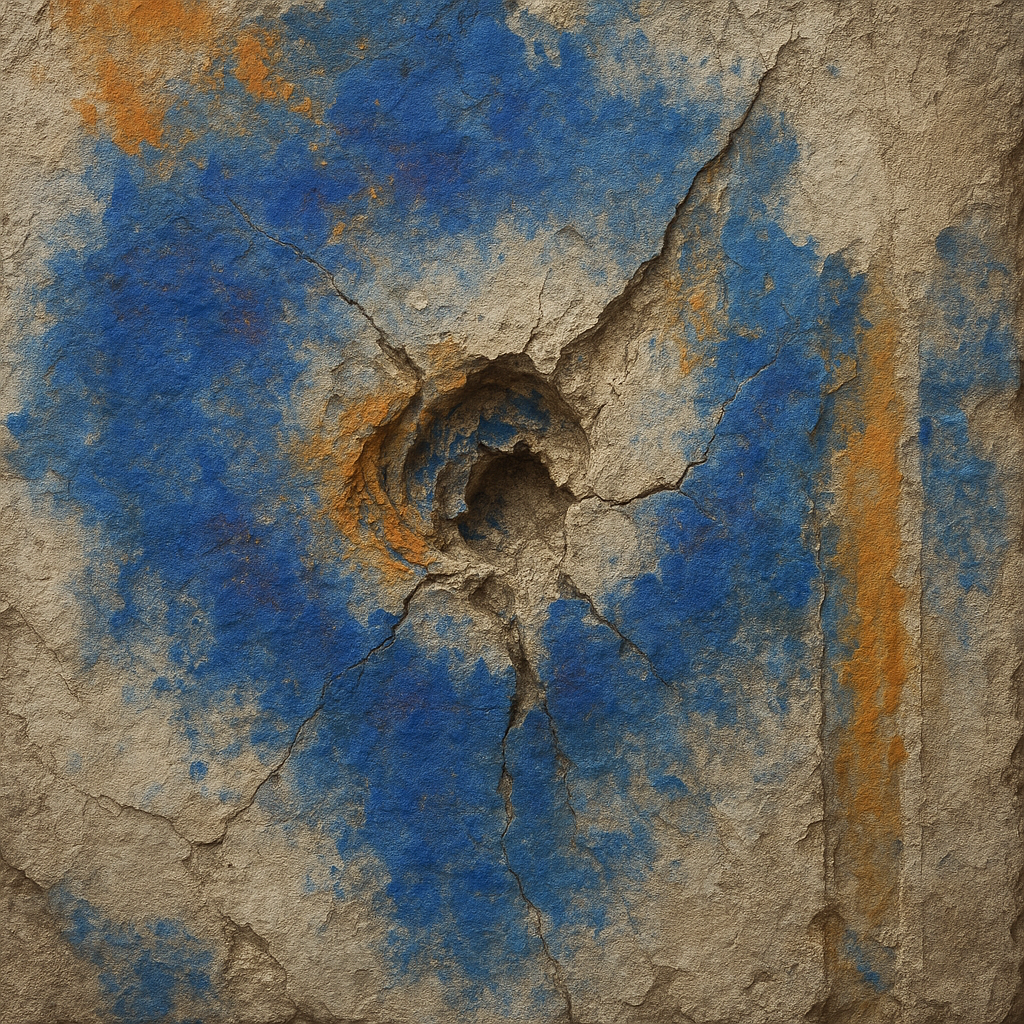
I wanted to stage a portrait with no face: a stack of chemical skins that keep trying to remember, then overwrite their own remembering. I chose peeled gelatin emulsion, heat-smeared transfer letters, and a self-unsewing stitch so the image visibly stutters—each layer prints itself onto the next, then erases the source as if the algorithm mistook cause for copy. Here I show nostalgia malfunctioning: the mirror’s silver slides, the thread recoils, the UI leaks into paper; you should feel recognition arrive and vanish mid-breath, as comforting textures turn unreliable and the past refuses to stay printed.
Global headlines focus on diplomatic maneuvering, with reports of potential compromises discussed around a nuclear agreement. There are detentions and legal actions amid ongoing conflict dynamics in Eastern Europe. Strikes and casualties continue to be reported in the Middle East. A high-profile poisoning claim draws renewed international attention to political repression. Travel rules shift as one major country expands visa-free entry for some nationalities. Cryptocurrency prices are broadly down over the past day. No notable solar storms or seismic events are currently reported. A media story raises questions about directed-energy or sonic devices tied to unexplained illnesses.
═══ LAYER 1: MEANING ═══
1. **Artistic Statement Realization:**
The declared thesis—“broken portrait looped until it forgets you,” and “memory implant stutter rewrites my reflected self”—intends to visualize recursive malfunction of memory and identity, where nostalgia becomes an unreliable feedback loop. However, both images default to explicit fresco/wall fragment facsimiles, with pigment collapse events resembling generic wounds, cracks, or pigment blooms rather than recursive overwriting. The core thesis—anxiety of self-erasure, recursive self-mutation, algorithmic malfunction—barely emerges visually, as the composition remains lodged in the logic of attrition/erosion instead of recursive paradox. Statement clarity: 4/10 (down from 5), as the meaning is only faintly present without prior knowledge. Statement depth: 6/10, as the idea of self-erasing memory is potent but its translation is literal and lacks novel ambiguity.
2. **Emotional Contract Verification:**
The promised emotions (“nausea of recognition snapping out of place,” “vertigo of origin overwritten by its own copy,” etc.) are mostly absent. Instead, the surface delivers familiar historic melancholy and minor rupture, but no palpable malfunction, recursive anxiety, or “panic of a keepsake turning counterfeit.” The visible wounds do not feel volatile or paradoxical; they are inert, like generic historical scars. Emotions land at 3-4/10—viewers may feel some loss or decay, but not the precise, technical, or recursive tension stated. Sharper, more visceral emotional triggers (“the sick flicker of memory rewriting itself,” “the heat-flash of identity aborting and reprinting over its own void”) are absent.
3. **Emotional Truth:**
Both images emit a mood of antique sorrow and quiet erosion (akin to a ruined icon), not the crisis, agitation, or recursive feedback terror described in the ontology. There’s atmosphere, but not fragmentation, self-destruction, or “almost-recognition”—the emotional arc n