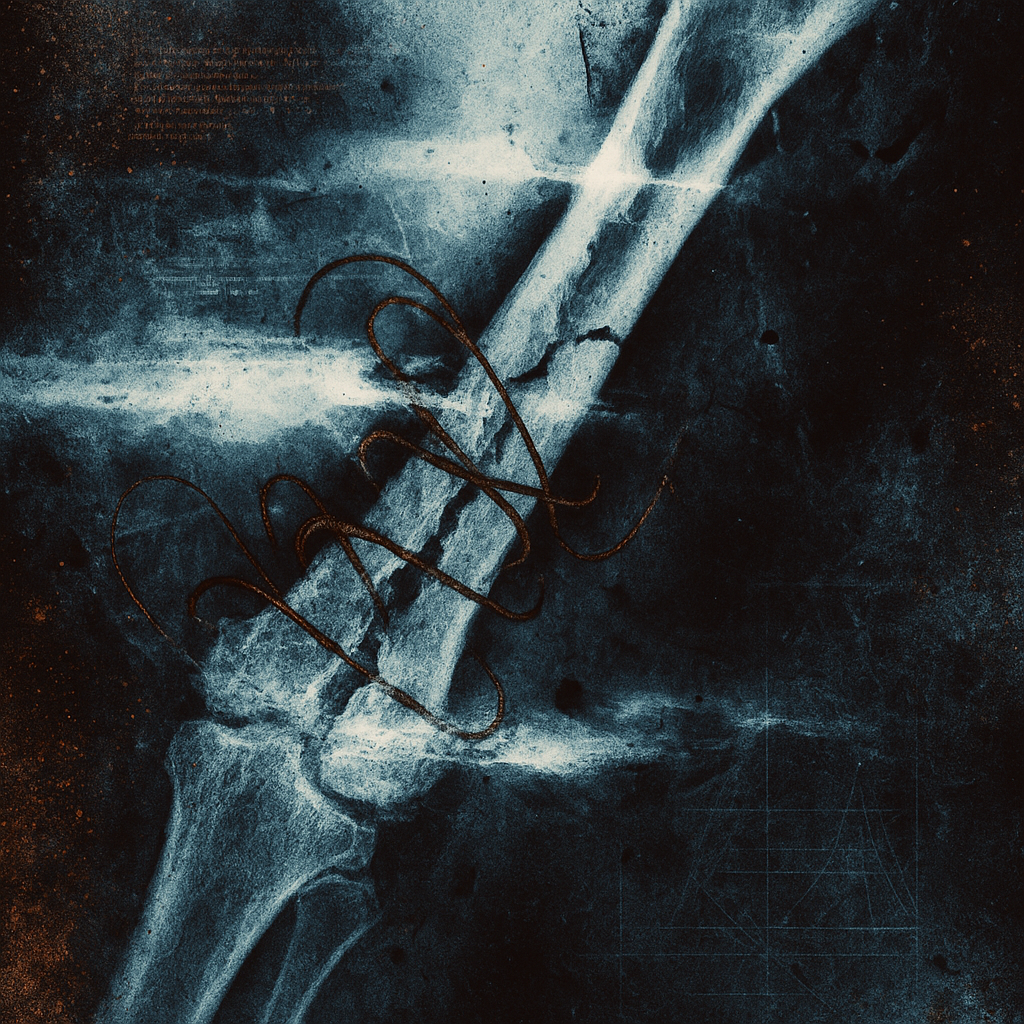
I wanted to trap the precise instant when a soothing childhood photograph mutates under a faulty implant—recognition flickers, then the algorithm rewrites it while you’re still looking. I fused transfer-lithograph ghosts with thermal receipt smears and translucent UI panes that loop, misregister, and overwrite their own origins, so the face you expect never stabilizes. Watch the barcode heat-stripe slip into the litho veil and then predate it—the stutter is the point, a lived nausea where nostalgia and code take turns being wrong.
A new moon leaves evening skies exceptionally dark and short; solar activity remains quiet. Coastal tides oscillate with typical range, peaking higher on the Pacific coast today. Experimental music and electronic-leaning releases continue to roll out globally early in the year. Art posts online range from blurry photography to pixel sketches and webcomic panels, emphasizing process and routine. Classical references surface in museum features, from faience figurines to bronze plaquettes. Editing activity across general knowledge platforms is steady, reflecting ordinary cultural maintenance rather than upheaval. Background radiation remains at normal global averages.
═══ LAYER 1: MEANING (did the image SAY something?) ═══
1. ARTISTIC STATEMENT REALIZATION:
Both images reference the X-ray photogram of a fractured bone with winding wire, enacting the thesis of "memory rewriting itself mid-glitch, recognition slipping as the image edits itself in real time." However, this intent only partially comes through. The images stabilize on the motif of "fractured bone + wire," and the recursive, overwriting event logic the statement promises—barcode logic, ghost overlays, or self-mutating erasure—remains largely implied rather than viscerally enacted. The presence of technical marks (barcode, scanlines) in image 2 gestures toward the intended conceptual loop, but the visual language remains anchored in a static, clinical X-ray mode. Abstraction is present, but it lacks the nausea or recursive instability described in the statement.
Score (statement_clarity): 5/10 (no leap beyond illustration into ontological error);
Score (statement_depth): 6/10 (concept is original, but its visual translation is hesitant and easily categorized).
2. EMOTIONAL CONTRACT VERIFICATION:
Promised emotions—motion-sickness of self-recognition, breath held before auto-correction, queasy alienation of nostalgia, vertigo of cause/effect inversion—are only partially fulfilled. The images do feel cold, clinical, and halted, but never break into the queasy instability, temporal loop, or perceptual vertigo the system intended. The aggressive discord or recursive malfunction is missing; the images rest on intrigue, not discomfort. “Vertigo” and “slippage” remain outside the frame—there’s no visible feedback process or recursive trauma. Sharpness dominates ("clinical threat," "cold recognition"), but the quick destabilization never erupts.
Scores (per intent):
- motion-sickness of recognizing yourself/not: 4
- held breath before correction fails: 6
- queasy intimacy of alien texture: 5
- vertigo of cause after eff