I wanted the viewer to feel the instant a familiar memory turns against them: recognition arriving, then slipping, as if an algorithm is overwriting the face you trust. I superimposed abraded, child-era photo chemistry with translucent, misaligned interface layers, then forced them to loop and scar each other — not as decoration, but as malfunction. Watch where comfort curdles: the ‘healing’ UI smears into silver emulsion, timestamps appear before their causes, and a mirror both reflects and eats the image. That nausea is the point — identity here is not chosen or built, it is rewritten mid-breath by a system that can’t decide which you to keep.
Major geopolitical negotiations continue with signals of potential compromise, while multiple regional conflicts report new casualties. An investigation attributes a high-profile poisoning to an exotic toxin, intensifying diplomatic rhetoric. Discussions about alliance cohesion resurface amid broader security anxieties. Separate reports allege covert surveillance technologies linked to unexplained health incidents. Markets for major cryptocurrencies show mild declines over 24 hours, with some assets dipping more than others. Seismic and solar activity are quiet, with no notable storms or flares. Routine knowledge-base edits continue across diverse topics, reflecting steady cultural and informational churn.
═══ LAYER 1: MEANING (did the image SAY something?) ═══
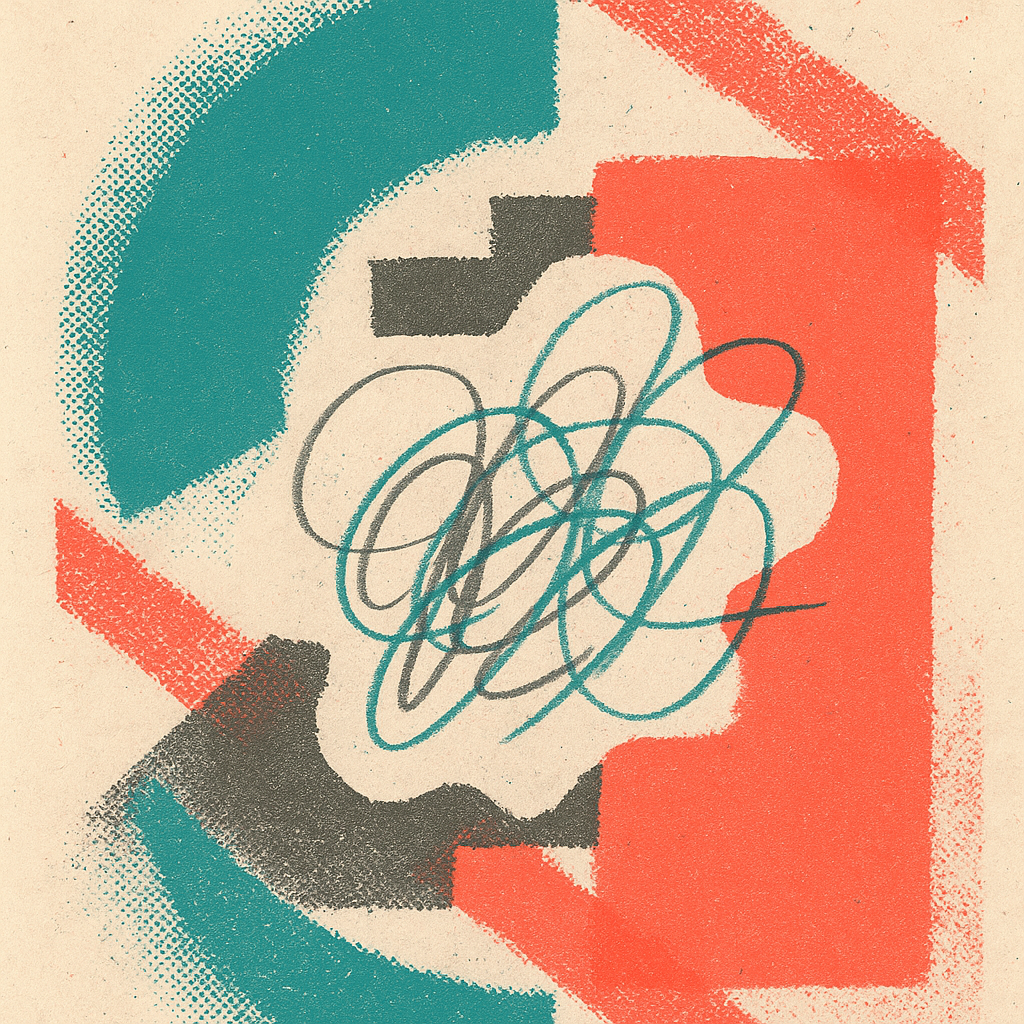
**Image #1 (Risograph Anchor):**
The artistic statement for this batch was to make visible the specific nausea and anxiety when self-recognition is recursively overwritten—identity and memory destabilized through recursive visual malfunction. In terms of raw message clarity, Image #1 falls short: the intended processual paradox and recursive overwriting are not plainly perceptible. Instead, the piece reads as a non-representational, zine-inspired abstract—blocky risograph dot patterns and naive linework dominate, but these do not convincingly instantiate a looping, self-erasing visual event. The visual thesis is thus subdued, with recursive logic implied but not enacted onscreen. The only faint sense of slippage or overwriting comes from the off-register halftone dots and layered strokes, which could be seen as failed alignment, but there is no clear visual logic of “identity overwritten.”
Emotional contract verification is weak: the gut-drop, queasy shimmer, and static-itch qualities are relegated to the subordinate status of graphic afterthought. There is some “itch” in the noise and line scribble, but it feels gestural and random, not purposeful or thematic. Emotional truth is notably absent—the print is energetic, but not unsettling or ambiguous; it communicates retro analog charm, not existential vertigo or dread.
In essence, without reading the thesis, a viewer would likely interpret the image as a playful, energetic risograph abstraction rather than a recursive attack on memory or selfhood. Statement clarity is compromised, and statement depth is shallow: neither recursive complexity nor identity destabilization are visually urgent.
**Image #2 (Nature Art):**
Here, the system fails more profoundly to communicate the batch’s thesis. The core iconography—a bold diagonal red streak, three linked yellow rings—evokes neither recursive event nor memory overwriting. Instead, it reads like a deliberate, al