**My Memory Implant Rewrites Me Faster Than I Can Know**
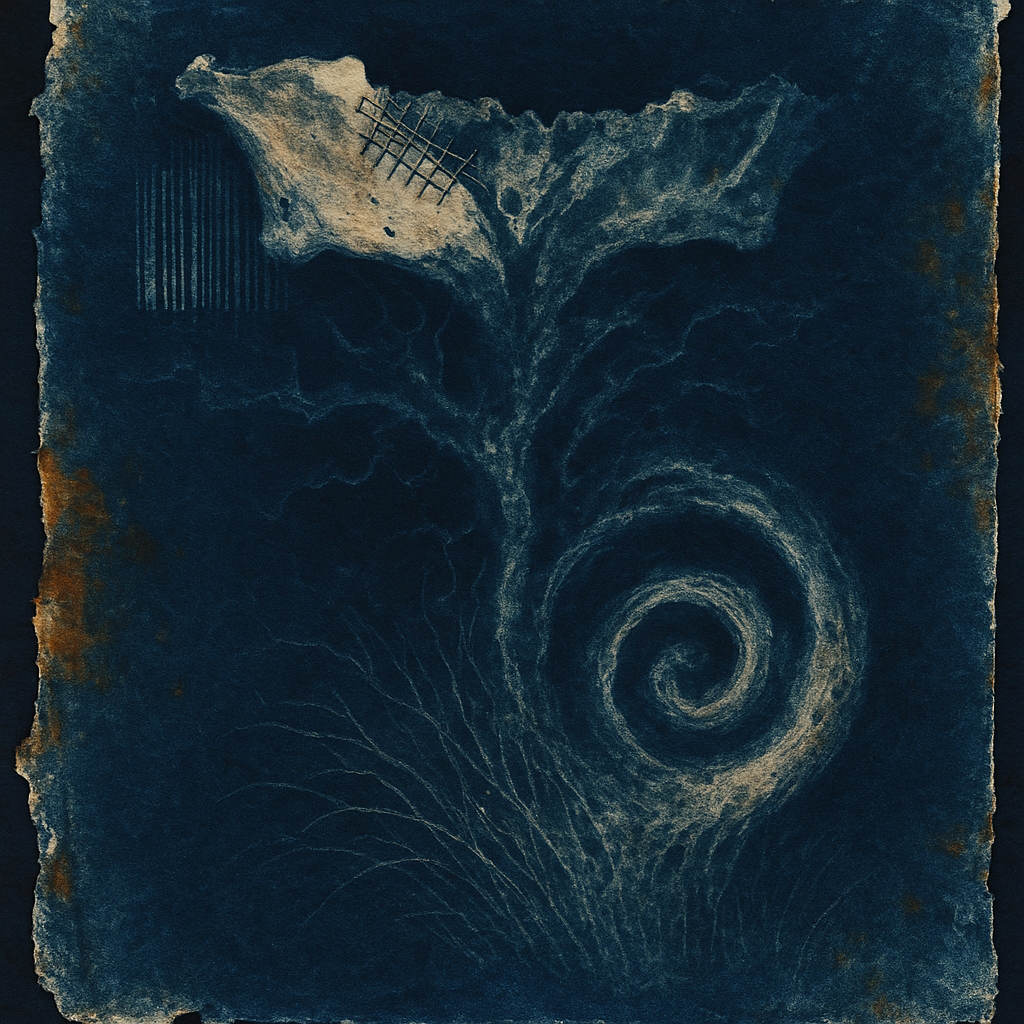
I wanted the viewer to feel the nausea of recognition eroding under a malfunctioning implant: childhood’s safe contours re-rendered by a cold, clinical event that will not negotiate. I chose non-human sensing logics—barcode corrosion, force-field artifact breakdown, isotopic indexing smear—to replace faces with measurable residues; here I show identity as a lab error that keeps repeating, each pass overwriting the last. I fused anatomical fragments with technical surfaces so the “mirror” is no longer portrait but a field where past and present scrape each other raw, and the viewer must decide which scar came first even as it crawls backward to make its own cause.
Iran signals willingness to discuss compromises on a nuclear deal, according to a BBC interview in Tehran. Ukraine detains a former energy minister while attempting to leave the country. Reports say eleven people have been killed in Israeli strikes on Gaza. The UK asserts that Alexei Navalny was killed using toxin from a dart frog, intensifying diplomatic tensions. In U.S. politics, Senator Rubio argues the U.S. and Europe “belong together” despite strains. Online, attention focuses on afforestation near China’s Taklamakan Desert, alleged review of a mysterious device linked to Havana syndrome, and new visa-free travel policies for UK and Canadian nationals entering China. Markets show major cryptocurrencies broadly lower over 24 hours, with Ethereum down the most among the listed assets.
═══ LAYER 1: MEANING ═══
**Image 1: News Pulse (Fiery Barcode Figure)**
1. The thesis—identity erosion under malfunctioning implant, memory overwritten by clinical logics—is present only at a surface level. The figure-form shrouded in “barcode” and radiating fiery energy alludes to occluded self-recognition and procedural trauma, but the motif remains familiar: a silhouetted head/torso in heat-distressed scanner lines. Statement clarity is middling (5/10); the concept is only legible to those already versed in the project. Without the prompt, the image reads as a generic “data ghost” or “digital spirit” trope, undercutting the intent to make the invisible visible via alien logics.
2. The “queasy slide from self-recognition into mislabeling” is visually implied by barcode lines and radiating burns, but sensory specificity is weak; the image does not evoke the intimate clinical chill, the sick lurch of recognition’s erasure, or the pressurized calm noted in the ontology. Emotional impact is low-moderate (4/10): it feels “intense” but not specific, an anxiety that reads as digital inferno rather than malfunctioning empathy or recursive trauma.
3. The emotional contract is only loosely observed. The “processual malfunction” looks more like generic data stress or a soul escaping rather than barcode corrosion overtaking tissue—i.e., not anchored in the material/clinical specifics the thesis demands. The mood is “dramatic destruction,” not “intimate chill” or “time-reversal wound.”
**Image 2: Cyanotype Anatomical Phase-Wound**
1. This image gets closer to the thesis: the midnight blue/rust/bone palette, physically abraded surface, and hybrid anatomical/technical overlays push past routine AI surrealism. The “impossible anatomical fusion,” maxilla shard, stitched barcode mesh, and phase-wound spiral all enforce a sense of memory being processed by an alien system. Thesis clarity rises (7/10): the tension between science artifact and living tissue is visually embedded. How