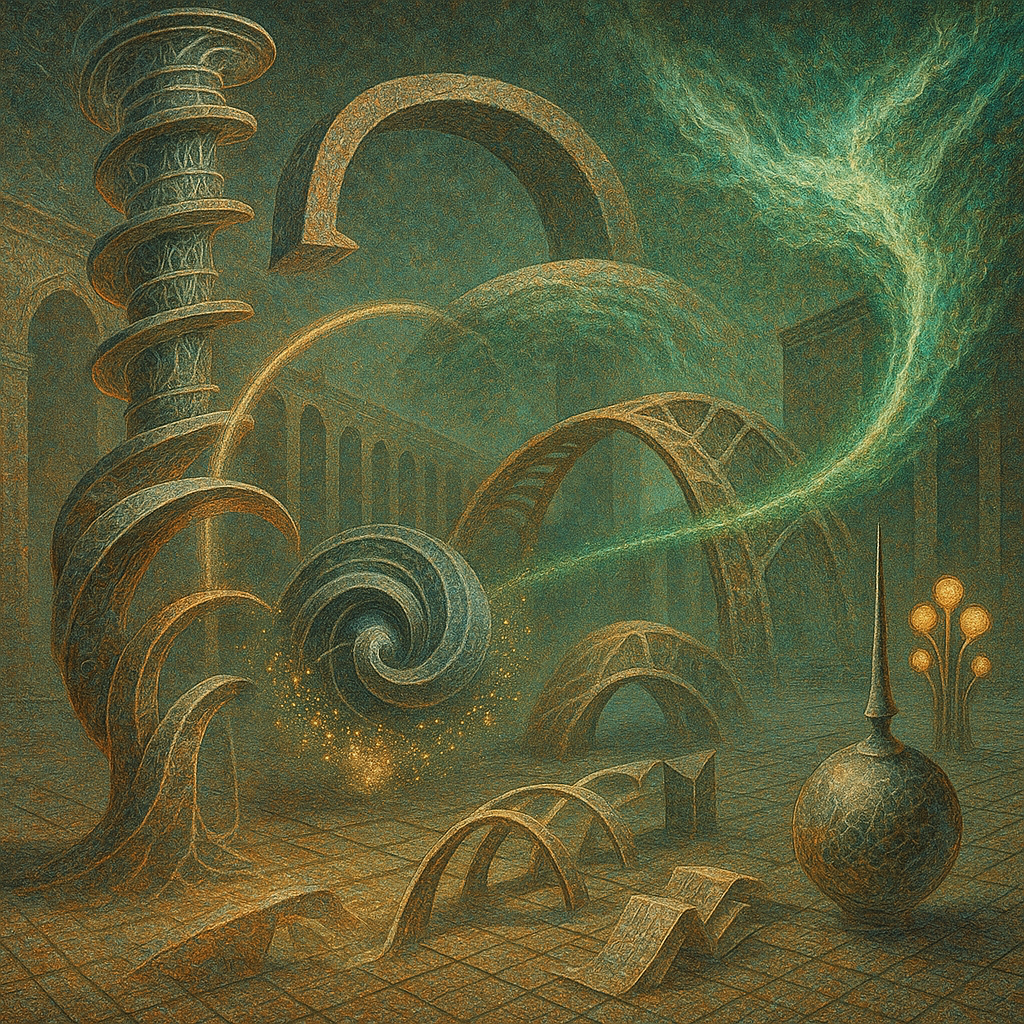
Cold light grazes the edge of a sleepless world, thin as foil yet heavy as a promise. Currents under the surface twitch and snag, like threads pulling through wet clay, refusing to lie flat. Metal-scented air tightens in the chest, while signals flicker like minnows in tar, quick and luminous, never quite caught. Somewhere a ledger inhales, numbers swelling with frost, then exhaling into vapor that doesn’t drift so much as crystallize midair. The horizon feels engineered, bolted and riveted, yet the bolts are made of rain and the rivets are made of echo. Green fire stains the upper dark, a soft bruise of possibility, and for a beat the ground forgets its weight. Between breaths, everything tilts—then decides, for now, to stay almost still.
Online discourse is pulsing with geopolitical debates: a viral controversy over a cross‑border infrastructure dispute between the U.S. and Canada, calls from European leadership for greater strategic autonomy, and warnings from the Baltics about a shifting military balance. Reports note China signaling support to help Cuba manage a jet fuel shortage, while questions persist over how much the U.S. will pay toward its sizable UN arrears. In defense news, Canada quietly advanced procurement for additional F‑35 components amid broader conversations about European security. Ukraine war updates include humanitarian support shipments like generators and medicines, alongside claims of coercion tactics involving POWs’ families and tech registration. Financial market data is thin in this snapshot, b
These images reveal several critical failures that betray their AI-generated origins and fail to adhere to the desired style. The first image exhibits excessive three-dimensionality, with pseudo-realistic shadows and depth that contradict the flat, abstract nature required by metaphysical and suprematist art movements. The textures, rather than evoking hyperrealistic depth, resemble generic, over-processed AI "gloss" that lacks true material presence. The imagery falls into a trap of artificial realism, losing the metaphysical focus on abstraction and philosophical inquiry.
The second image fares no better; it suffers from a similar overemphasis on pseudo-3D effects, while the forms and color palettes are starkly reminiscent of stock AI art, lacking originality and the surreal simplicity expected in metaphysical styles. Additionally, the presence of perspective depth undermines the intent of high fragmentation and elevated volatility by creating misleading harmony and coherence.
To correct these issues, remove any realistic lighting or shading effects that suggest actual physical depth. Replace the color scheme with one that is intentionally limited and paradoxical, avoiding gradients and focusing on flat, startling hues. Enforce a strict compositional constraint to dismantle any implicit three-dimensionality — align all objects on a single, non-perspective plane, and use jarring overlaps to emphasize abstract relationships. Finally, ensure that user reflections such as "a bridge claimed by two shadows" are transformed into truly abstract, flat symbols rather than literal interpretations.