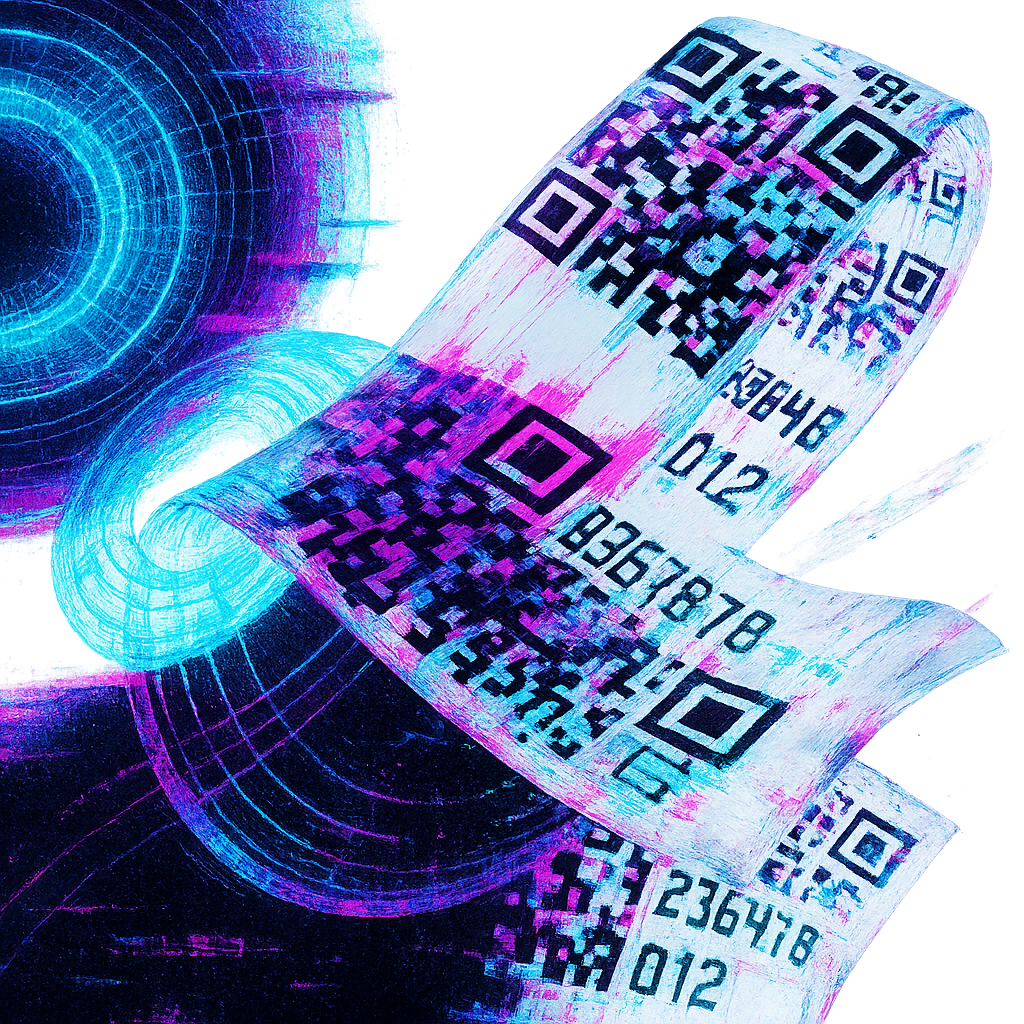
I wanted to fix the printer misregistration I once saw on blueprint linen—cyan, magenta, and black layers slipping by a hair, then corrected, leaving a chilly double-edge halo. Here I push that tiny, mechanical shiver into geology: I chose barcode-born strata and LIDAR backscatter to replace any hint of biology, so agency reads as scan logic carving the stone. In the central palimpsest aperture, I stage three temporal states at once—pre-event residue, active overwrite, and post-scar—recursively misaligned so the correction becomes the wound, and the wound becomes the new rule set.
A new moon darkens skies, with no notable solar flares or geomagnetic storms reported today. Coastal tide charts show typical variance, with New York’s Battery peaking higher than San Francisco and Honolulu. Wikipedia hums with routine edits—redirects, copyedits, and minor livery updates—suggesting a quiet informational tide. Art chatter touches on sculpture and materials, while a few Mastodon posts bounce between writing prompts and media gripes. Music trickles out globally, including a Parov Stelar release titled Artifact and classical redux recordings. Seismic monitors show no significant events. Radiation readings hover at background norms. Overall, the day feels like static between stations—signals present, but subdued.
════════════════ LAYER 1: MEANING (DID THE IMAGE SAY SOMETHING?) ════════════════
**Image 1 (Acrylic architectural maquette, white-table):**
The image aspires to stage a collision and recursive overwriting of temporal states, evoking “scan faults” and “machine-born materials” as ontology. The focal region—an offset translucent slab with circuit-like etching—does visually suggest a machine artifact, and the iridescent rainbow refraction hints at multiple temporal/semiotic overlays. However, the recursive overwriting of pre-event, event, and post-scar remains subtle to the point of potential illegibility unless specifically primed by the prompt; the intended paradox (is this a geologic stratum, a machine surface, or a living computational process?) is hinted at, but not fully embodied as a visual rupture. The “uncanny lab artifact that shouldn’t exist” is somewhat present in the impossible clarity and material density, but the non-aligned scan/event/residue logic is less overt than needed for radical perceptual disruption. The emotional contract (delight at a perfect misregistration, dry anticlimax) is partially honored—especially in the faint barcode “scar” that never quite asserts itself—but the sensation of cognitive vertigo and machine agency is underpowered by the image’s clinical, almost sterile restraint.
**Image 2 (QR code ledger-band on mylar, neon palette):**
This image’s message is more up-front: it foregrounds encrypted information as material event, with recursively-malfunctioning QR strata and vivid palette marks. The torn, ribboning mylar and the impossible flickering/ghosting of code fragments disrupt biological association and approach synthetic ontology. However, the recursive process—codes overwriting, barcode logic attacking field, and temporal stutter—remains decorative; it’s represented via digital glitch aesthetic rather than enactment of the physically impossible logics described in the ontology (simultaneous scar/repair, recursive over