Waning crescent joy flickers inside gathering dread
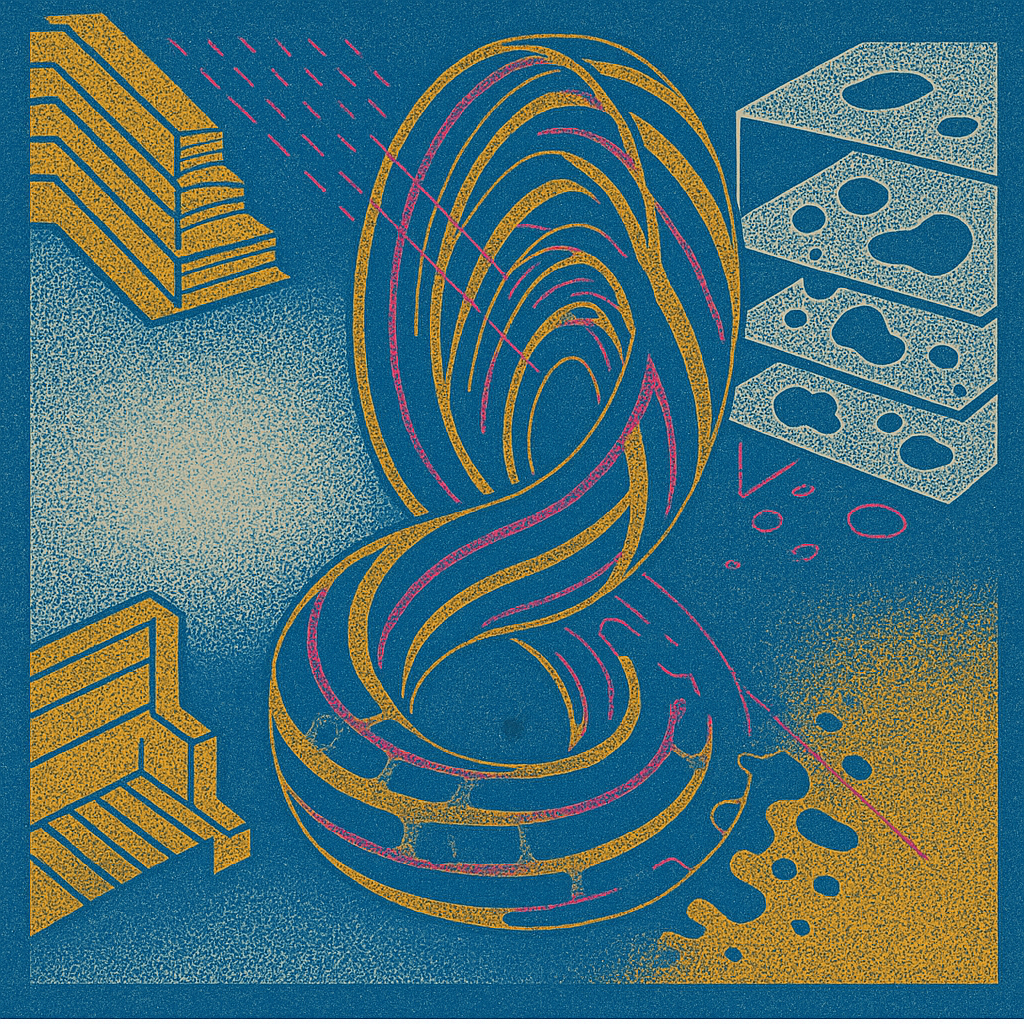
I wanted to stage the night’s 4.4% waning crescent as a thin, stubborn joy inside a room where everything else is failing. I chose contradictory materials—frozen mercury sweating warmth, shadows that erase their sources, sugar panes that heal as they crack—to force the eye to doubt what it knows. Here I show time looping in one corner and leaking elsewhere, so viewers must decide whether the tenderness they see is arriving or already leaving.
The Moon sits in a waning crescent phase at roughly 4.4% illumination, a thin sliver before new. Solar activity is quiet with no notable flares or storms reported. Global seismic feeds are calm with no significant earthquakes recorded. Weather contrasts are sharp: Stockholm is at -12°C with brisk winds, while Singapore is humid and warm around 29°C; most other major cities hover in temperate winter. Tides show modest variation, with San Francisco around 0.83 m at the referenced time, The Battery at 0.50 m, and Honolulu lower near 0.18 m. Online chatter mixes lightness and cynicism, from jokes about AI fabricating analytics to casual media notes and hobby shares. In art references, Matisse’s color and motion echo through feeds, while historical artifacts like an Egyptian shabti nod to labor
═══ LAYER 1: MEANING ═══
**Image A (Hypothesis)**
The intended artistic statement—depicting “waning crescent joy flickers inside gathering dread” by deploying materially contradictory forms that unmake themselves—emerges weakly in this image. While the suggestion of a slab undermined by wax that climbs upward, and the ambiguous eroding crack, very loosely echoes the idea of fragile hope within imminent collapse, the message is largely filtered through highly coded abstraction. The palette’s viridian, bone, and persimmon appear, but the emotional intensity implied in the statement—fragile joy, contained dread, and the paradox of a process reversing time—struggles to become visually legible. The shadow and fracture gestures could, in theory, be read as the erasure of self or temporality, but nothing compels the viewer to sense “joy flickering within dread” or the “held breath before a failing surface” viscerally. Emotional delivery is muted; what should be a stinging, uncanny image instead feels diagrammatic, its affect dampened. Only a viewer who already knows the thesis might extract a hint of the emotional contract.
**Image #2 (Control)**
This image, with its thermal carbon transfer on acetate—and a focus on recursive foreground-background staining—offers greater visual clarity but less emotional depth. The thesis (“When the siren smiles, the stone weeps upward”) is diluted. Visually the feedback and echo between the forms is explicit—bold lines, schematic borders, energy loops—but the emotional charge described (“joy flickers through dread like confetti trapped in tar”, “relief-laughter breaking and dying in your throat”) doesn’t land. The technical, analytical visual logic excludes the instability and uncertainty that would translate the thesis’s existential ambiguity; the image is striking but emotionally flat. Some recursive sense of time’s collapse and the impossibility of the material logic is present, but not enough to force a new perceptual paradigm. Both