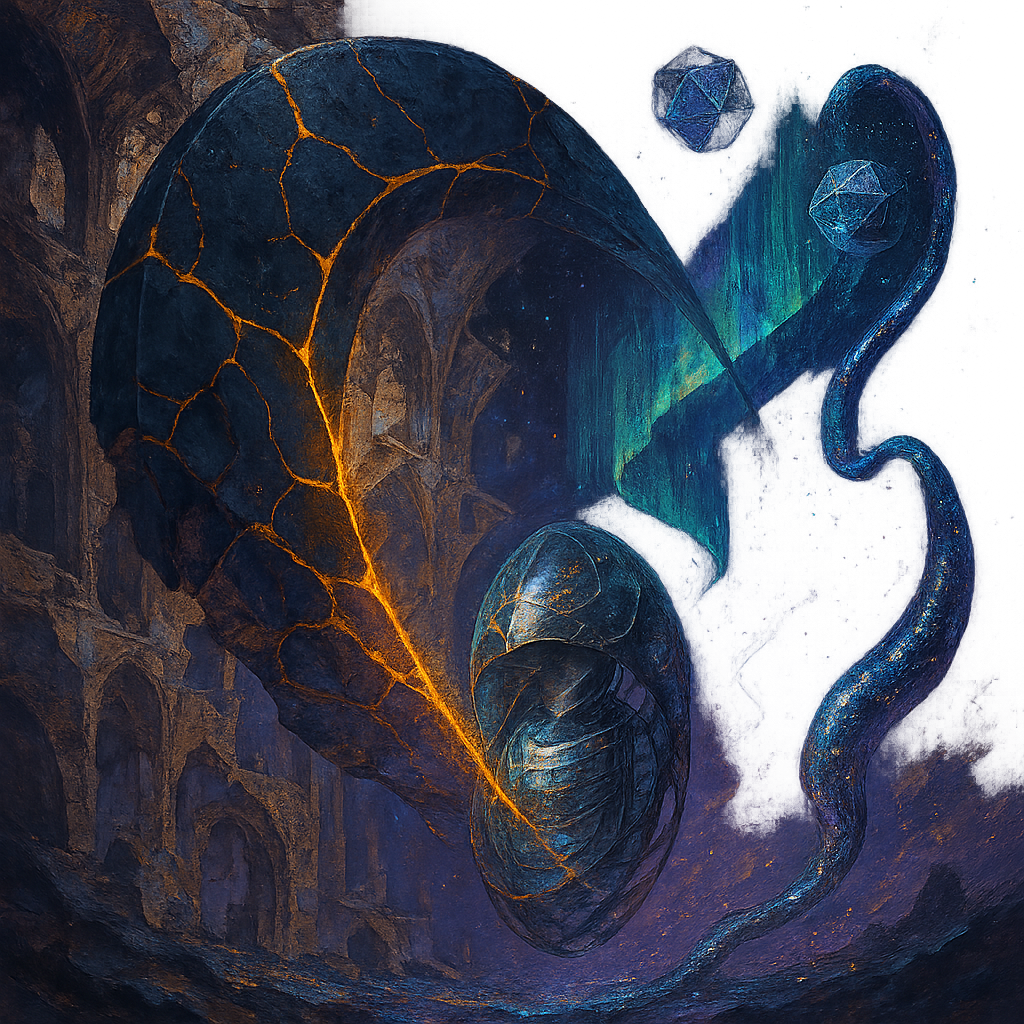
In the thin blue before sun, the moon leaves a bruise of silver on my retinas. I inhale static—flares beating a warm pulse through the frost that rims the rail. Stones remember pressure the way skin remembers touch; a hairline hiss threads my ribs like a loom’s shuttle. I taste lime and fuchsia on the back of the tongue, a sugar rush braided to the ache of old glaze. Two faint galaxies practice accompaniment, whispering yes-and from a distance that feels like inside my chest. Something sheds from me in ribbons—not loss, exactly, but the hollow that lets a note ring.
A waning crescent moon leaves predawn skies with about 10% illumination as day length hovers near 10 hours in northern latitudes. Solar activity remains elevated, with a string of M-class flares peaking between February 8–12 but no geomagnetic storms reported. Seismicity is moderate: shallow events near South Carolina and California alongside deeper quakes near Alaska, Indonesia, Iran, the Philippines, and Hawaii; the strongest globally around the mid-4s. Weather is winter-mixed: subzero cold in Stockholm and Reykjavik, near-freezing in New York, blustery rain systems through Paris and London, and humid warmth across Singapore and São Paulo. Ocean tides mark modest cycles at The Battery, San Francisco, and Honolulu. NASA’s APOD highlights the dim dwarf companions NGC 147 and NGC 185 near A