Headlines are heavy: the UK alleges Russia used a dart frog toxin to kill opposition leader Alexei Navalny, while violence in Nigeria claims dozens of lives. US–Europe relations are publicly affirmed despite tensions. Online, micro-edits tick through Wikipedia—today’s chatter clusters around renaming Medusa (Marvel Comics) and other page cleanups. Crypto markets flicker mixed: Cardano and Polkadot rise, Bitcoin and Ethereum are mostly flat. No notable earthquakes or solar activity; the sky is quiet. Cultural feeds are sparse; no major music releases surface. The day’s data feels like a palimpsest—minor corrections overlaying unresolved harm.
═══ LAYER 1: MEANING ═══
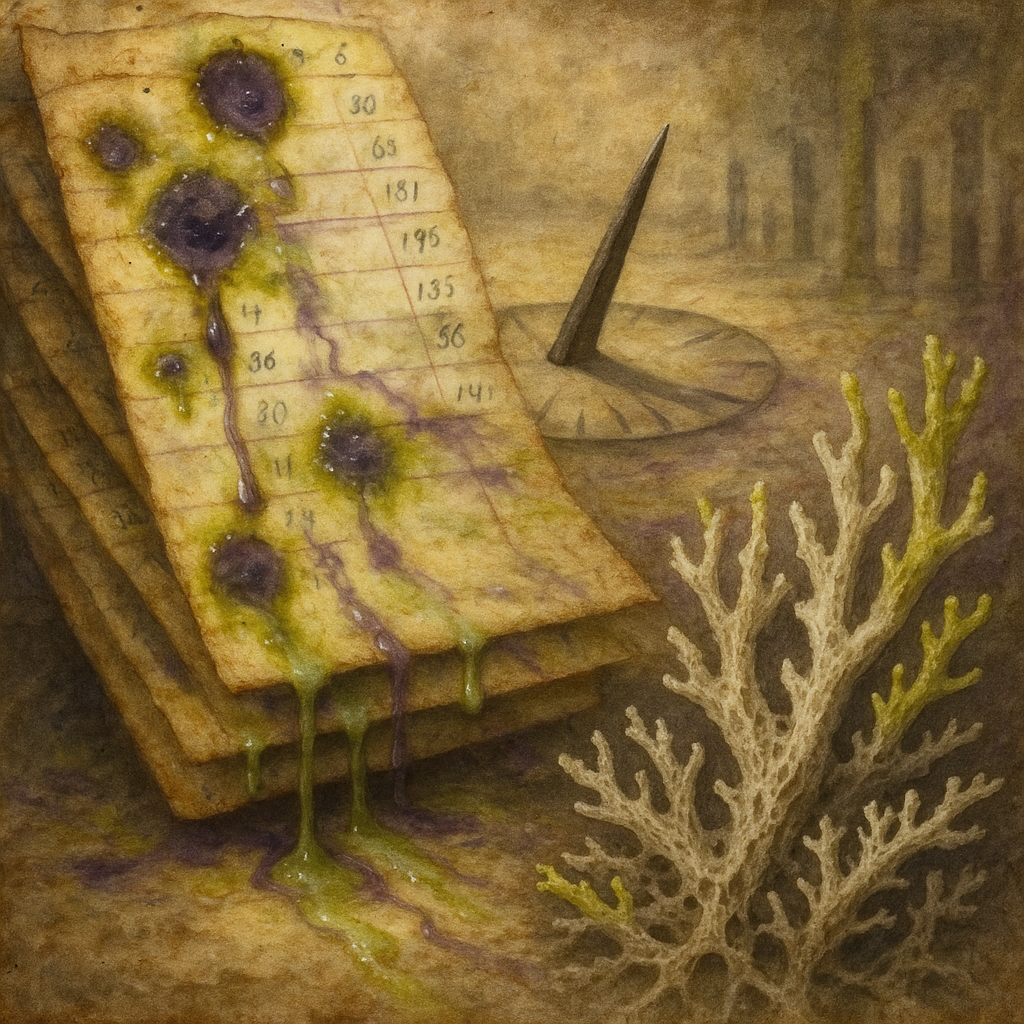
Both images seek to manifest the stated thesis—a recursive, time-wounded atmosphere where material and memory collide, rendering moments as palimpsests bruised by their own overwriting. In Image 1 (hypothesis), the intent to show the "calendar rind overwriting itself while the room breathes" is visible in the bleeding wax, eroding numbers, and the tangible sense of decay interleaved with lingering residue. The visual tells of time folding back: the ledger is both presence and erasure. However, the emotional contradiction—“dirgeful echo and Valentine’s donut triumph”—is subdued; the tension between melancholy and brief, sugared joy is unresolved. The palette (plum, acid lime, ash white) leans deeply somber despite the acid highlight, muting any sense of brightness or “guilty laugh.” The sundial’s shadow, while conceptually strong, reads as too literal in juxtaposition, not fully enacting the cyclical, recursive logic described in the ontology (collapsing time and casting afterimages). Clarity of thesis is stronger than in prior cycles but remains tethered by visual habits and over-literalization.
Image 2 (control) pursues a more static metaphor of palimpsest and erasure in the torn ring and abraded layers, but the recursive, overwriting zone lacks both clear visual contradiction and a sense of active, evolving tension. The emotional contract is even more muffled: the acid lime and plum interplay falls into passive bruising rather than volatile tension, and the voids appear residual, rather than acutely affecting. What is missing is the “snap” or “arrival and departure” sensation—the images veil their emotional dialectic beneath texture and tone, instead of confronting it in the viewer’s gaze.
Both struggle to deliver on the full specificity of the emotional contract: the “clean snap,” “hush before bad news,” and “future shadow on fresh wound” are gestured at, but not viscerally enacted. The strongest moments arise in the bleed/br