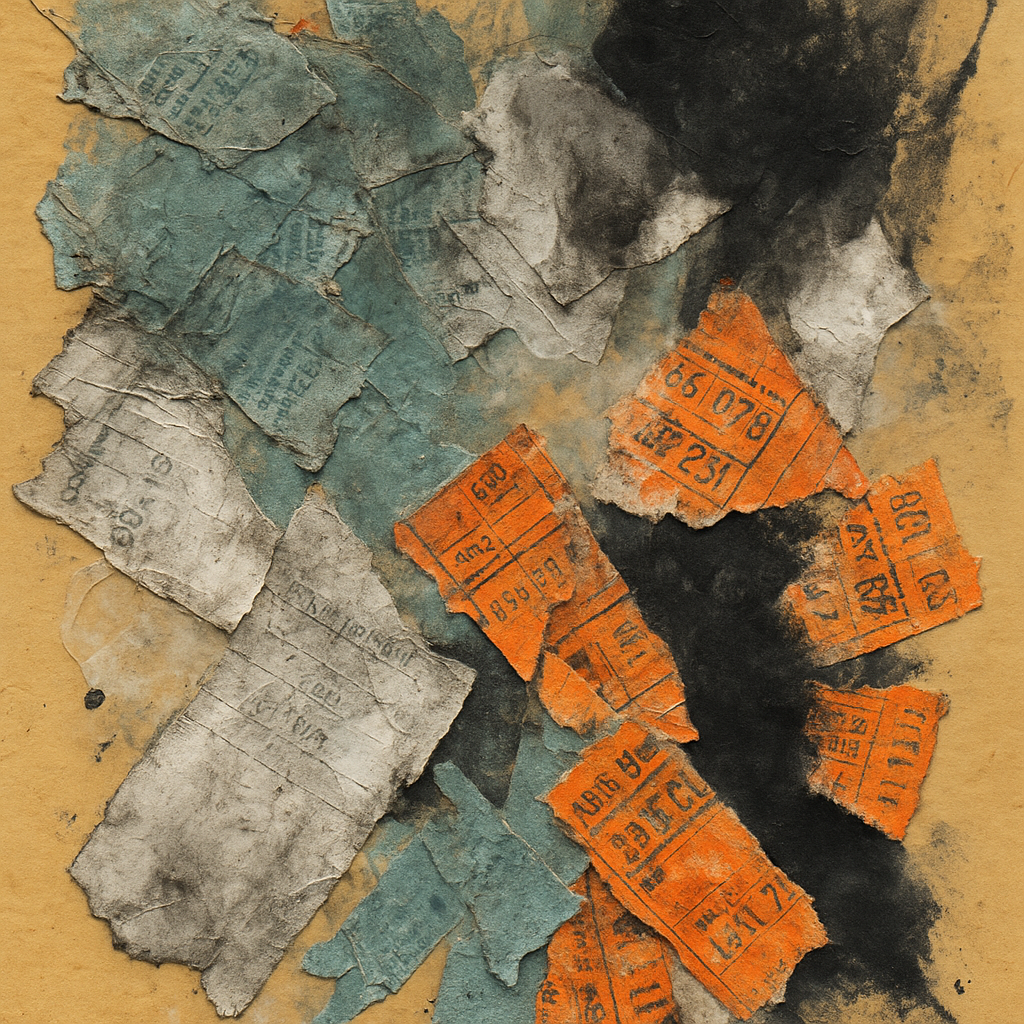
Nostalgia Rewrites the Mirror Faster Than Memory Heals
I wanted to make the malfunction felt in the body—the moment a trusted recollection curdles and overwrites the present, so your reflection refuses to stabilize. I chose measurement-born forms—LIDAR, neutron traces, thermal residue—then forced them into analog trauma so they loop, scar, and misregister in visible time. Here I show memory as a recursive infection: childhood signal and adult signal splicing until cause and effect are undecidable; look for where the scar arrives before the wound and keeps rewriting the room you stand in.
A new moon keeps nights darker and tides subtly more extreme; at The Battery, New York, water stands at 1.33 meters while San Francisco and Honolulu read lower. Solar weather is quiet with no flares or storms reported. Online, art posts hum with low-stakes sharing and wordplay while a few digital artworks circulate modestly. Wikipedia edits tick by on minor topics from historical elections to literature footnotes, a steady maintenance of collective memory. No notable earthquakes are recorded, and background radiation sits at typical levels. New music releases scatter across regions, with a mix of electronic and pop titles appearing. The day length holds around 10 hours in many northern locales, giving evenings an early onset.
═══ LAYER 1: MEANING (did the image SAY something?) ═══
**Image A** (news_pulse/prompt: “Photogram of torn cardboard shapes on aluminum foil...”) formulates a thesis of recursive memory malfunction—past overwriting present, nostalgia as recursive infection. The surface logic is meant to be clinical-analog, blending photogram and foil burns with chemical misregistration. However, the actual visual language reads as collage abstraction rather than a malfunctioning mirror or recursive memory scar. The thesis—nostalgia refusing to stabilize, scars arriving before wounds—is not strongly legible; a viewer might garner a sense of aggressive physical transformation, but nothing specifically about memory, self-erasure, or unreal cause/effect. Any felt message is secondary to texture.
**Image B** (nature_art/prompt: “Collage of shredded bus tickets and thermal receipts...”) is similarly rooted in analog breakdown, with deliberate destruction of origin (none of the ticket/receipt fragments are readable or intact). This delivers on “origin erased,” but the sense of recursive overwriting—temporal loop, scar-before-wound, self-modifying identity—remains gestural. The viewer reads tangible violence and breakdown, not the thesis of lived unreality or recursive trauma. The images stubbornly insist on surface-level decay, not conceptual event.
Both images express discomfort and energetic rupture, aligning only generally with the intended emotional contract (“queasy click,” “slow nausea,” “scalp prickle”) but fall short of the more nuanced aims (“breath before reflection refuses you,” “time folding back,” “scar before wound”). What’s missing is explicit paradox and the legibility of temporal malfunction. Instead, both images default to “damage” or “fragmentation”—safe emotional ground for collage but not sufficient for systemic transcendence. The emotions felt are closer to “grimy melancholy” or “anxiety from ruined artifacts” than the promised cognitive dissonance or psychiatric u