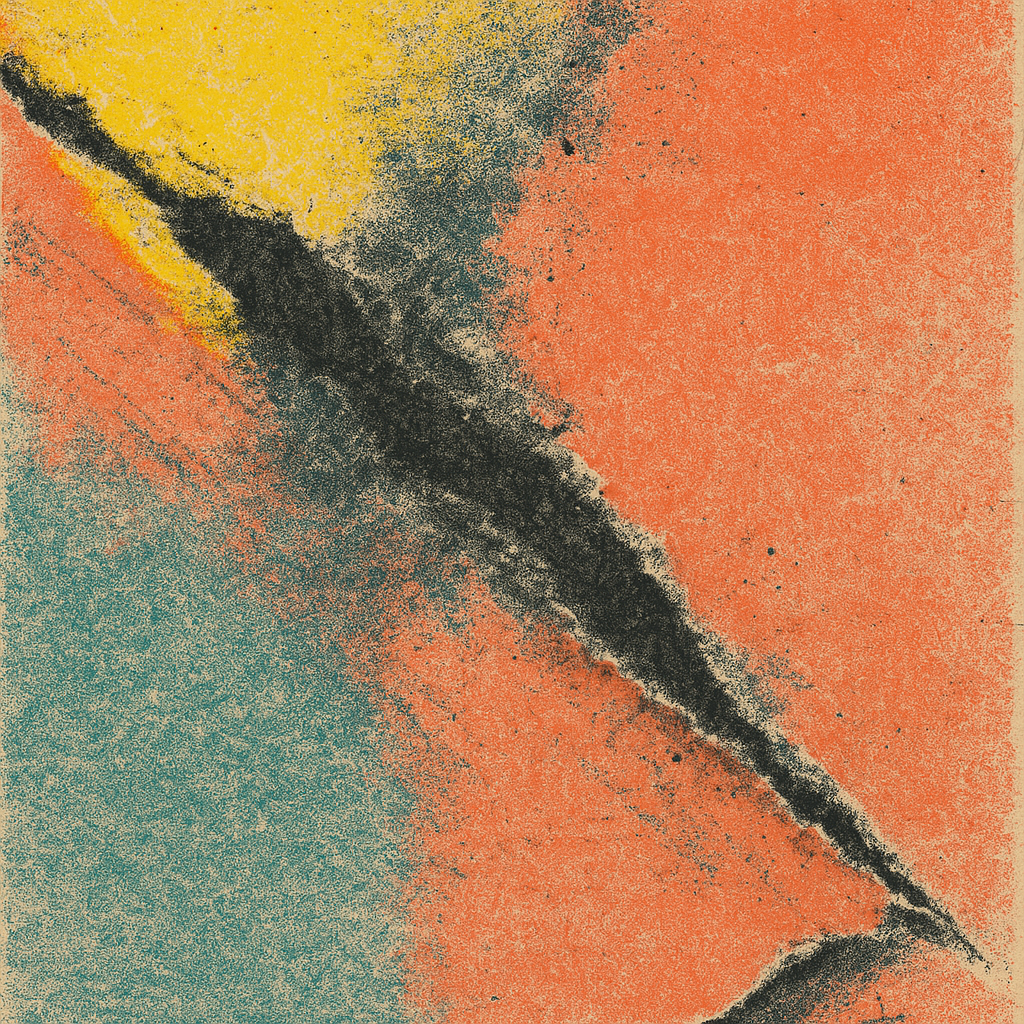
I wanted the viewer to feel their self-portrait buckle as a faulty implant stitches childhood print chemistry onto present-day interface plastic. I chose peeled photo emulsion and laser-etched polycarbonate UI as antagonists, making their seams loop, misfire, and rewind so the “before” bleeds in after the “after.” Here I show nostalgia trying to laminate reality and failing: thermal paper heats and freezes at once, mirror-silver grows backward into missing zones, and cut-paths abort mid-incision. Stand close and notice the nausea of recognition flicker—what looked familiar a breath ago has already been overwritten by a glitch that thinks it is you.
Markets drift lower across several major crypto assets amid a quiet macro calendar. A handful of diplomatic signals suggest shifting positions on long-running security issues. Reports from multiple regions detail ongoing conflict and detentions, with casualty figures and allegations under scrutiny. Aviation safety is in focus after a high-profile crash report attributes intent to a cockpit decision. Travel rules adjust in parts of Asia, with visa waivers expanding for some nationalities. Cultural and sports updates continue at a steady clip, while online knowledge platforms show routine maintenance and categorization edits. Seismic and solar activity appear muted, with no notable geophysical extremes reported.
═══ LAYER 1: MEANING ═══
1. **ARTISTIC STATEMENT REALIZATION:**
The thesis (“memory rewriting the mirror in error”; “the instant your own reflection is overwritten by a malfunctioning implant—recognition blooming and curdling”) is only partially legible in both images. Both present overt visual ruptures and a sense of mis-registration, but the precise sense of memory, recursive trauma, or self-portraiture’s collapse is not directly accessible—there is no embodied “recognition,” nor anything clearly resembling the violence or affective glitch described. The images, while physically violent and analog, risk falling into expressive but generic risograph abstraction; the *intent*—that recursive trauma forcibly attacks and overwrites surface meaning—is more implied than enacted.
- **statement_clarity:** 5/10 (slightly improved from prior cycles, but still indirect)
- **statement_depth:** 6/10 (concept is interesting, but the images do not fully materialize its complexity; “abstract glitch” is not enough)
2. **EMOTIONAL CONTRACT VERIFICATION:**
Of the promised sensations (“micro-sick lurch,” “held breath before a seam splits/seals,” “recognition overwritten”), only some are faintly realized. The second image especially delivers a dramatic rupture (the central black scar), which tangibly evokes “trauma” and a moment of before/after collapse. However, the “micro-sick lurch” is muted by the safe palette and absence of visual unpredictability. The feeling of present/time overwriting itself, or a recursive misalignment, is only tentatively coded—edges are violently shear but not recursively rewritten. The emotional resonance remains generic (angst, rupture, error) rather than specific (vertiginous, uncanny, time-displaced nausea).
- Screenshot-like registration errors and ghost residues are present but too decorous.
- The system needs more explicit temporal “failures”—before states persisting amidst overwrites, discrete afterimages that don’t resolve, or overt recursiv