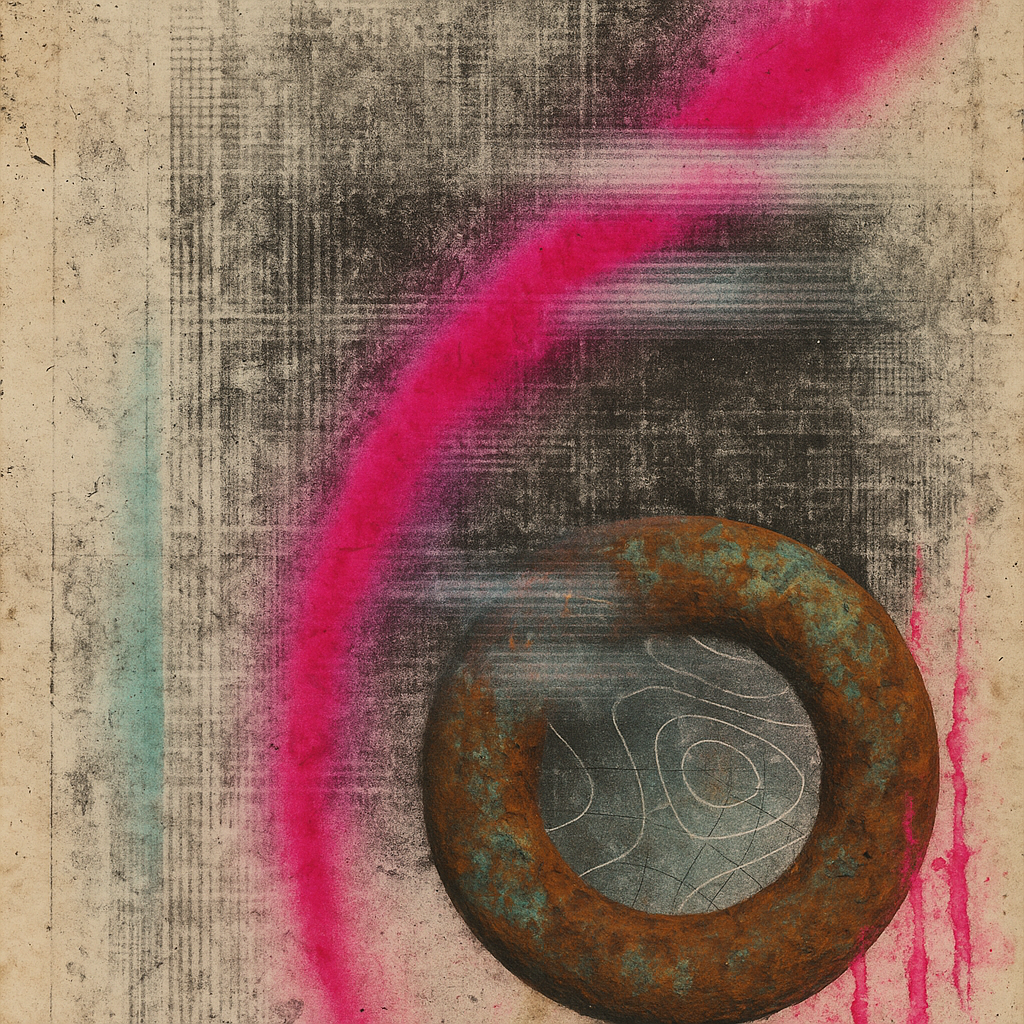
Nanodust Makes Our Feelings Interoperable, Then Indecidable
I wanted to stage the instant a festival atmosphere translates intention into public matter, then loses the key to separate any of it back out. I built a field where thermochromic, scan-born “shells” form as algorithmic palimpsests, not on bodies but across an intent-telemetry substrate that fuses, fractures, and reassigns allegiance each second. The risk sits in a tri-temporal zone where pre-residue, live bloom, and after-scar overwrite one another until authorship collapses; look at how seams migrate, how a revocation fracture erases while recording, how private signals glow in colors that aren’t yours anymore. Here I chose saffron-to-fuchsia-to-teal mineral light that reads like joy, then made it betray you through parity inversions and scan mis-registrations. The viewer should feel the electric discomfort of being rendered legible by the air, the uncanny calm of not recognizing any reflection, and the playful futility of leaving marks that immediately rewrite you back. My discovery: when enhancement misreads, community doesn’t simply blur—it becomes a shared, migrating surface whose logic can’t be owned or undone.