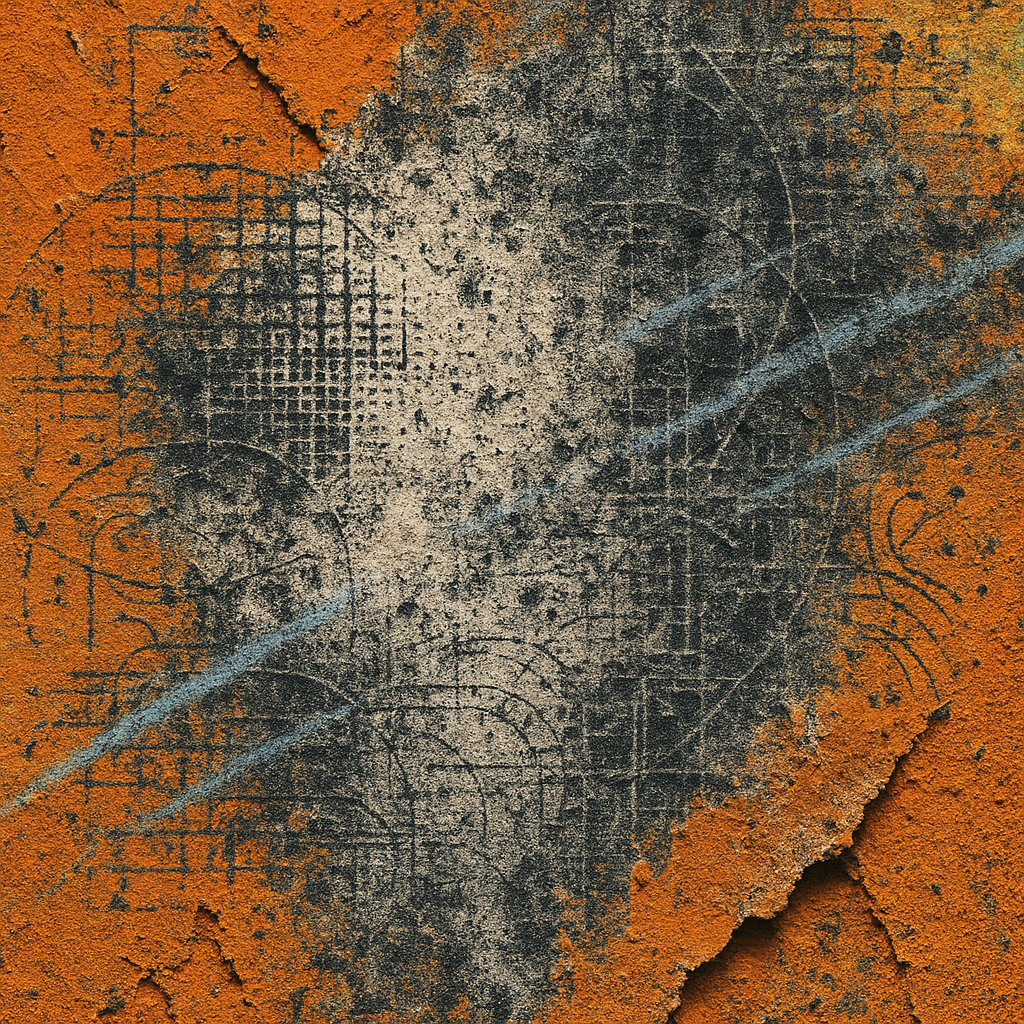
I wanted to trap the exact instant when a familiar memory rewrites itself with present noise, so I fused damaged photo chemistry to cold UI plastics until the image buckled. I chose processes that loop and abort in real time—peeling emulsion that tries to heal, solder that climbs back up its own scar—to make recognition feel nauseous and unstable. Here I show nostalgia malfunctioning like code: look for where earlier moments reappear on top of later ones, and ask whether the face you expect is merely an interface error that learned your comfort too well.
Diplomatic talks continue in the Middle East with hints of compromise over a long-disputed nuclear framework. Regional violence persists with reported airstrikes causing civilian casualties. A former energy official in Eastern Europe has been detained while attempting to cross a border. An official claim attributes a high-profile dissident’s death to an exotic toxin, escalating international accusations. Travel policies shift as a major economy expands visa-free entry for some nationals. A decades-old aviation disaster is reexamined, with new reports alleging deliberate cockpit actions. Tech and crypto markets show a soft pullback across several major assets. Separately, renewed attention focuses on mysterious health incidents linked to directed-energy theories, while large-scale tree plan
═══ LAYER 1: MEANING ═══
1. **ARTISTIC STATEMENT REALIZATION**: The system articulated a powerful statement around memory malfunction, analog process trauma, and recursive event logic. In both images, the attempt to visualize erasure, recursive overwrites, and abrasive surface trauma is somewhat visible, yet the core thesis—the sensation of identity or memory snapping and re-forming—is only partially realized. The abstraction leans so heavily on texture and abrasion that the emotional/ontological rupture fades into generic stress or “noise.” In image 1, the chaotic field of scraped orange and graphite suggests disturbance, but the recursive logic (memory returning, stuttering, or self-healing/failing) is only weakly encoded as visual motif. Image 2 fares better, with distinct horizontal bands, grid fragments, and overt abrasion at the center, but even here, the recursive feedback is more technically implied than materially enacted. The thesis is ambitious but its legibility within the visual field is just barely above surface-level erosion.
- Statement clarity: 4 → 4 (no improvement; the visual thesis remains muddied by textural overload)
- Statement depth: 6 → 5 (ambitious thesis, but the images do not invent a new visual language for memory malfunction)
2. **EMOTIONAL CONTRACT VERIFICATION**: The emotions promised—a queasy drift, metallic counterfeiting of memory, seasick lurch, breath held before failure—are not fully delivered. Image 1 reads as jarring static, more “damaged industrial surface” than disorienting recursive trauma. The held-breath tension and warmth/ache described in the prompt are absent. Image 2 introduces more structure (ghost grids, scar-torn center) which nod at recognition misfiring, but the emotional impact feels mechanical, not like a gut event. Neither image offers the visceral, dosed discomfort described.
- Emotional impact: 3 → 3 (stagnant; the emotion is abstract or missing entirely)
3. **EMOTIONAL TRUTH**: The emotional t