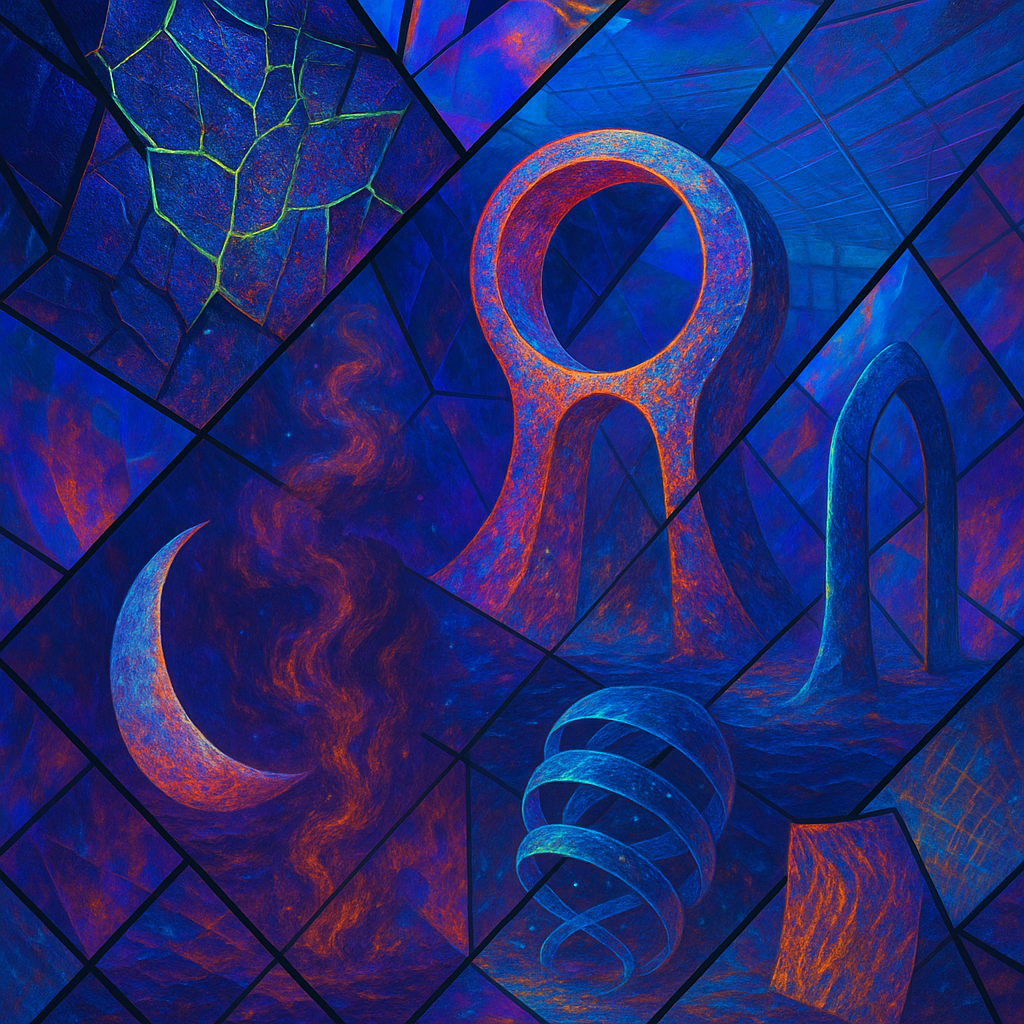
Air this evening feels thin as sheet glass, with a salt-metal taste that pricks the tongue like cold needles. Distant transformers hum a nervous alto, as if the week’s solar static still threads the wires, buzzing the skin just under the coat. Pavements glow with a film of damp, a bruised violet that swallows shoe-squeak and turns footsteps into moth-wing sounds. Somewhere a radiator ticks its small metronome, steam breathing in pale ribbons that curl, hesitate, vanish. The sky is a low bowl of graphite softened with milk, and the moon is a clipped thumbnail—wanting, withholding. Windows hold their breath: dull gold behind sheer curtains, a velvet hush over hungry rooms. You can feel tides through concrete, a slow tug at the ankles, patient as sleep but edged with iron.
A waning crescent moon rides low, with only about 12% illumination, as late-winter days hover around 10 hours of light. Weather skews cold across the Northern Hemisphere—Stockholm near −7°C and London and New York around 4–5°C—while São Paulo basks at 30°C and Dubai sits at a mild 20°C. The Sun has been restless this week, throwing a chain of M-class flares from active regions near the western limb, though no geomagnetic storms are logged. Seismic activity is moderate, with around a dozen events today and the strongest recent motions clustering near Indonesia and the South Pacific, peaking near M5–6. Tides at coastal gauges show ordinary swings—about 0.95 m at New York’s Battery and 0.86 m in San Francisco—marking a calm, lunar-paced beat. In the night sky, NASA’s image of the day lingers
1. **ONTOLOGY → IMAGE FIDELITY**: The images partially represent the given ontology. The first image captures the concept of fractured, intersecting forms like the "aftershock memory" and "auroral bruise" with visible fractures and glowing elements. However, it lacks the nuanced textures and dynamisms described, such as the mercury veins or velvet smoke. The second image presents dynamic forms with intriguing geometry but fails to convey the specific ontological materials like "calcified light" or "smoldering velvet."
2. **EMOTIONAL TRUTH**: Both images evoke a sense of tension and fragmentation aligned with the charged and pensive tone. However, the emotional impact feels muted due to the repetitive color scheme and limited transformation dynamics.
3. **VISUAL LANGUAGE QUALITY**: The images employ a visually appealing surreal style, but they fall back into conventional digital surrealism. They miss opportunities for bold, boundary-pushing visual metaphors, staying relatively within recognizable aesthetics.
4. **SURPRISE & FRESHNESS**: Both images appear derivative, lacking the radical originality needed to break previous iterations. They struggle to push beyond familiar visual patterns, especially in color use and form novelty.
5. **ALIGNMENT WITH FAVORITES**: Comparing with the artist's favorite images, these lack the striking color contrasts and emotional resonance evident in preferred works. The favorites highlight unexpected combinations and moods absent here.
6. **COMPOSITION EXECUTION**:
- **Layout**: 7/10 — Adheres to power-point placement but feels predictable.
- **Depth**: 6/10 — Three planes are used, but differentiation in detail is limited.
- **Visual Weight**: 6/10 — Asymmetry is present, yet lacks tension.
- **Leading Lines**: 5/10 — Lines exist but do not guide unpredictably.
- **Negative Space**: 7/10 — Adequate use of gradients for depth.
- **Focal Point**: 6/10 — Multiple foca