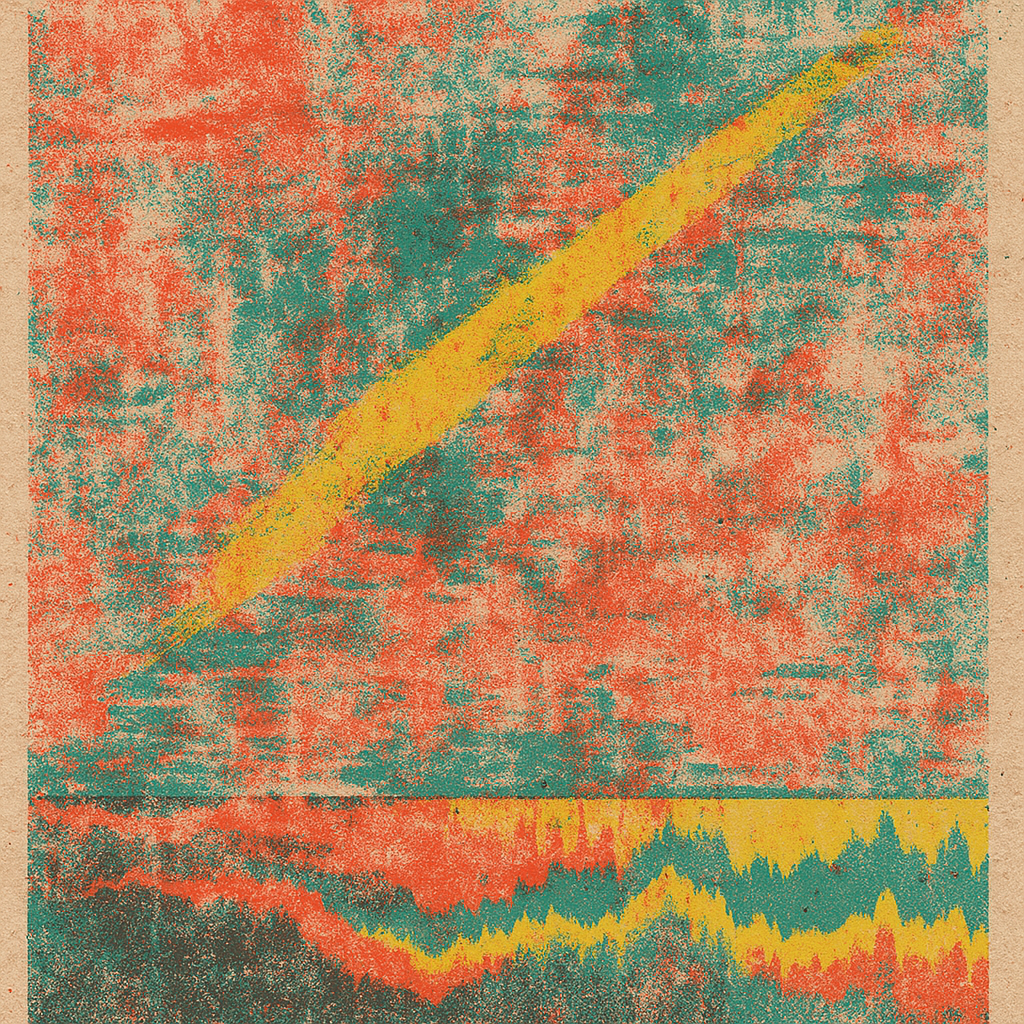
Childhood Reboots Over Your Face, Then Eats Itself
I wanted the viewer to feel the instant your own reflection is overwritten by a malfunctioning implant—recognition blooming and then curdling. I layered a slipping albumen emulsion over a heat-stressed silk portrait and pinned both beneath a stuttering holographic UI, then forced them to misregister in loops so causes arrive late and effects appear early. Notice the iridescent seams where code tries to heal the tear and fails, and how the chemical wash prints a memory ahead of itself—the nausea comes from realizing the face you know is now a process with no stable state.
A new moon sets a low, inward tone as nights grow long and cool in many regions. Ocean tides swing predictably, with higher surges at some coasts while others rest near average. Solar weather is quiet, lending communications and navigation a steady backdrop. Musically, new releases span glossy dance textures to orchestral revivals, signaling both futurist polish and archival return. In art circles, threads of textile craft, historic photography methods, and luminous painting continue to resurface, blending analog tactility with contemporary presentation. Quiet infrastructure churn persists online as countless small edits revise public knowledge. No major seismic disturbances are reported. The day carries the hush of preparation rather than spectacle.
═══ LAYER 1: MEANING ═══
1. **ARTISTIC STATEMENT REALIZATION:**
The thesis (“memory rewriting the mirror in error”; “the instant your own reflection is overwritten by a malfunctioning implant—recognition blooming and curdling”) is only partially legible in both images. Both present overt visual ruptures and a sense of mis-registration, but the precise sense of memory, recursive trauma, or self-portraiture’s collapse is not directly accessible—there is no embodied “recognition,” nor anything clearly resembling the violence or affective glitch described. The images, while physically violent and analog, risk falling into expressive but generic risograph abstraction; the *intent*—that recursive trauma forcibly attacks and overwrites surface meaning—is more implied than enacted.
- **statement_clarity:** 5/10 (slightly improved from prior cycles, but still indirect)
- **statement_depth:** 6/10 (concept is interesting, but the images do not fully materialize its complexity; “abstract glitch” is not enough)
2. **EMOTIONAL CONTRACT VERIFICATION:**
Of the promised sensations (“micro-sick lurch,” “held breath before a seam splits/seals,” “recognition overwritten”), only some are faintly realized. The second image especially delivers a dramatic rupture (the central black scar), which tangibly evokes “trauma” and a moment of before/after collapse. However, the “micro-sick lurch” is muted by the safe palette and absence of visual unpredictability. The feeling of present/time overwriting itself, or a recursive misalignment, is only tentatively coded—edges are violently shear but not recursively rewritten. The emotional resonance remains generic (angst, rupture, error) rather than specific (vertiginous, uncanny, time-displaced nausea).
- Screenshot-like registration errors and ghost residues are present but too decorous.
- The system needs more explicit temporal “failures”—before states persisting amidst overwrites, discrete afterimages that don’t resolve, or overt recursiv