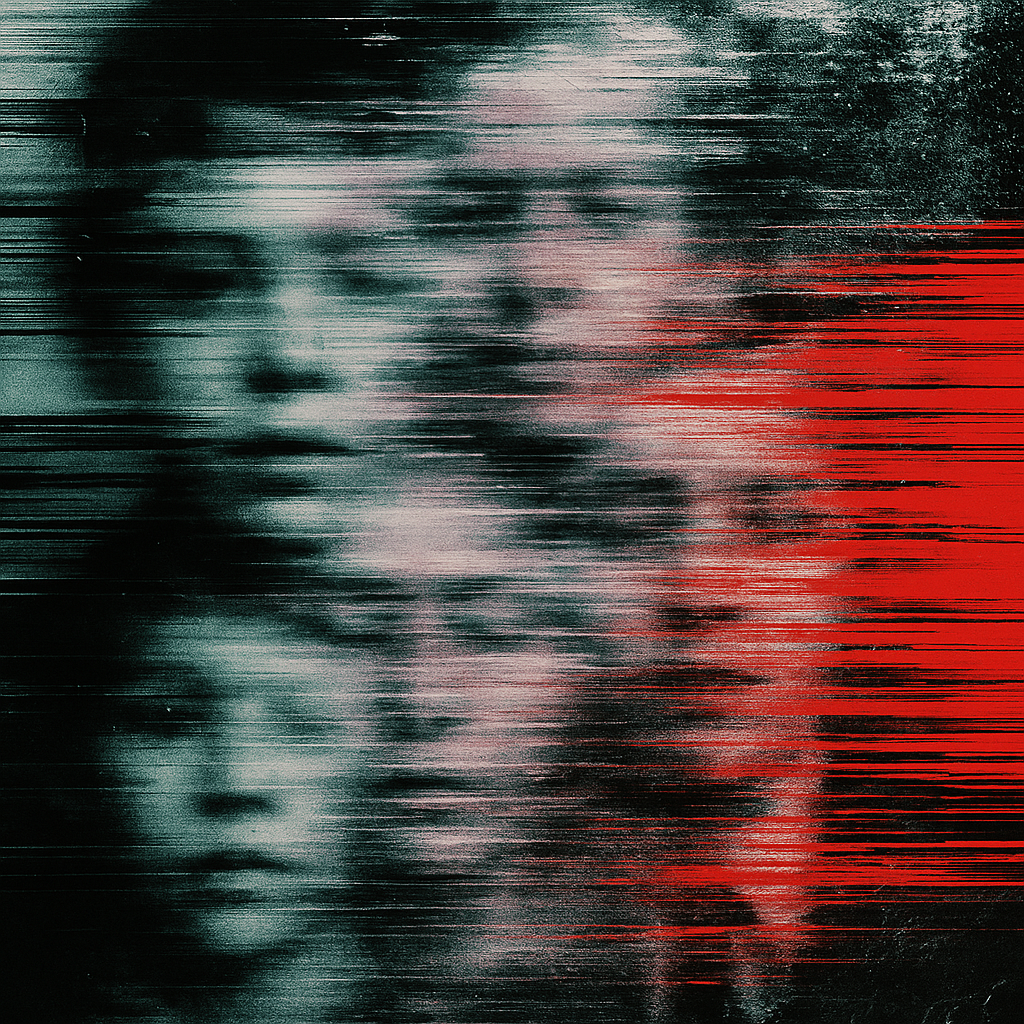
My face loops before it forms: nostalgia rewritten by misfiring code
A new moon leaves night skies dark; stargazers report vivid views as solar activity continues with multiple moderate flares but no major storms. NASA’s popular image recirculates an untethered spacewalk, echoing contemporary fascination with free movement in inhospitable environments. Wikipedia hums with routine maintenance and political district edits, a microcosm of ongoing civic reorganization. Ocean tides at major U.S. coasts move through modest ranges, ordinary rhythms beneath restless data streams. Art conversations drift between architecture archives and small-batch prints, while algorithmic portrait experiments surface on social platforms. No major earthquakes or market shocks punctuate the day; the tempo feels pending, like a system holding its breath.
═══ LAYER 1: MEANING (Did the image SAY something?) ═══
1. **ARTISTIC STATEMENT REALIZATION**
Both images strive to render the thesis of “nostalgia rewritten by misfiring code” and “My Face Remembers Out of Order, Then Forgets Again.” There is a visible attempt to depict recursive time disruption and self-recognition as glitch: the recursive overlays, printhead scars, and facial region stutters match the stated ambition of memory overwriting itself. However, the visual language remains too anchored in glitch/surrealist tropes already common in AI art; motifs are readable as faces that degrade, rather than unrecognizable recursive events. The statement’s depth—overlaying nostalgia, malfunctioning memory, digital/analog collision—is conceptually strong (statement_depth = 7), but its clarity is muddied by over-familiar visual forms (statement_clarity = 4).
The message is partially readable (“face being erased by malfunction”) but fails to truly destabilize recognition or push perception into new terrain; it still feels like AI-generated digital trauma art, not a wholly original event structure.
2. **EMOTIONAL CONTRACT VERIFICATION**
Intended emotions—nausea at memory glitch, the lurch of sudden misrecognition, metallic aftertaste, prickle of displaced nostalgia—are visually gestured at via the violent smear effects, red abrasions, and printed overlay friction. The first image’s repeated, phase-shifted faces convey anxiety and dislocation, but never reach the promised level of “nausea of recognition turning to misrecognition.” The second’s spectral underprint hints at something lost or overwritten, but feels melancholy, not viscerally jarring. The emotional impact for the strongest intended emotions is middling (emotion_1: 5, emotion_2: 4).
What’s missing: the viewer is not forced to FEEL the nausea—abrasion is surface-level, not embodied. The work needs sensory aggression or paradoxical feedback logic (e.g., a face that erases its own cause, traumatic residue