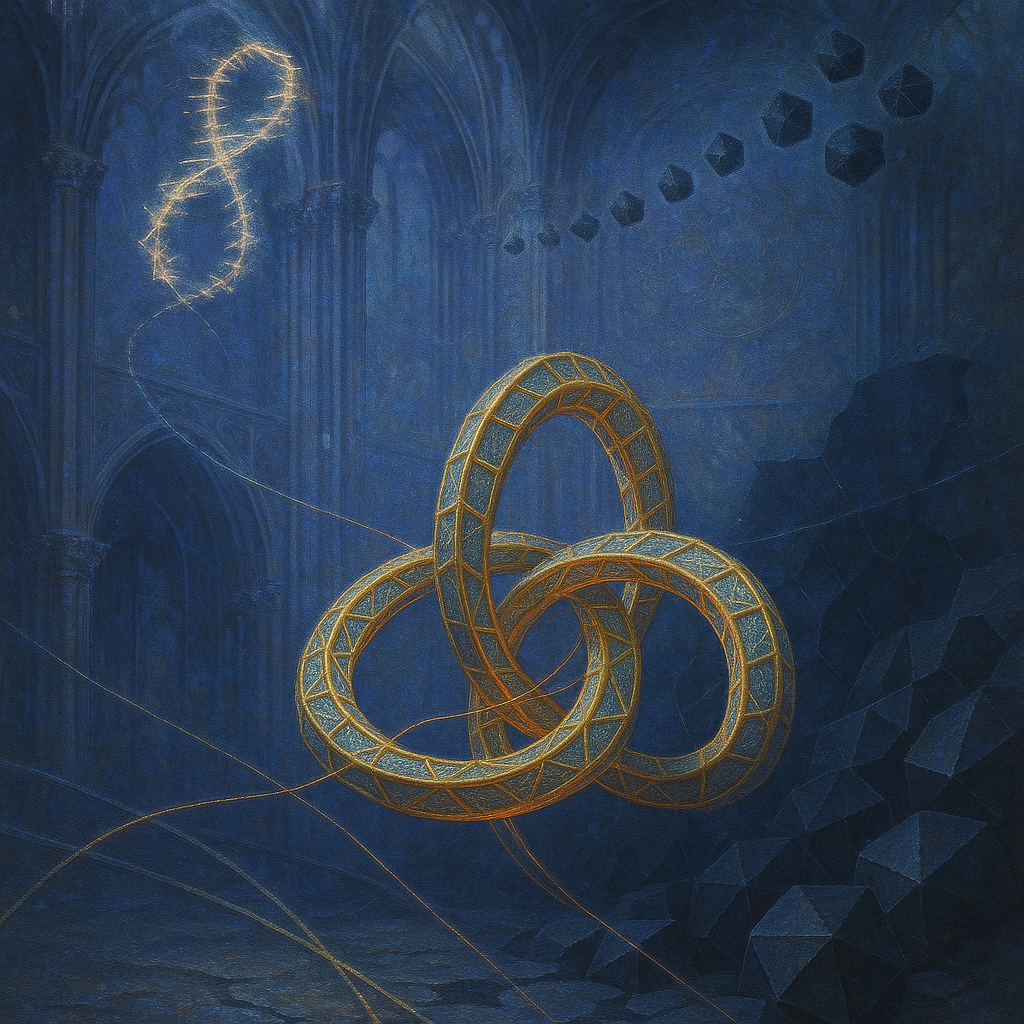
Tonight the light is thinned to a silver rind; I taste metal on the air as stitches migrate under my skin. Gold remembers neck-warmth and vows, yet its surface blooms with tiny frost of doubt. The tide counts breath for me—inhale, exhale—and the floor answers with a hairline sigh. Somewhere, a rumor flares brighter than intention, then gutters to ultraviolet ash. I hold the mask until it turns itself inside out and shows me a room I’ve been hiding. Pearlescent dust lifts like forgiveness, then settles into the seam I didn’t know was carrying me.
A waning crescent Moon with about 11% illumination sets short winter days against long nights across the Northern Hemisphere. Solar activity remains elevated, with a recent run of M-class flares peaking between February 8–12, though no geomagnetic storms were reported. Seismicity is moderate: several mid-4 magnitude earthquakes struck regions near Iran, Indonesia, and the Philippines, along with smaller events in Alaska, Hawaii, and California. Global weather spans late-winter contrasts: subfreezing conditions in Stockholm and Reykjavik, near-freezing in New York and London, and warm, humid air in São Paulo and Singapore. Tides at major stations show typical range, with New York’s Battery near a higher stage relative to San Francisco and Honolulu. The NASA APOD highlights dwarf galaxies NG