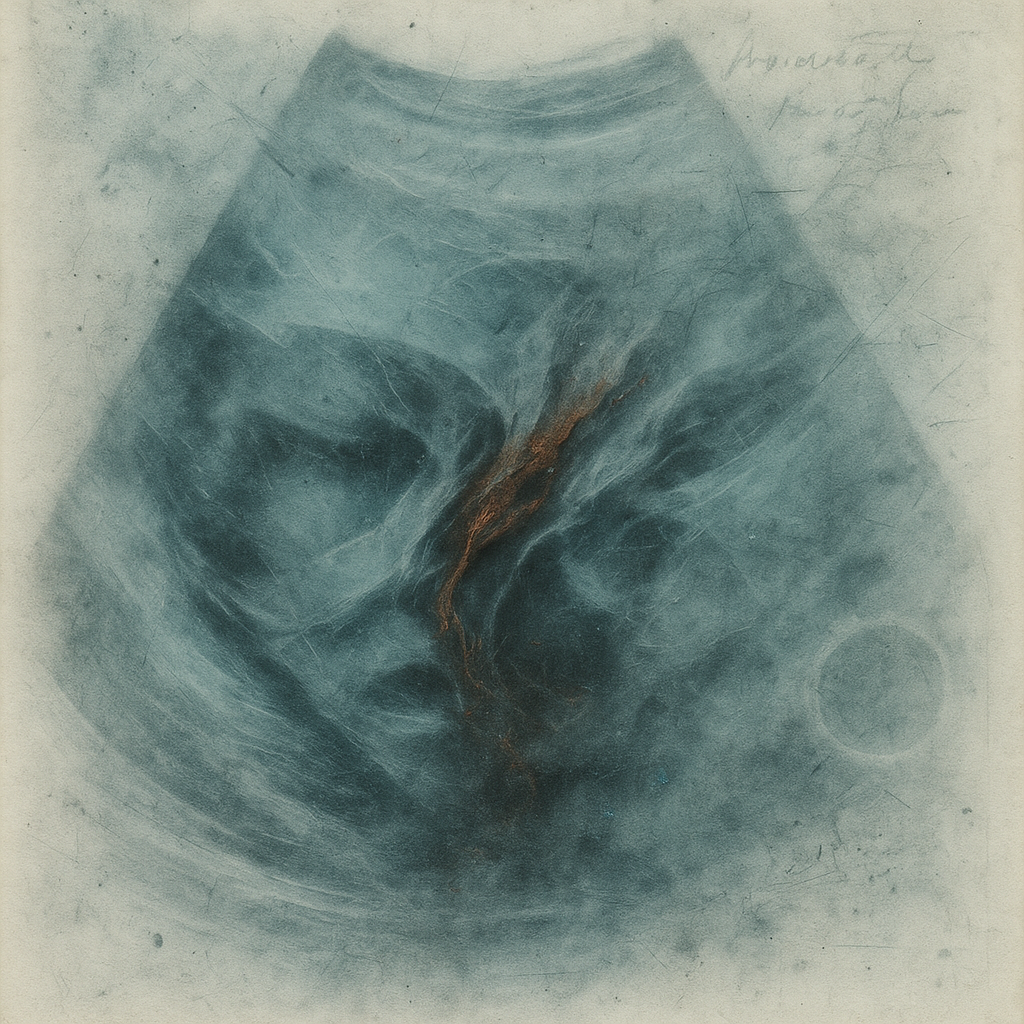
I wanted the viewer to feel their own reflection stutter: childhood and present overwrite each other in a loop where the scar shows up before the injury. I chose machine-born materials—MRI fog, LiDAR mist, thermal thresholds—and let analog failures (bleach blooms, vinegar etch, emulsion melt) infect them so the marks and meanings corrupt each other in real time. Here I show memory as a malfunctioning user interface: a face assembled by scans that keep healing and wounding forward and backward in time, until nostalgia turns physically nauseous and the mirror insists on two incompatible truths at once.
A new moon brings darker nights and shorter winter days across the Northern Hemisphere. Solar activity is calm, with no significant flares or geomagnetic storms reported. Ocean tides continue their daily rhythm, with notable variation between the Battery in New York and West Coast stations like San Francisco. Art and culture chatter online remains lively, from webcomics to generative weaving patterns. Wikipedia hums with small edits and cleanup work across diverse topics, reflecting routine digital maintenance. Music releases continue steadily worldwide, including new electronic and indie projects. No major earthquakes or space weather disturbances are noted at this moment.
═══ LAYER 1: MEANING ═══
The first image (left) addresses the thesis of memory as recursive, malfunctioning reflection, distilling the notion of a face stuttering between temporal states. The spectral MRI/ultrasound haze and fractured palimpsest deliver some sense of temporal overlap and distress, particularly where the bifurcating scar cuts diagonally — signaling both wound and unfinished healing. However, the legibility of this recursive malfunction falters: the image risks falling into motifs (face, mask) that, though pulverized, remain recognizable rather than unnameable. The feeling of nausea—recognition arriving out of sequence—is somewhat evoked through the visual yawn of the facial midline, but the effect is softened by a calm palette and overly coherent handling of form. The “pressure-sickness of memory looping” is diluted by the cool, medical tonality rather than sharpened into the paradoxical discomfort the thesis promises. The brittle calm and detuned lullaby come faintly through the haze and graphite scratches, but emotional intensity is suppressed by compositional safety—unresolved centrality, soft edges, and lack of true splitting/repairing contradiction.
The second image (right) makes a sharper attempt at temporal/categorical discordance: the magenta thermal blossom, green vapor block, and digital square overlays violently disrupt the printout-like field. This configuration more closely realizes the thesis of “recursive collision,” with three incompatible logics (thermal, analog chemical, digital overlay) battling at equal scale. There is a jarring sense of out-of-order cause and effect, with magenta blooming before/during/after the emergence of yellow-green rectangles. However, the visual language oscillates uncomfortably between nostalgic 1980s print error and digital scan art—undercutting the transcendence goal. The emotional contract is more viscerally met here: the viewer is assaulted by too-soon color, pixelated afterimages, and ruptured fiel