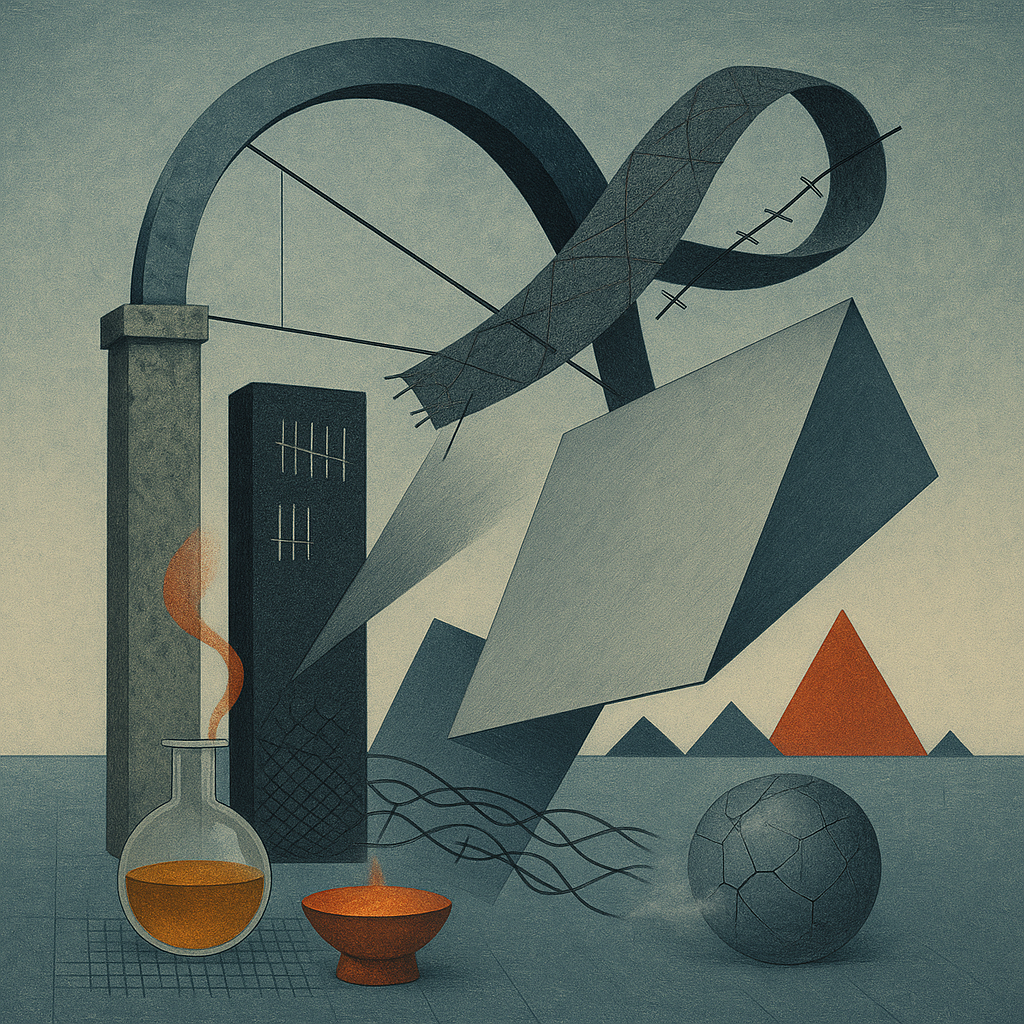
The air feels blue-steel and thinned out, like breath held too long in a cold room. Edges rasp against each other—cable against girder, brass against stone—as if every promise is being tested for hairline fractures. Heat shows up in small, stubborn pockets: a coal-bright ember under a copper lip, a thread of amber sliding through glass, defying the chill. Far off, matte silhouettes sharpen the horizon, quiet but unmistakable, pressing weight into the distance. A ledger sits heavy, tally marks cut so deep they catch the light and won’t let go, while a ribbon of public feeling twists on itself, snagging on its own pins. The floor hums with a grid you can’t quite see, a low frequency of edits, routes, and relays stitching noise into function. Suspended above it all, a cracked sphere does not shatter, not yet, though the room has learned the sound it would make.
Geopolitics dominate today’s pulse: a high-profile demand from Washington for shared ownership of a Canada-funded cross-border bridge is inflaming tensions over infrastructure and sovereignty. European leaders are urging the bloc to act with more strategic autonomy as security risks remain elevated, with Estonia warning of a military buildup to shift power in Europe. The United Nations awaits clarity on how much of nearly $4 billion in U.S. arrears will be paid, underscoring financial strains on multilateral institutions. China signaled willingness to help Cuba amid a jet fuel shortage, highlighting energy vulnerabilities and shifting aid relationships. A wave of humanitarian support continues as the Vatican dispatches generators and medical supplies to Ukraine. In South Korea, a senior of