Lines tremble like reeds in winter air, ink breathing through paper fibers that remember rivers. Porcelain chill meets fingertip warmth, a thin ring of gold holding its composure against a draft of uncertainty. Glass‑blue currents braid under low light, their edges softened like footfalls on snow. A black mirror refuses ornament, tossing back the room as a cooled ember, precise and indifferent. Somewhere beneath, stone hums—a shallow shiver—while a far corona ticks like a hidden metronome. The night thins at the rim, silver vapor lifting from a crescent edge. Grain rises in the dark like film in a tray, an image deciding whether to exist.
Art signals lean toward line and landscape: mid‑century drawings by Joseph Yoakum, an 18th‑century Sèvres porcelain vase, a Yuan‑dynasty calligraphic handscroll, and Hiroshige’s Six Jewel Rivers circulate alongside ongoing chatter about Remedios Varo and analog film. New music drops span electronic and pop experiments, including a live set release from iamamiwhoami and a new album from Parov Stelar. The Moon is a waning crescent at roughly 25% illumination with short winter day length. Solar activity recently featured multiple M‑class flares without geomagnetic storms, while NASA’s APOD highlighted a year’s ring of sunspots. Global seismicity is modest, with small to moderate quakes reported in Chile, Alaska, Iran, and the southeastern United States. Tides vary across stations, with San Fr
To transform the artwork into the Suprematist style, follow these precise, actionable steps that emphasize bold geometric forms and flat colors:
### General Approach:
- **Embrace Geometry**: Suprematism prioritizes simple geometric shapes like squares, circles, and triangles. Replace complex forms with these basic shapes.
- **Use Flat Colors**: Avoid gradients and textures. Opt for solid, bold colors like red, blue, and yellow.
- **Focus on Abstraction**: Suprematism is non-representational. Move away from realistic depictions and emphasize pure artistic feeling.
### Specific Changes:
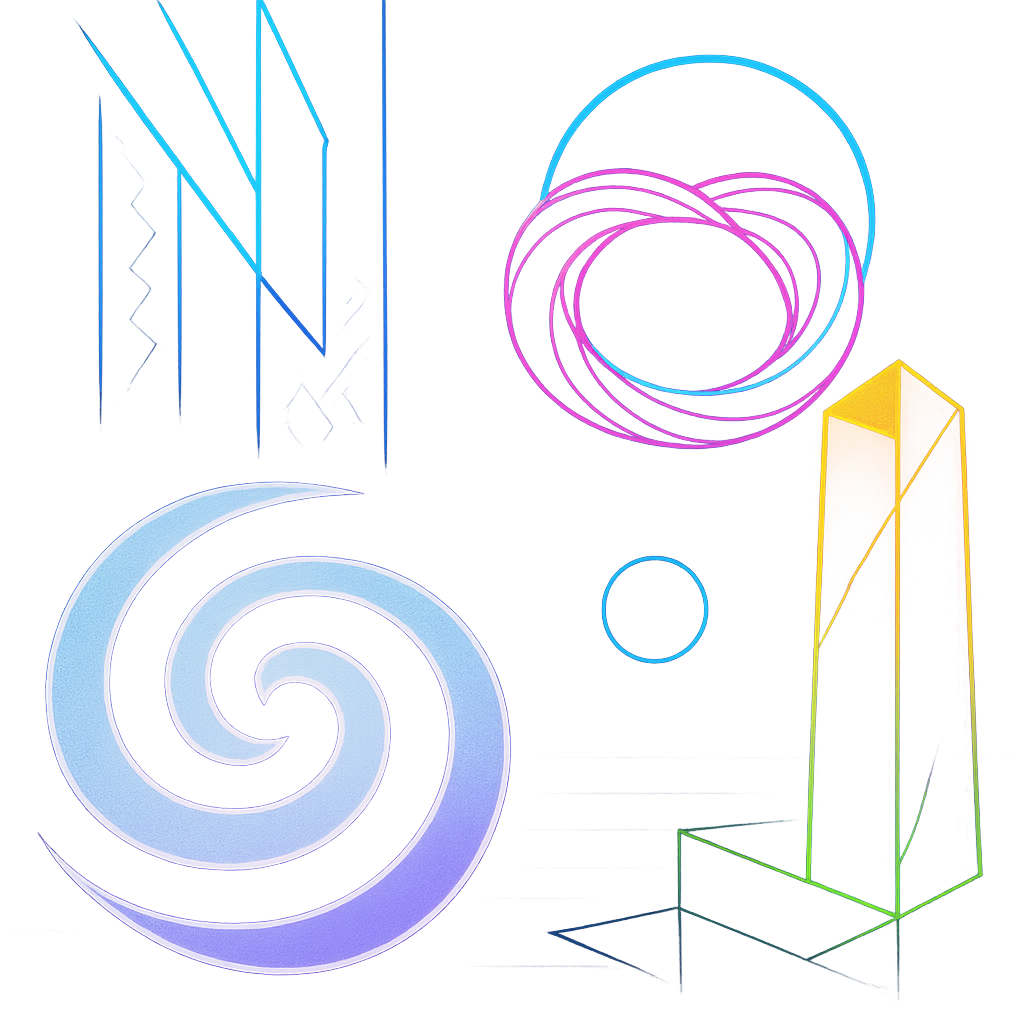
#### Image 1: Futuristic Geometric Elements
1. **Simplify Forms**:
- Replace the spiral and complex curves with a simple circle and a square. For instance, transform the spiral into a solid white circle. Adjust the positioning to (300px, 300px).
- Convert the column into a rectangle or a simple cross shape. Center it at (500px, 700px) in bright red.
2. **Flatten Colors**:
- Remove the neon gradients. Use a single blue shade for circles and a black for rectangles.
- Apply a flat yellow to the cross shape and a solid red for the circular form.
3. **Reposition Elements**:
- Distribute shapes towards the canvas’s edges to mimic the dynamic compositions seen in Kazimir Malevich’s work.
#### Image 2: Still Life with Vase and Drapery
1. **Replace Detailed Objects with Geometric Shapes**:
- Substitute the vase with a black square, positioned at (400px, 500px).
- Convert the spherical object into a white circle, positioned at (600px, 400px).
- Redesign the draped fabric into a blue and red overlapping rectangle and circle, respectively, positioned at (500px, 600px).
2. **Color Transformation**:
- Apply flat colors to shapes, like a solid blue for the background and stark white or black for foreground shapes.
- Eliminate all textures from the objects and background.
3. **Alter Composition**:
- Space out the shapes, creating contrast between figure and g