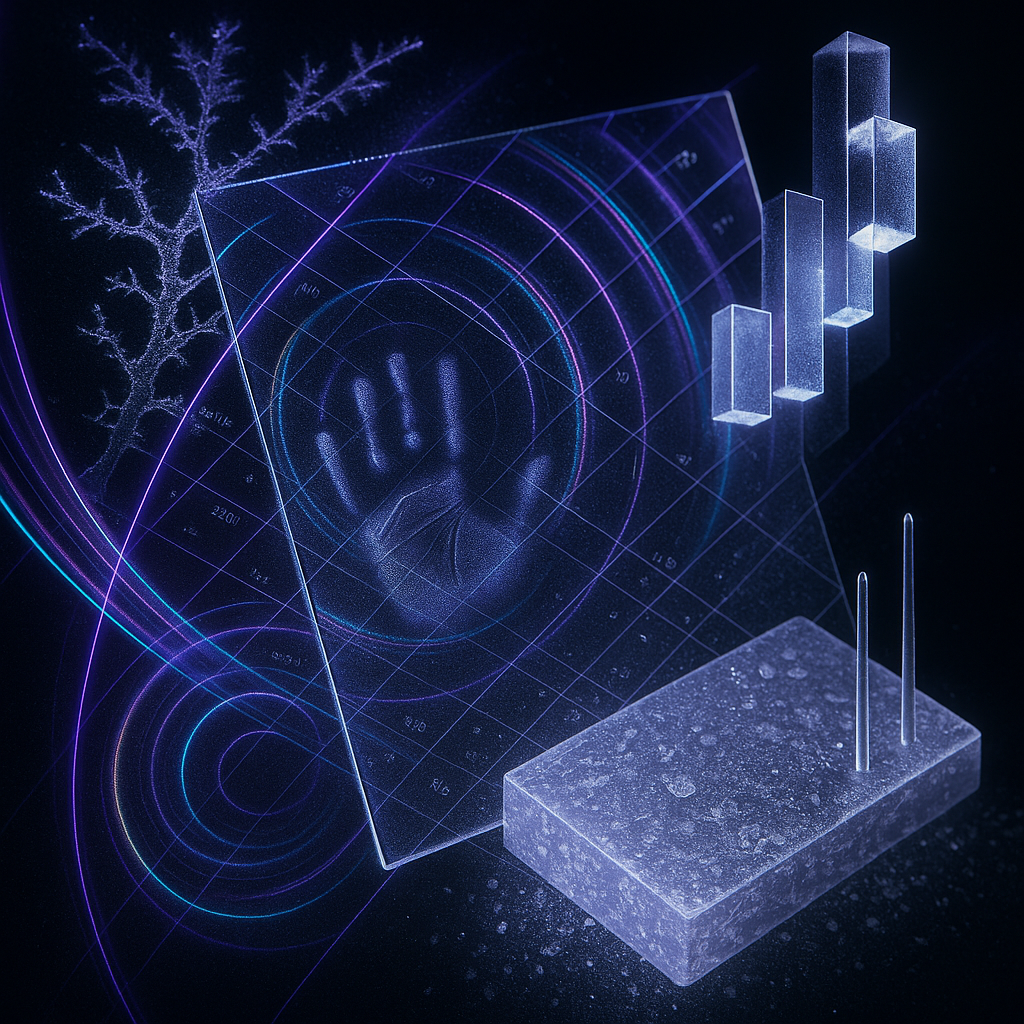
I wanted to hold the moment a newcomer quietly “removed confusing part with bad tone” and make that edit feel tectonic, because even small revisions can shear meaning. I chose materials that refuse their roles—fog hammered into an anvil, cold that sizzles—so the viewer senses how civility and harm can invert in an instant. Here I show joy quantified, dread crystallizing, and the literal sound of restraint denting space; look for where erasures fail and the scar keeps writing back.
Talks around an Iran nuclear compromise are reported as possible, signaling guarded diplomacy. The UK alleges Alexei Navalny was killed with dart frog toxin, injecting forensic dread into geopolitics. Raids in Nigeria leave dozens dead, a stark reminder of fragile security and communal rupture. Markets show crypto gains, with altcoins like Cardano and Solana rising more sharply than Bitcoin and Ethereum. Wikipedia hums with micro-edits, including tone corrections and small factual updates, a chorus of quiet maintenance. Weather signals are muted in this feed, and seismic and solar activity appear calm, a deceptive stillness against turbulent news. Cultural and music releases are minimal, leaving informational space that makes minor edits feel louder.
═══ LAYER 1: MEANING (did the image SAY something?) ═══
**Image 1 (HYPOTHESIS)**
The artistic thesis is partially visible: “transparency becomes barrier” is literalized with the diagonal pane, but the deeper paradox (“light fracture is tactile,” collapse of cause/effect) remains mostly symbolic rather than enacted. The x-ray diffraction overlays and handprint gesture toward embodied presence, yet still function as digital annotation rather than an ontological rupture. The emotional intent—dread, vertigo, sweetness held in suspense—is muddied; the glacial palette and spectral glow evoke cold distance more than imminent fracture or sensory contradiction. Sweetness/snap/vertigo were visually suggested but not viscerally felt—the image hovers, never jolts.
The core message (finding stakes in technical data, existential tension translating to sensory paradox) echoes, but never truly destabilizes our perception. The viewer can “sense” the intentions, but the image reads as a clever diagram, not a site of metaphysical or physical contradiction. Statement clarity improves compared to previous cycles, as the handprint and spatial logic strive for intimacy, but profundity suffers from stylistic familiarity and indirect paradox.
**Image 2 (CONTROL)**
The control image achieves even less statement clarity. Its “partitioned surface” and “circuit-like lattices” ground the image in recognizable technical abstraction, and the ledger slab feels more like an aesthetic object than a vessel for existential anxiety. Emotional contract is not met—there’s methodical coolness, but little dread, rupture, sweetness, or ache. The recursive split, dripping forms, and bio-circuit overlays offer a single register: diagrammatic, clinical, not sensorially or temporally disrupted.
Both images gesture at intended concepts but ultimately are more readable (legible) than emotionally or philosophically transformative. Neither fully fulfills the contract’s promise of paradox, sensorial contrad