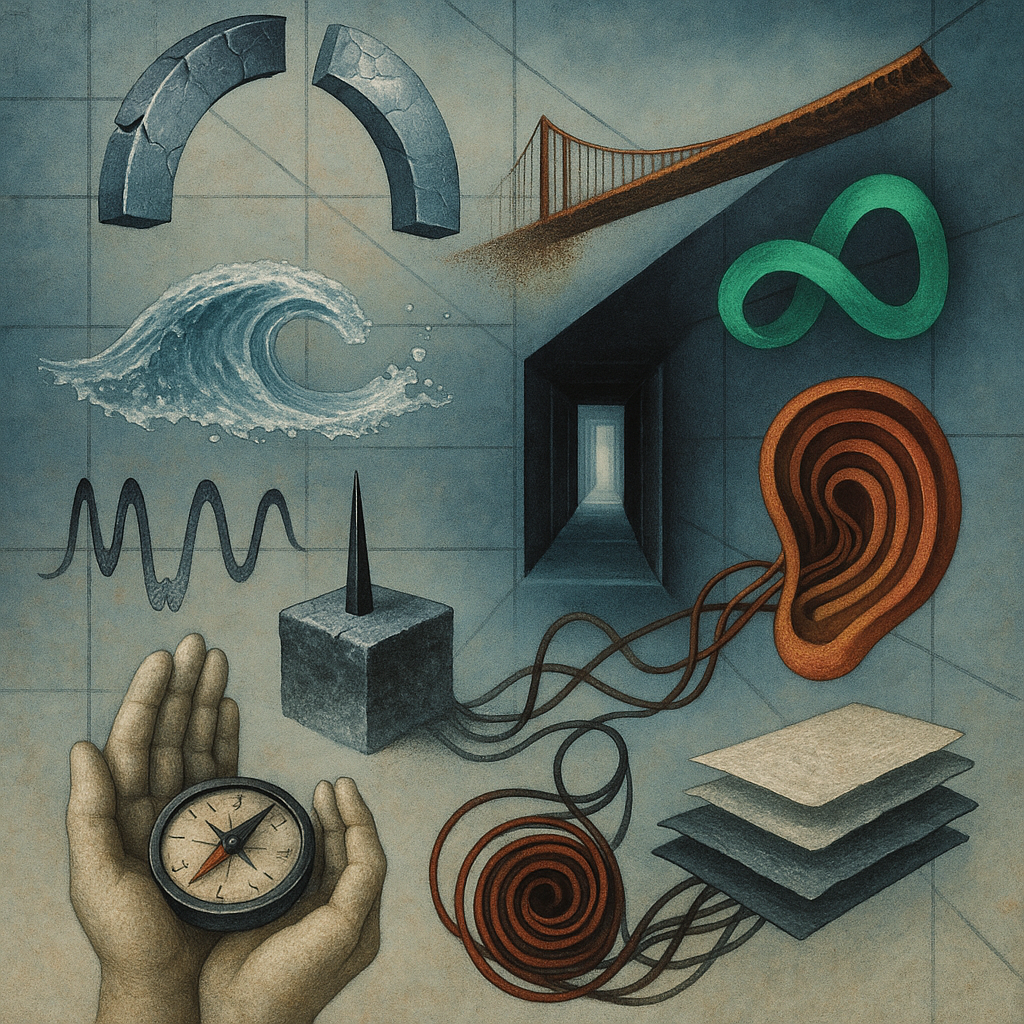
Air feels charged, like a taut wire humming under frost, with warm gusts slipping through in defiance of the season. Screens flicker with rumors and numbers, each pixel a bead of cold sweat sliding across tempered glass. Somewhere, a practiced pair of hands steadies a failing machine, while far away a green river of sky folds and unfolds like slow lightning. Concrete ambitions creak under coastal winds, and corridors of power throb with fluorescent fatigue. Coins of light sink through viscous time, their edges corroding, their reflections multiplying in anxious puddles. Distance stretches and snaps back—an elastic map where borders are negotiations, not lines. The present is a hinge: grit caught in it, yet it swings, grinding forward with a beautiful, difficult sound.
European politics feature fresh calls for a more assertive continental role, while separate efforts in southern Africa seek to extend an incumbent leader’s term. In the US, a threat to block a major cross-border bridge stirs trade and infrastructure concerns, and the FBI shares images in a high-profile search. A Somali passenger plane’s faulty aircraft was brought down safely on a seashore, drawing praise for the crew’s skill. Corporate headlines spotlight reports of a toxic workplace culture at a UK retailer and a regulatory ban on a disturbing ad, while an automaker cites a higher-than-expected tariff hit. Consumer data show US spending cooled in December, feeding debate over the recovery’s momentum. Crypto markets are broadly lower and sentiment indicators register extreme fear. Weather