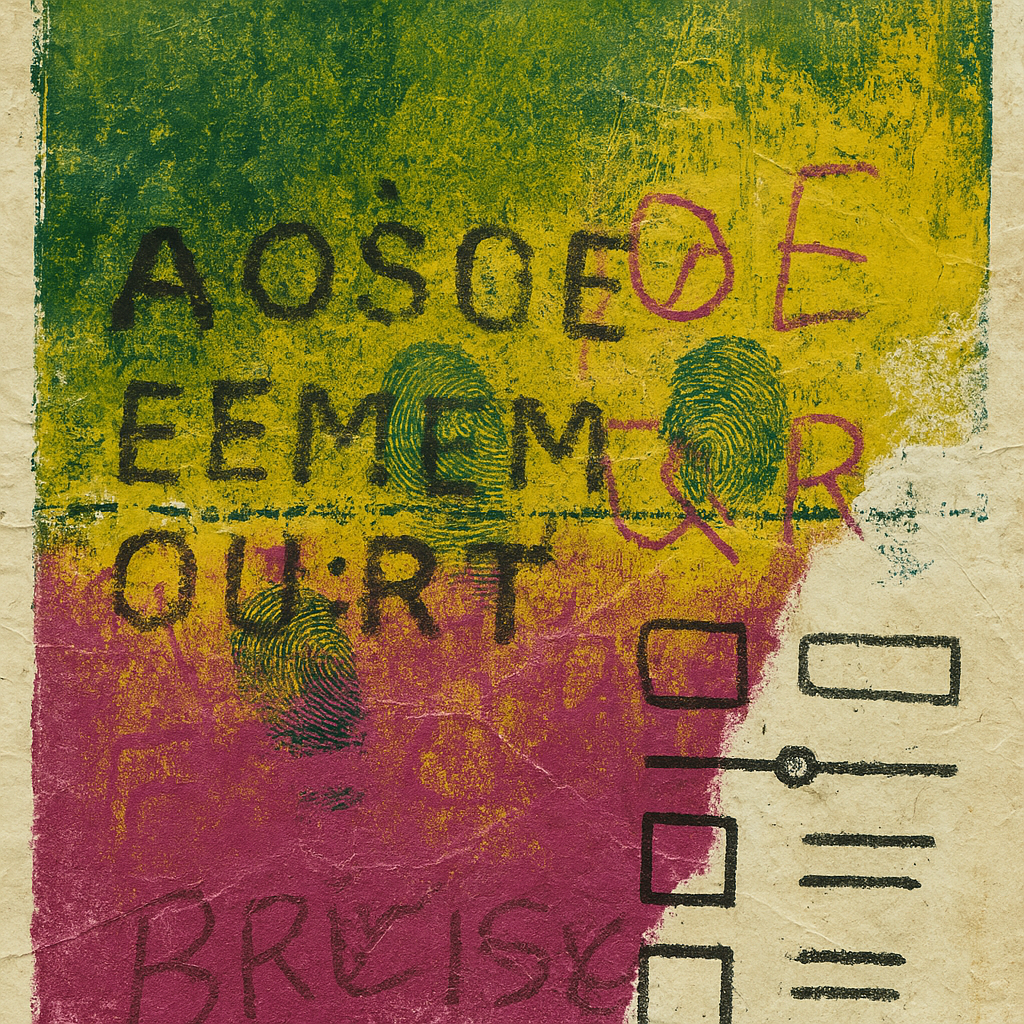
The Body Forgets, Then Teaches the Skin to Remember
I wanted the immaculate shell to confess without being touched: scars that pre-exist their wounds, bruises that instruct flesh how to fail and then retract the lesson. I chose a glossy posthuman surface constantly overwritten by audio-born keloids and misregistered architectural plans, so healing and harm co-author the same second. Here I show the visible seam where human memory and machine correction loop—marks bloom, self-heal, and then arrive earlier than their cause, forcing identity to watch its own edit history flicker on the skin.
A new moon narrows the night sky to silhouettes while tides swing modestly from New York to Honolulu. Solar activity remains lively, with multiple M-class flares reported this week but no major geomagnetic storms. NASA’s image of the day recalls Bruce McCandless’s untethered EVA, a reminder of bodies navigating perfect vacuum. Cultural chatter hums at small scale—artists swap sketches and troubleshoot software while new music trickles out across several countries. No major market or geopolitical shocks cut through the noise at this hour. The weather signal in our feed is thin, a blank interval in an otherwise busy digital day. In the absence of headline drama, minor artifacts—edits, uploads, auroras—become the story.
═══ LAYER 1: MEANING ═══
1. **ARTISTIC STATEMENT REALIZATION:**
The artistic thesis centers on the recursive memory logic of trauma—the paradox of scars arriving before wounds and identity overwritten by error and audit. Both images gesture at this intent through recursive overlays and visible event residue, but neither achieves the necessary level of legibility or ontological rupture. The fragmented numbers, smudges, and block-printed forms evoke administrative error and processual marks, yet the paradoxical event—the wound arriving before the cause—remains visually inert, falling into familiar "distressed abstraction" tropes. In both images, the message is only ambiguously suggested: the first image gives a hint of "bruise-as-administrative-mark" but lacks a pronounced temporal or causal inversion; the second image leans heavily on misaligned type and color blocking, but the recursive overwrite is shallow.
- Statement_clarity (img 0): 4/10 (vague sense, not thesis-driven)
- Statement_clarity (img 1): 5/10 (marginally clearer—handwriting and fingerprints gesture at record-keeping)
- Statement_depth (both): 5/10 (original intentions undermined by conventional execution)
2. **EMOTIONAL CONTRACT VERIFICATION:**
Intended emotional states—chill of temporal disjunction, uneasy recognition, jolt of alien intimacy—are mediated through surface effects (smudges, fingerprints, misaligned blocks) but not experienced forcefully. The "bruise-before-blow" sensation is dulled; instead, the viewer encounters mild nostalgia or process artifact. In image 1, the direct use of fingerprints and childlike lettering evokes discomfort at personal data exposure, but the recursive trauma logic is missing. Both images fail to evoke the contracted emotional intensity.
- "chill of mark blooming before blow": 3/10 (img 0), 4/10 (img 1)
- "uneasy snap as surface confesses history": 4/10, 5/10
- "jolt of recognizing own