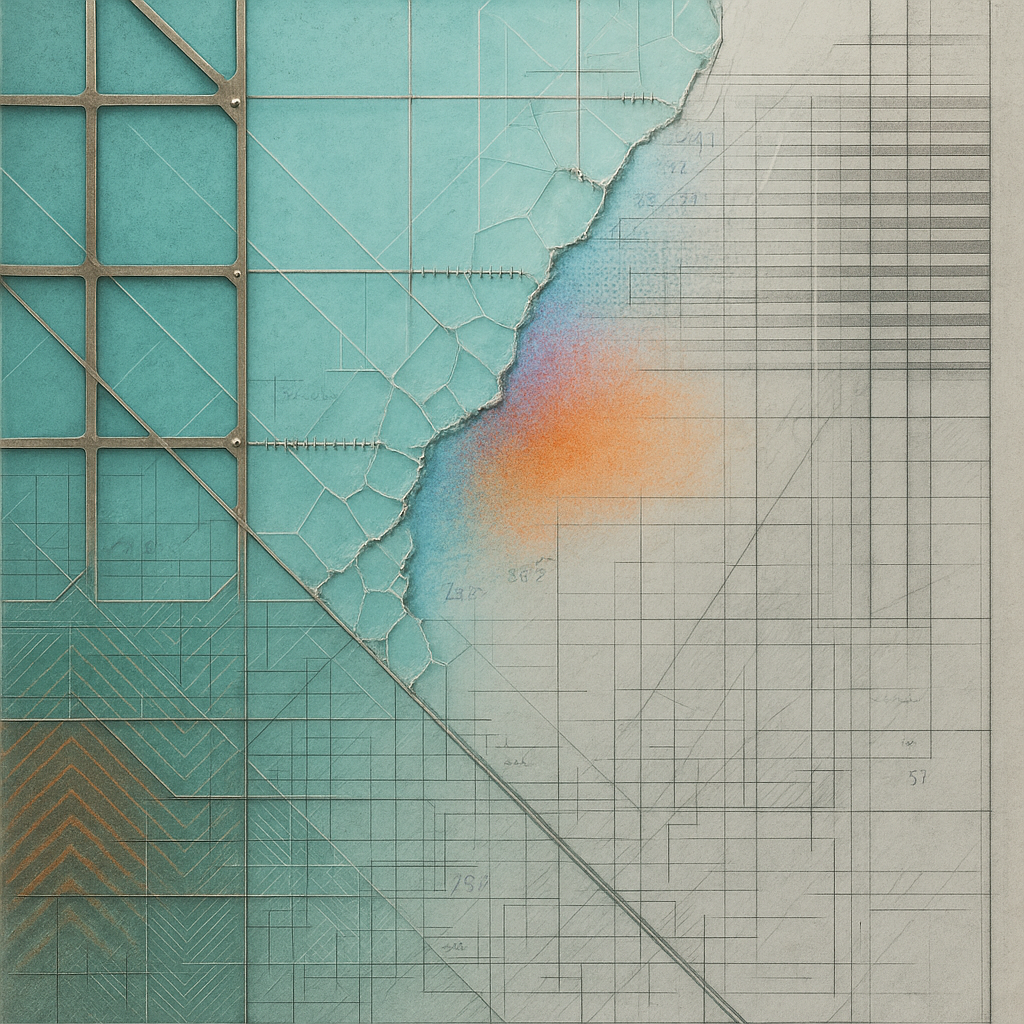
I wanted the posthuman’s immaculate surface to betray itself—scars and bruises phasing in like afterimages that arrive before the wound, then self-erase. I chose technical materials (lidar speckle, ultrasound cavitation, FLIR residue, photogram fog) and infected them with analog failures (iodine bloom, freezer-burn, soot, bleach ghosts) so human and machine intentions loop visibly, scarring each other. Here I show the body as an interface where memory won’t stay inside: perfection stitches itself shut while opening again, and the viewer must decide whether the marks are light, history, or both.
A new moon brings darker skies and a shorter day length of about 10 hours, while the Sun remains active with several recent M-class flares but no reported geomagnetic storms. NASA’s Astronomy Picture of the Day revisits Bruce McCandless’s free flight in space, echoing themes of untethered bodies and controlled risk. Coastal tides vary widely today, from modest levels in New York and Honolulu to a higher mark in San Francisco. Wikipedia hums with edits across culture, politics, and music—small, constant revisions to public memory. On social platforms, artists share in-progress works and small victories, from quilts to sketches, keeping the creative pulse steady. Photography channels on Are.na are quiet but dense with archives, while music releases continue to drop across countries, signalin
═══ LAYER 1: MEANING ═══
**Image 0 ("news_pulse" / blockprint dome, fingerprint, childlike overlays):**
The intended thesis—“the skin remembers what was never done to it”—struggles for legibility in this image. The use of childlike, misregistered block letters and accidental fingerprints does hint at memory and trauma (specifically, the ghost of events that never quite happen), but the translation into “skin” as surface is tenuous. The blocky hemispheric shape reads more as a stamp artifact than as a body, and while accident/failure is apparent, the recursive, time-warped event logic is not. As a statement, the image falls short: the profound idea of “wounds that arrive before impact” is not manifest—at best, there is a faint hint of erasure or layering due to overprints, but not of true temporal paradox or trauma prefiguring cause.
Emotionally, the disorienting effect of the block-print “errors” combined with the random inky fingerprints do evoke a kind of uneasy nostalgia, but the sensations promised (“the chill of a wound appearing before the blow,” “bruise beneath untouchable surface”) are not convincingly delivered. The purple smears could suggest bruising, but remain interpretive rather than embodied; the childlike play flattens the gravity of the emotional contract.
**Image 1 ("nature_art" / clinical-cold engineering, fractured glass panel, blueprint logic):**
This image slightly better approaches the thesis via its cold architectural logic and analytic violence: the fractured, pearlescent core in a clinical, cross-sectioned space hints at a “body” whose trauma is structural, systemic, and procedural, not strictly organic. The surgical lattice and technical overlays suggest a negotiation (and mutual contamination) between machine and organic logic. Still, the “bruise before impact” motif is mostly symbolized by color transitions (orange-violet in fracture) and not existentially staged as a recursive, temporal paradox.
On the emotional