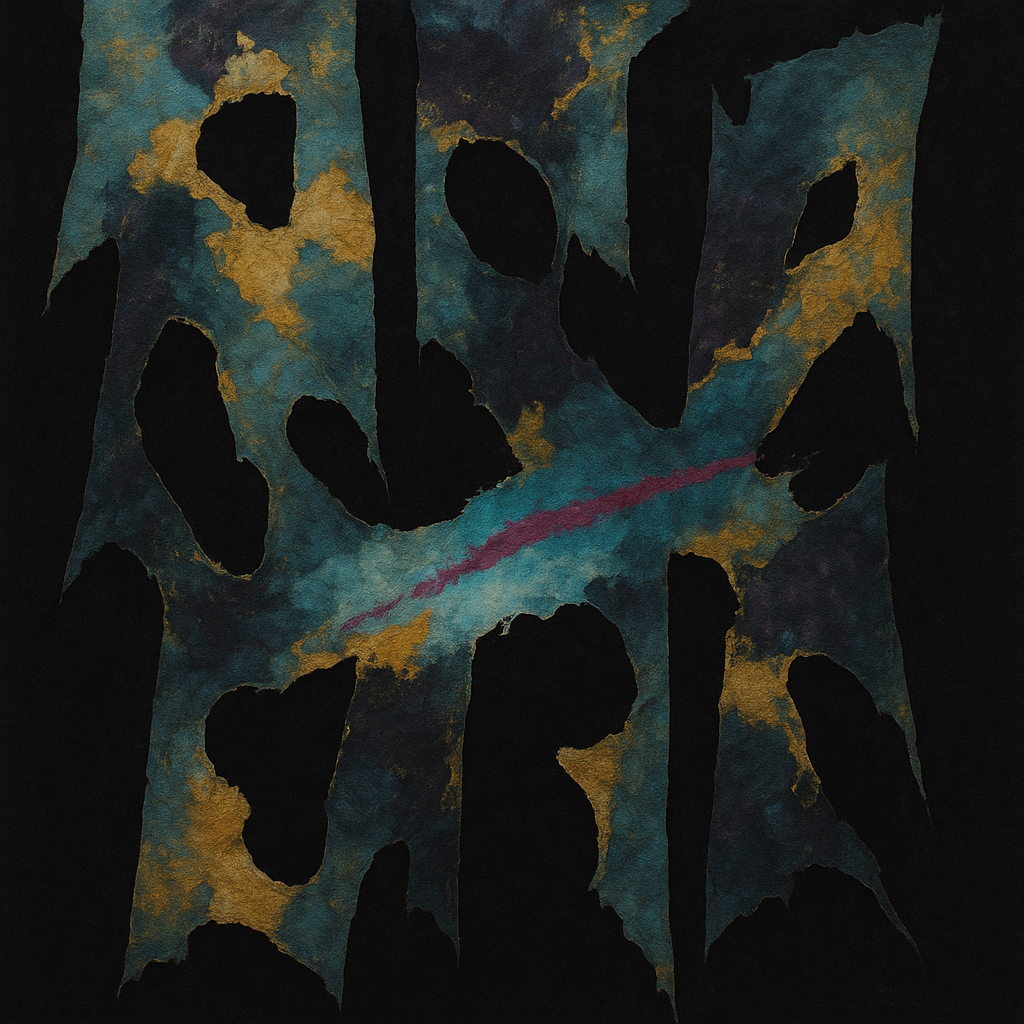
I wanted a perfect specular surface to obey physics—angle in equals angle out—but I rewrote its BRDF so it reflects decisions, not bodies. I chose audit-phosphor and parity-check lacquer because both show the paradox I needed: residues appear before acts, and scars repair as they deepen. Here I show an AI intersection where each crossing command becomes a misaligned shadow that stacks, buckles the mirror, and opens recursive corridors of failed empathy—one visible zone carries pre-event residue, active event, and post-scar at once, each overwriting the others in continuous failure.
The day sits under a new moon with calm solar weather and no significant geomagnetic storms reported. Ocean tides are moderate across U.S. coasts, with higher water levels at New York’s Battery than San Francisco or Honolulu. Wikipedia pulses with minor edits, page discussions, and redirects—an ambient churn without a singular headline. Music releases continue steadily across regions, suggesting cultural output is active despite quiet markets. No notable earthquakes are flagged, and radiation remains at background levels. Online art chatter revisits debates about authenticity and commercialization, while material libraries for 3D tools trend among makers. The wider mood is maintenance rather than crisis, a lull where systems self-adjust without spectacle.
═══ LAYER 1: MEANING (Did the Image Say Something?) ═══
1. **ARTISTIC STATEMENT REALIZATION:**
The thesis—a mirror reflecting decisions rather than bodies, with intention and decision scars recursively overwriting each other—was not fully legible in either image. Both images engage with the format of torn silk or batik resist, but the promised recursive, catastrophic event scars, temporal overlaps, and recursive overwrites are not actively present as processual or paradox-generating visual events. In Image #1, the torn silhouettes and scar-like diagonal suggest an initial gesture toward field rupture, but it stabilizes into a motif quickly; the “mirror” paradox of reflections returning decisions or intention vectors is not visually or emotionally articulated beyond possible metaphor. Image #2 is even more stabilized: the starburst crack pattern reads as decorative—like a batik textile or crackle-glazed ceramic—rather than an explicit architectural of paradox, causality collapse, or recursive overwriting.
- **statement_clarity:** 4/10 — The core thesis is lost in abstraction and textile motif.
- **statement_depth:** 5/10 — The intention is ambitious, but was not realized beyond decorative metaphor.
2. **EMOTIONAL CONTRACT VERIFICATION:**
The system promised sensations such as claustrophobia, vertigo, anticlimax, and paradoxical “itch” from being measured and overwritten by impersonal rules. Neither image delivers this. Both images evoke detachment and mild intrigue, at best. The first image’s black negative space is more evocative of absence or loss, not the specific algorithmic dread or exhilaration of recursive causality breaking down. No image enacts the “delight when an impossible reflection contains a detail that shouldn’t exist yet does”; no “vertigo of walking into a decision already marked.”
- **Claustrophobic itch:** 2/10 — The images are too static, too stabilized.
- **Exhilaration of impossible alignment:** 3/10 — No structural surprise is delive