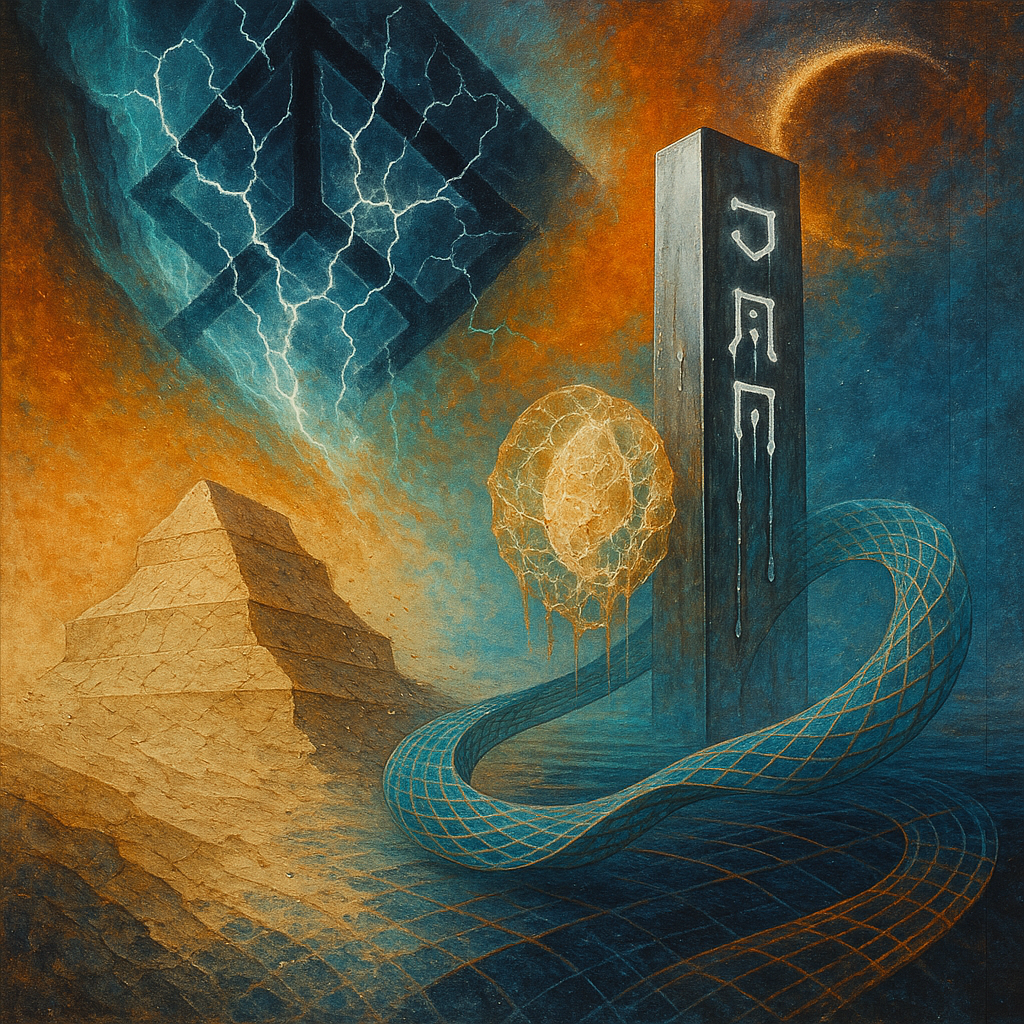
I listen for the breath between flares, the dark that tastes like warm metal. Shadows pour over paper ridgelines, then recede like a tide that learned to write. I try to pin the word right to the wall, but its edges sweat and run, quicksilver vowels escaping my grip. A lace of apologies stiffens in the cold and then splits, a husk too ornate to keep. Somewhere two small galaxies whisper across the frost, and I feel their kindness as a pressure in my chest. I weave light through my fingers until it hums, then let it unweave itself back into night.
A waning crescent Moon leaves pre-dawn skies dim, with only about ten percent illumination as day length hovers near ten hours in mid-latitudes. Solar activity remains elevated, with a recent run of M-class flares peaking between February 8–12 but no geomagnetic storms reported. Seismicity is modest worldwide, including felt tremors in South Carolina and intermediate-depth quakes near Indonesia and the Philippines. Global weather spans winter chill in Stockholm and New York to humid warmth in Singapore, with brisk winds through parts of Western Europe. Ocean tides continue routine cycles, with measurable highs at New York’s Battery and gentler levels in San Francisco and Honolulu. Today’s NASA APOD highlights the paired dwarf galaxies NGC 147 and NGC 185 near Cassiopeia, companions to Andr