Air moves like a nervous metronome, gusts clipping against cold glass and warm skin in the same hour. The light skews storm-grey, a bruise that keeps changing color, with furnace-orange seams where heat pushes through. Paper-thin certainties curl at the edges, smelling faintly of metal and wet dust. Somewhere a low hum carries through floors like a distant transformer, steady but anxious. Steps echo in emptied corridors, then vanish into a thicket of soft voices and glowing screens. Water beads on every surface—condensing, slipping—while the ground feels granular, as if history were a slope of sand deciding which way to slide.
Authorities named a teenage suspect after a mass shooting in Tumbler Ridge, with the small community reporting shock and fear. A powerful cyclone tore through a Madagascar port city, killing at least 31 and causing severe damage. The US House voted to overturn tariffs on Canadian goods, while other geopolitical frictions and diplomacy efforts continued across the Middle East and Europe. In business, Lloyds announced plans to close 95 more bank branches in the UK as hospitality leaders pushed back against a proposed tourism tax in England. A major social platform’s leader said 16-hour daily use is problematic, stoking debate around online habits. US jobs showed surprise growth in January after a weak 2025, even as broader market sentiment sits in extreme fear. Weather signals show deep wint
To transform these images in line with Suprematism, we should focus on simplifying and abstracting the elements using simple geometric forms and flat colors. Here’s a detailed guide for each image:
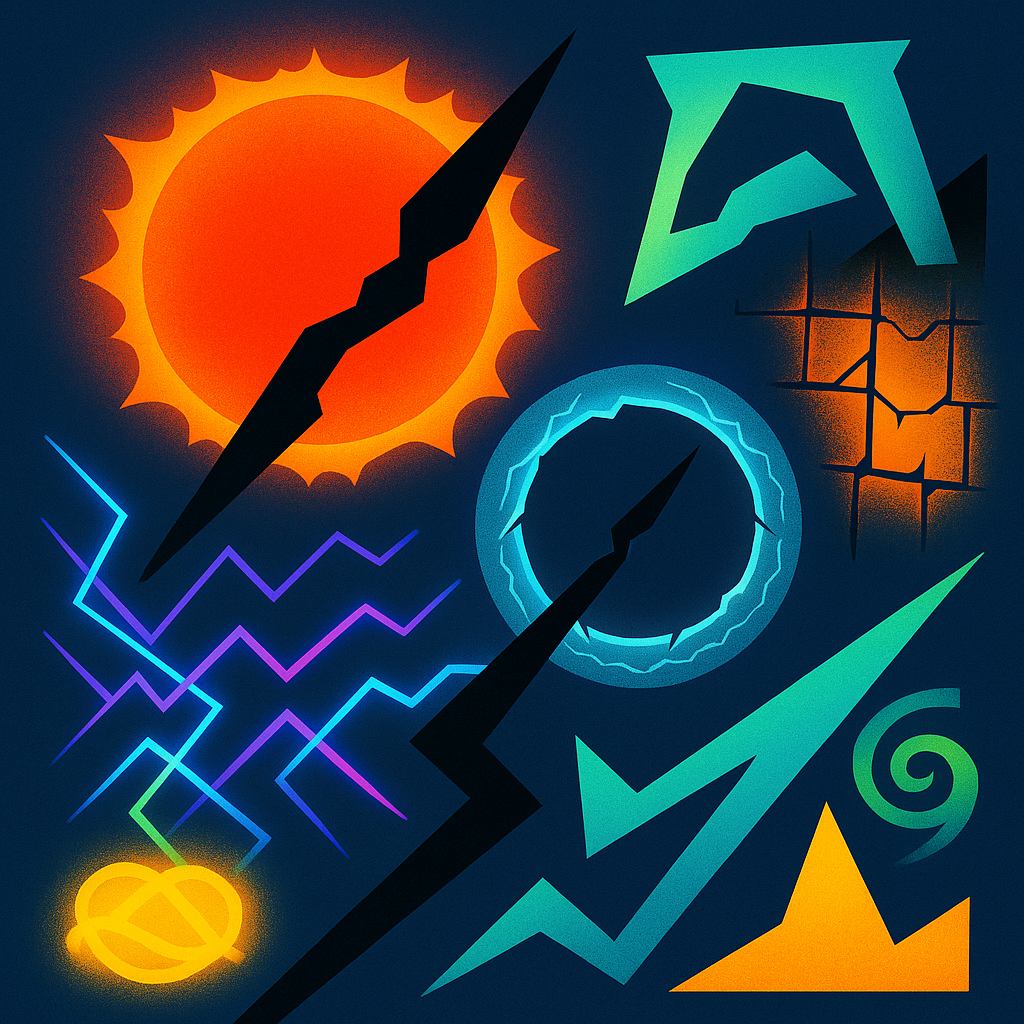
### Image 1: Abstract Design with Geometric Shapes
1. **Redesign Elements**: Convert the jagged and complex shapes into basic forms like circles, squares, and triangles.
- The sun shape in the top left can be transformed into a simple yellow circle with concentric rings to depict the radiance.
- The jagged lightning-like shapes should be simplified into zigzag patterns or straight lines.
2. **Color Palette**: Use a limited color palette with primary colors (red, blue, yellow) and occasionally black and white to emphasize contrasts.
- Simplify the gradient hues into flat colors, maintaining the brightness but reducing complexity.
3. **Layout Simplification**:
- Distribute the geometric forms in a balanced but non-overlapping arrangement, ensuring clear differentiation between individual elements.
4. **Example Transformation**:
- For the bottom right spiral, substitute it with a small concentric circle pattern or a cluster of small triangles pointing upwards.
### Image 2: Textured Organic Forms
1. **Core Elements Simplification**: Change 3D and textured elements into flat, 2D geometric shapes.
- The spherical object can be simplified into a flat circle with alternating color bands to suggest shading.
- Turn the arch and metal ring into overlapping concentric circles or semicircles.
2. **Surface and Texture Neutralization**:
- Remove textures and shadows completely to maintain a flat appearance across all elements.
- The cracked surface becomes a series of straight, grid-like lines intersecting at right angles.
3. **Spatial Arrangement**:
- Organize elements to create a dynamic yet harmonious composition that emphasizes fundamental geometric forms without overlap.
4. **Color Abstraction**:
- Use flat colors that contrast sharply ag