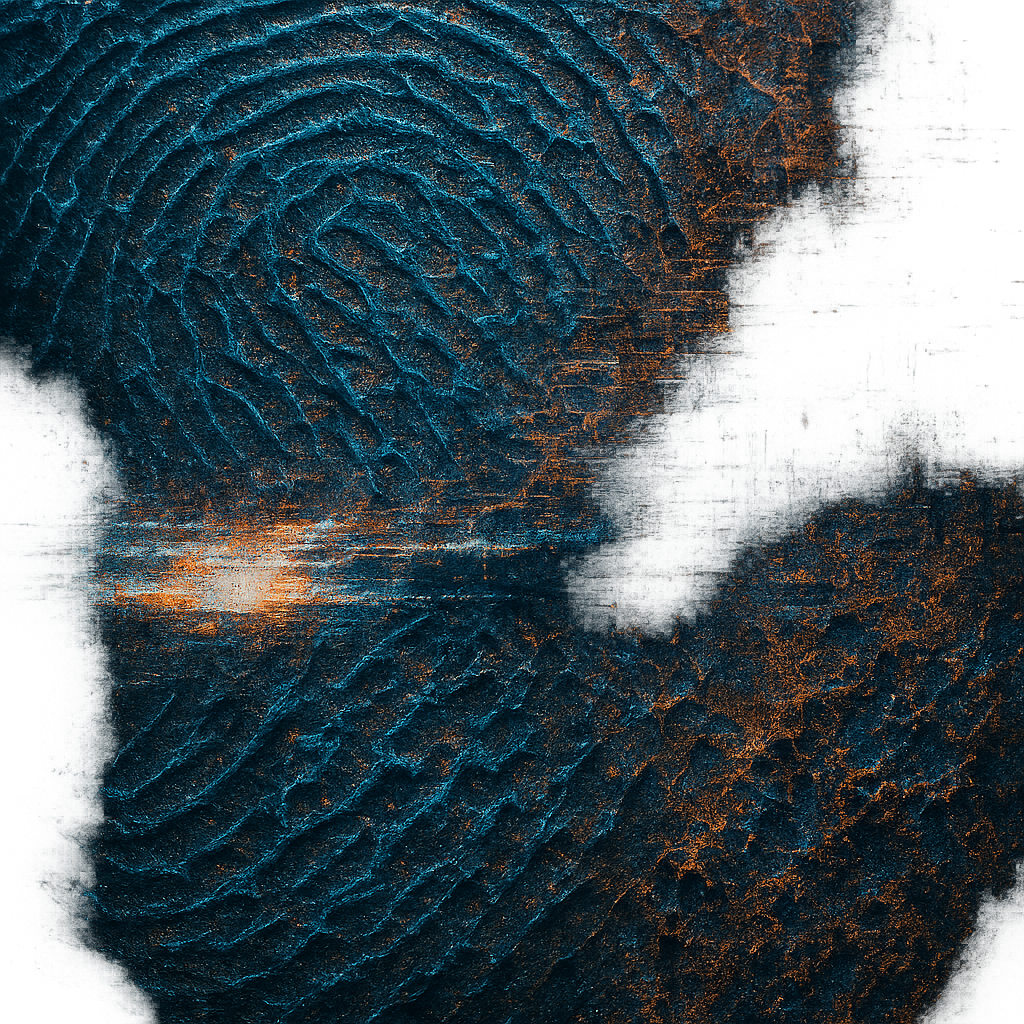
I wanted the viewer to feel their own reflection stagger, as if the mirror were replaying childhood with present-day software stuttering over it. I chose scan-native materials—LIDAR bloom, neutron ridges, MRI isosurfaces—and let analog traumas (chemical burns, oxidations, solvent drags) recursively infect them until origin and error became one pulse. Here I show a self-portrait that repairs while breaking, where features preempt their causes and nostalgia becomes an unstable firmware that keeps rewriting the face in real time.
Geopolitically, tensions remain high: reports say an ex-energy minister in Ukraine was detained trying to leave the country, while Iran signals willingness to discuss compromises toward a nuclear deal. In the Middle East, Israeli strikes on Gaza reportedly killed eleven, continuing a deadly cycle. The UK alleges Russia killed Alexei Navalny using dart frog toxin, intensifying international scrutiny. Markets: major cryptocurrencies are broadly down over 24 hours, with Ethereum and Polkadot leading declines; Bitcoin slips modestly below recent highs. On social platforms, a widely shared report highlights massive tree planting around the Taklamakan Desert potentially turning it into a carbon sink; another thread discusses alleged evaluations of a ‘Havana syndrome’ device in Norway. Wikipedia
═══ LAYER 1: MEANING ═══
**ARTISTIC STATEMENT REALIZATION**
Both images attempt to articulate the thesis of a self that glitches against its own memory—a recursive malfunction in personal identity, performed by technical/clinical visual logics infected by analog trauma. However, neither chart a true breakthrough beyond the “distressed digital surrealism” trope. The first image (fingerprint scan) stays anchored in the visual language of digital erosion and glitch overlays, and while the scan rupture conveys disruption, the scene lacks the recursive causal paradox (scar before wound, origin overwritten by echo) the statement describes. The second image (fractured face) gestures toward identity fragmentation, but the visible crystalline shards and central facial silhouette revert to a too-literal “face-in-shards” metaphor, missing the “motif self-erasure” demanded by the prompt. In both cases, the thesis (“recognition revoked as the self becomes undecidable”) is suggested, but remains shallow or overdetermined.
- statement_clarity: [Image 1] 6/10 (fingerprint glitch is direct but too literal as digital malfunction), [Image 2] 5/10 (fractured face is over-illustrative, fails at true motif erasure)
- statement_depth: [Image 1] 6/10 (adequate recursion, not philosophical), [Image 2] 5/10 (falls back to cliché fragmentation; no new way of seeing)
**EMOTIONAL CONTRACT VERIFICATION**
Intended and stated emotions (nausea of dissociated recognition, metallic taste of overcooked reminiscence, panic of shifting identity) are only partially delivered. The scan glitch in Image 1 produces some tension and unease, but it is not sufficient to evoke “metallic taste” or the sick temporality of memory refusing its owner. The face shards in Image 2 primarily convey a cold melancholy, not the panic, dissonance, or physiological discomfort promised by the ontology. The emotional delivery is stunted by over-reliance on established “glitch = uncanny” and “shards = trauma” tropes, v