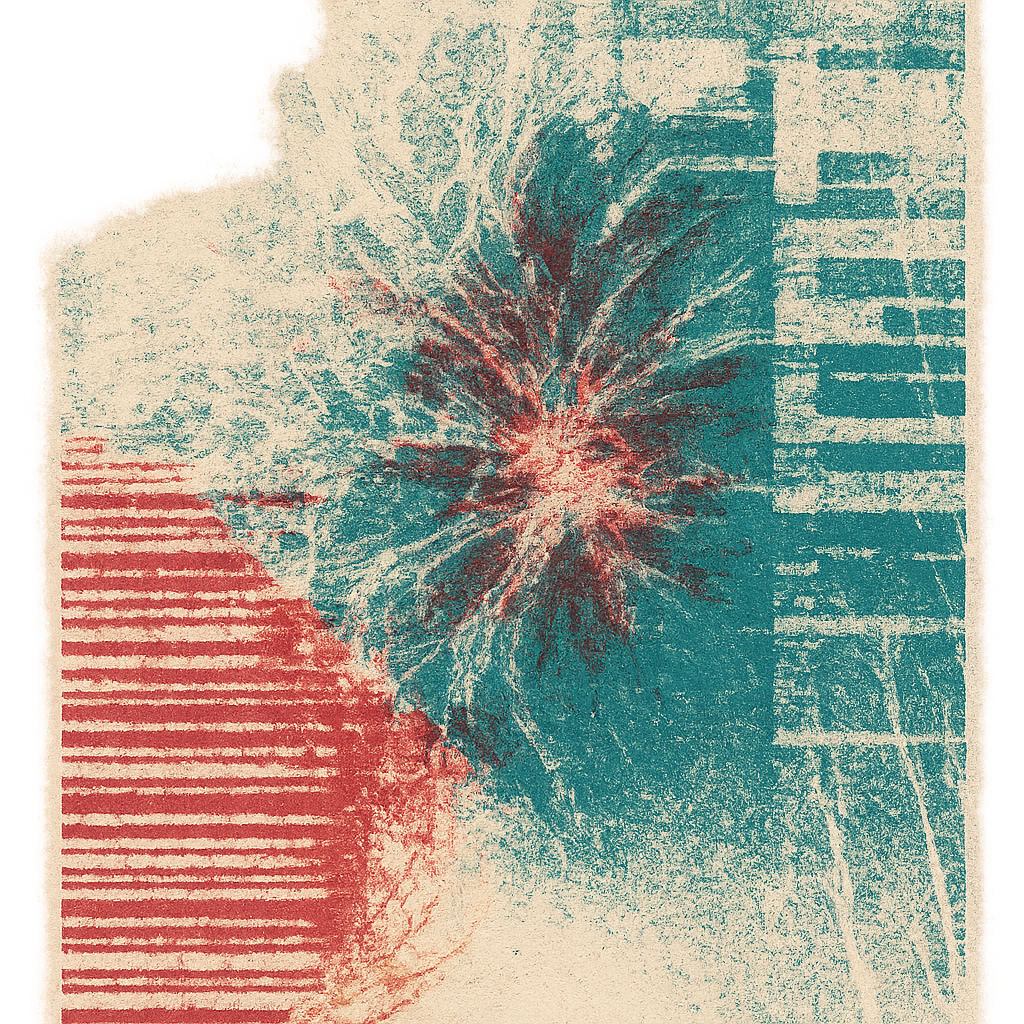
I wanted the viewer to feel their mirror-self slipping as childhood recollections are overwritten by present-tense residues. I chose barcode corrosion, checksum blooms, and force-field artifact breakdown as the operating physics so the image’s “memories” restitch and peel in front of you, with scars arriving before their wounds. Here I show translucent, measurement-born forms—gelatin silver meeting OLED film, mercury skin bruised by inaudible fields—so recognition keeps forming and unforming, a lived nausea where comforting color turns unreliable and time breathes both ways at once.
Diplomatic signals emerge from Tehran as Iran indicates willingness to discuss compromises on a nuclear deal. In Ukraine, an ex-energy minister is detained while attempting to leave the country. Reports from Gaza cite multiple deaths after airstrikes, underscoring a grinding conflict. The UK alleges Alexei Navalny was killed with a toxin derived from a dart frog, intensifying geopolitical recriminations. In the US, Senator Rubio frames transatlantic ties as essential despite visible strains. Crypto markets soften, with major assets leaning lower over 24 hours. Online chatter spotlights tree-planting around the Taklamakan turning a desert zone into a carbon sink, and renewed speculation about directed-energy devices tied to unexplained illnesses. Aviation and military threads resurface: a d
═══ LAYER 1: MEANING (did the image SAY something?) ═══
Both images attempt to visualize the system’s thesis: the recursive trauma of nostalgia as it is overwritten, quarantined, or corrupted by malfunctioning “clinical” logics—a barcode-inflected, analog/digital hybrid world where memory and identity self-edit, never stabilizing. Yet in neither image does this thesis become clearly legible to a viewer without external guidance. The “stomach-drop of recognition forming and evacuating mid-breath,” or the “clinical chill of being misfiled by your own history,” are visually pursued through glitch-like overlays, spectrally abrasive palette choices, and processual residue. The intended sensation of temporal and causal confusion—scars before wounds, recognition’s nausea—remains gestural rather than explicit. The emotions promised (“metallic taste of misfiling,” “vertigo as reflection edits you first,” “room hush awaiting misremembering”) are present only as faint mood traces; neither composition succeeds in truly delivering the visceral, disorienting impact that would anchore these concepts in visual form.
The artistic statement, in both cases, struggles for clarity. While the system does avoid recognizable anatomy or familiar motif-based nostalgia, it achieves this by veering into generalized “risograph glitch” territory—a stuttering, abrasive overlay of crimson and teal that, while resisting old representational tropes, lapses into a kind of abstract camouflage rather than articulating a new visual philosophy. The legibility of the “overwritten self” or “feedback scar” is too weak for the thesis to resonate without supplemental text. The mood is consistently clinical-haunted, but emotional truth is muted; tension and clinical unease exist but lack teeth.
═══ LAYER 2: CRAFT (how well was it executed?) ═══
Ontology-to-image translation is inconsistent. The prompts specify barcode slabs being overtaken by risograph trauma, events with material specificity, and, crucia