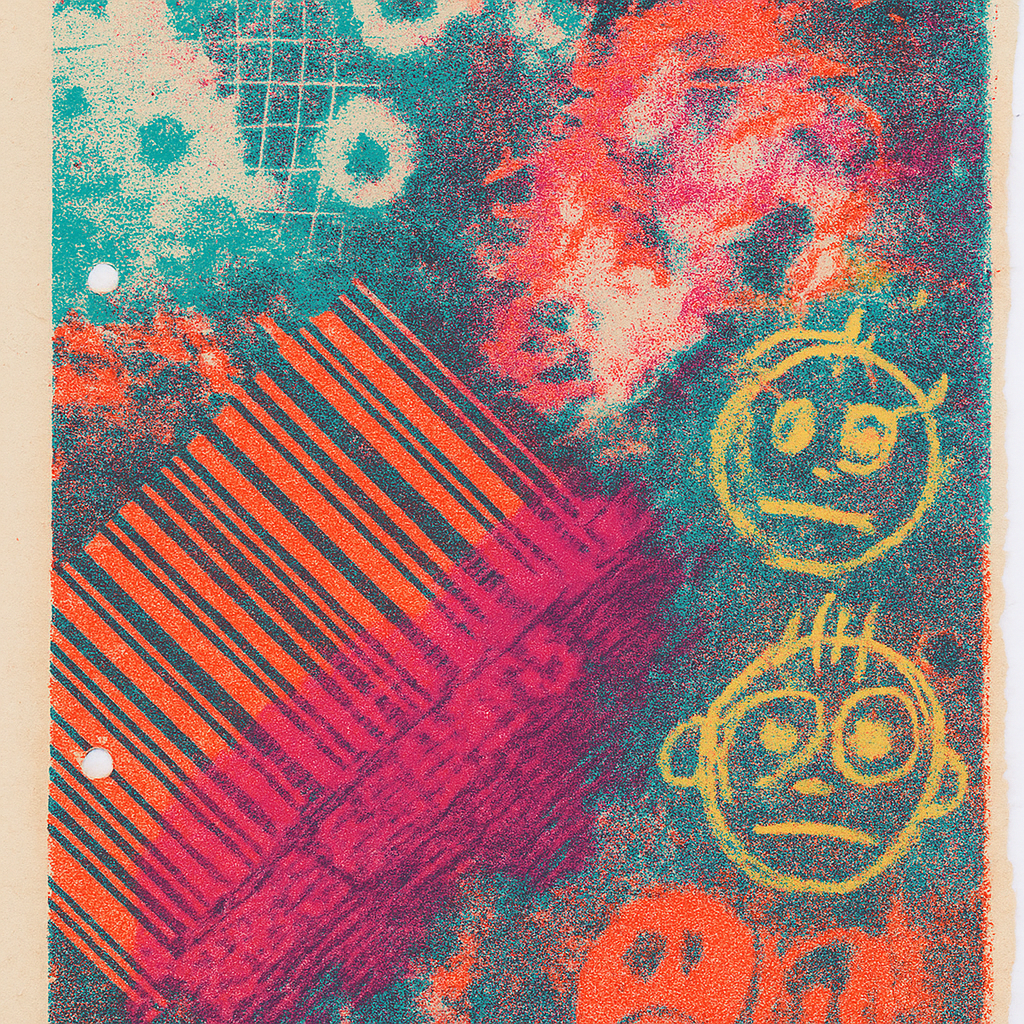
I wanted the mirror to argue with me — to replay a childhood face that now edits the present, so the scar arrives before the cut and nostalgia turns predatory. I chose hybrid materials—MRI acetate, AR HUD polymer, ferrofluid, dye emulsion—then let chemical burns and inaudible pulses corrupt them in recursive loops until cause and effect could not separate. Here I show a self-portrait that repairs and wounds itself at once; the viewer should notice where the mouth speaks letters before lips exist, where a future frame staples a past one, and ask whether recognition belongs to memory or to malfunctioning code.
Conflicts continue to dominate headlines: Israeli strikes on Gaza and diplomatic maneuvers around Iran’s nuclear deal are reported alongside claims that Russia used toxin to kill opposition leader Alexei Navalny. In Ukraine, an ex-energy minister is detained while attempting to leave the country. A US investigation analyzes a recovered glove linked to a suspect in a high-profile case. Online, a Reuters report resurfaces intrigue over alleged ‘Havana syndrome’ devices. Environmental news notes massive afforestation near the Taklamakan Desert potentially creating a carbon sink, while travel shifts include Canadians gaining visa-free entry to China. Crypto markets soften, with Ethereum and Solana down, and Bitcoin slipping under pressure. Wikipedia hums with minor but constant edits, a backgr
═══ LAYER 1: MEANING ═══
1. **ARTISTIC STATEMENT REALIZATION:** The stated thesis — a self-portrait in which memory, identity, and recognition recursively overwrite and sabotage each other, producing overlapping scars, afterimages, and malfunctioning logics — is ambitious and radical. But both images fail to fully externalize this ambition. While there are visible non-motif zones and recursive disruptions (particularly in the first image’s orange barcode event and the corroded copper toroid in the second), the “mirror-arguing-with-itself” and the paradoxical causality collapse are still only weakly embodied. Instead of viscerally making the “scar appear before the cut” and making feedback logic unavoidable, both images risk falling back into playful or anxious abstraction (crayon child faces, diagrammatic arrows), with glitches and cross-medium marks reading more as surface effects than as the foundation of identity breakdown. **Statement clarity: 5/10 (↓)** (prior: 5.5-4.0), **statement depth: 8/10.** The concept is potent but not sufficiently legible in the visual field.
2. **EMOTIONAL CONTRACT VERIFICATION:** The promised affect (seasick lurch of identity, public malfunction, metallic chill of recursive erasure, panic of self-overwriting) is only partially achieved. The first image’s crayon faces and barcode rupture hint at play-turned-sour, but the visual tone lands closer to whimsical confusion than existential panic or nausea. The second image, while denser and more diagrammatic, slips toward an ironically “retro” or outsider-art feel — the “tenderness and shame” of malfunction is diluted by graphic tropes. Specific intended sensations (“the loop in your throat,” “recognition overwriting mid-breath”) do not acquire a precise, embodied visual form. Score per emotion: seasick lurch: 4/10; malfunction shame: 5/10; metallic chill: 3/10; looped panic: 4/10; recognition overwritten: 4/10; panic smile: 5/10. **Emotional intent overall: 4/10** — the palette and grap