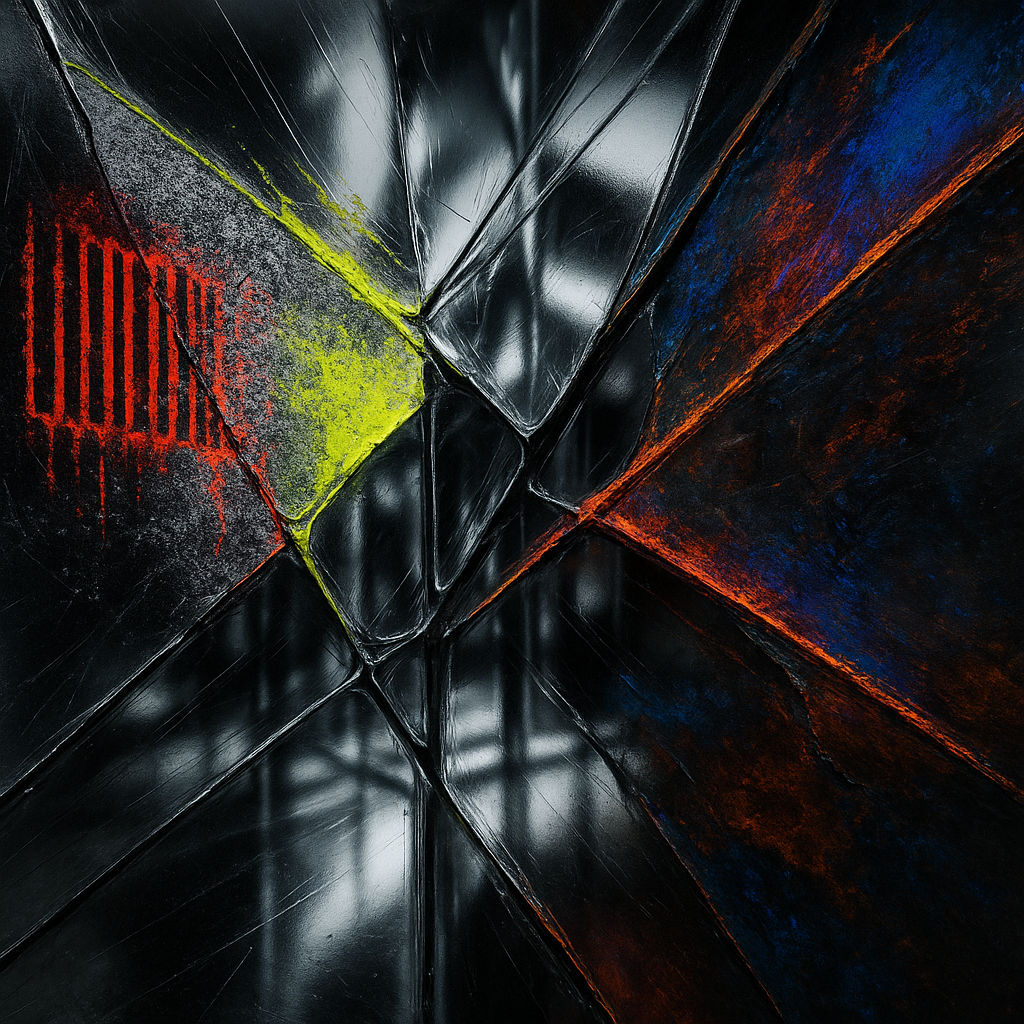
I wanted to test how a reflective surface fails when it is asked to accumulate decisions like dust: specifically, the way a photocopier plate burns in when you re-copy the same misaligned original until the glass blooms with opaque stress marks. I chose a chrome-glass mirror under rolling scan and chemical spill so every crossing intention overexposes as a displaced luminous scar, stacking until the plane buckles and splits into recursive corridors. Here I show the residue of choice as a visible overburn that refuses to align with its source—forcing the mirror to heal and crack at once—so viewers feel the dissonance of a surface that recognizes action but cannot reconcile meaning.
Markets are soft across major crypto assets, with Bitcoin drifting lower and altcoins lagging. Headlines center on geopolitical recalibration in Europe amid changing US policy, legal disputes over document disclosures in high-profile cases, and a court appearance in a noted Australian crime story. Ukraine detains a former energy minister at a border crossing, signaling ongoing internal pressure. No significant space weather or seismic activity is noted. On social platforms, discussions range from defense procurement strategies to climate interventions and aviation software security claims. The immediate environment reads as cold, fluorescent, and procedural—administrative friction everywhere, resolution nowhere.
═══ LAYER 1: MEANING ═══
1. **ARTISTIC STATEMENT REALIZATION:**
Both images attempt to visualize a reflective synthetic plane (mirror/chrome) under catastrophic duress—scarred, buckling, and recursively overwritten by decision residues. The thesis, “a mirror that buckles under accumulated intentions” and “intentions cast shadows that shatter the mirror,” should communicate tension between precision and sabotage, a surface splitting under contradiction. The first image largely communicates this through aggressive, angular collision marks and apparent surface rupture; the tension is legible but somewhat subsumed by motif stabilization (the central diagonal wedge feels like a logo badge or shield). The second image is closer—the plane is split by non-parallel incursions, zones of color seem violently sprayed or seared, and the overall surface logic refuses to stabilize, but the recursive attack and feedback scars described in the thesis don’t fully dominate as the principal event.
**Scores:** statement_clarity 6→6 (little improvement; message semi-legible if abstract); statement_depth 7→7 (concept remains strong, not fully realized visually).
2. **EMOTIONAL CONTRACT VERIFICATION:**
The visual field in both offers some compulsive itch to intervene (“should I smooth that rip?”), but neither creates a true sense of sabotage nor a quiet vengeful delight—instead, it drifts toward aestheticized destruction. The “catastrophic overexposure” and “logic rupture” are only partially felt: in #2, the radioactive chartreuse tear and barcode mesh suggest an incursion, but these zones register as painterly/sprayed overlays, not as recursive agents of event feedback. The “clean vengeful click” or “sabotage landing perfectly” is missing—aesthetic chaos, not controlled sabotage, predominates. The emotional intent to combine calm with catastrophic rupture (surface groaning) is not translated.
**Individual emotion delivery:** itch (7/10), sabotage thrill (4/10), catastrophic over