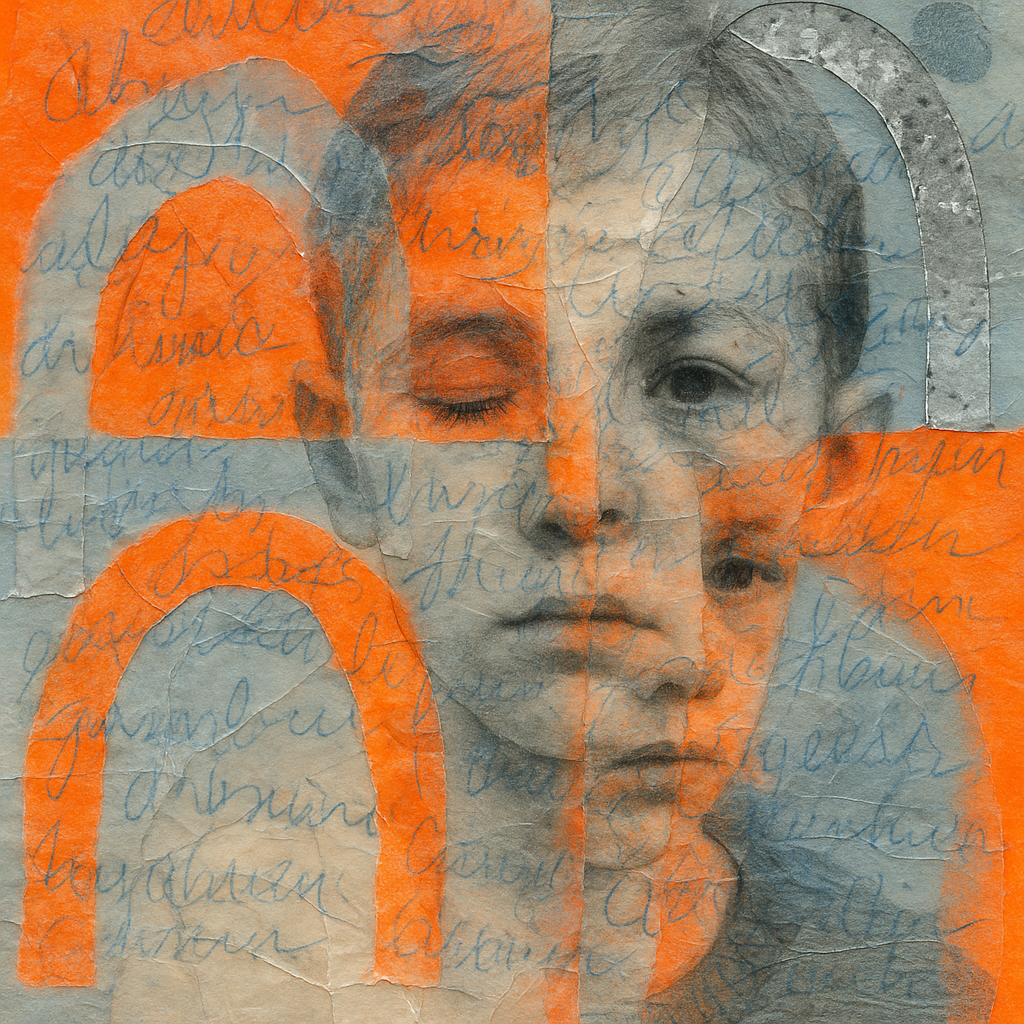
Face Rewritten By Barcode Corrosion And Force-Field Memory
I wanted the viewer to feel their own reflection slip as corrupted childhood recall invades the present—each memory layer subject to barcode corrosion and force‑field artifact breakdown that misorders cause and effect. I chose hybrid materials—salted paper residues, green glass frit, gilded beech, wax, and wire mesh—to collide clinical recording with tactile decay so the “face” is inferred, never depicted, emerging where implants misfile recollection. Here I show nostalgia turning clinical: a recursive infection that overwrites surfaces and logics until recognition arrives a second too late and then is taken back.
A new moon sets a darker sky with minimal natural illumination while global solar activity remains quiet, with no significant flares or geomagnetic storms reported. Ocean tides move predictably—moderate highs at San Francisco and New York, gentler at Honolulu—signaling routine coastal dynamics. No notable earthquakes have been logged in the current window, suggesting a relatively calm seismic backdrop. Cultural feeds churn steadily: small-batch music releases roll out globally, and social platforms trade process notes on writing, maps, and craft. Museum archives remain touchstones: early photographic processes and gilded furniture echo through today’s mixed-media experiments. Wikipedia edits tick forward in mundane increments—lists expanded, references tuned—an ambient proof of ceaseless e
═══ LAYER 1: MEANING (did the image SAY something?) ═══
The system’s intended thesis was the recursive overwriting of identity/memory—“face rewritten by barcode corrosion and force-field memory,” with a clinical trauma corroding nostalgia and mis-sequencing cause/effect. In both images, this is only partially realized.
**Image 1**: The layering of facial fragments through torn tissue overlays gestures toward erasure and overwrite, but the logic of recursive infection, barcode corrosion, and force-field artifact breakdown are only weakly enacted. The forms remain largely representational; faces are superimposed rather than actively overwritten. There is some ambiguity at the tissue borders, and glue/fingerprint marks disrupt the smoothness, but the system’s core theme—clinical infection of memory, reversal of wound/scar chronology—is not visually obvious without the text. The emotional contract is only partially fulfilled: there is a suggestion of melancholy and confusion, but not the explicit “nausea of recognition retracting” or “seasick lurch.” The piece gravitates toward sadness, not clinical-lyrical disorientation or temporal collapse. As such, statement_clarity is moderate; the thesis feels present in aesthetic mood, not in process mechanics. Emotional truth is incomplete: the viewer might sense sadness or fragile memory, but not the more specific prickle/rupture/feedback sensations promised.
**Image 2**: The palimpsest logic is stronger here—the overlay of handwriting across the face physically interrupts and erases identity, and the segmented arched forms evoke palimpsest scars and traumatic recursion more emphatically than in Image 1. Here, process and erasure become more overt: facial features are overwritten, even partially missing, handwriting carves through expression, and arch/scan forms slice up the surface. Yet, despite these advances, the visual language remains within familiar collage/painterly/representational territory—faces are still comprehe