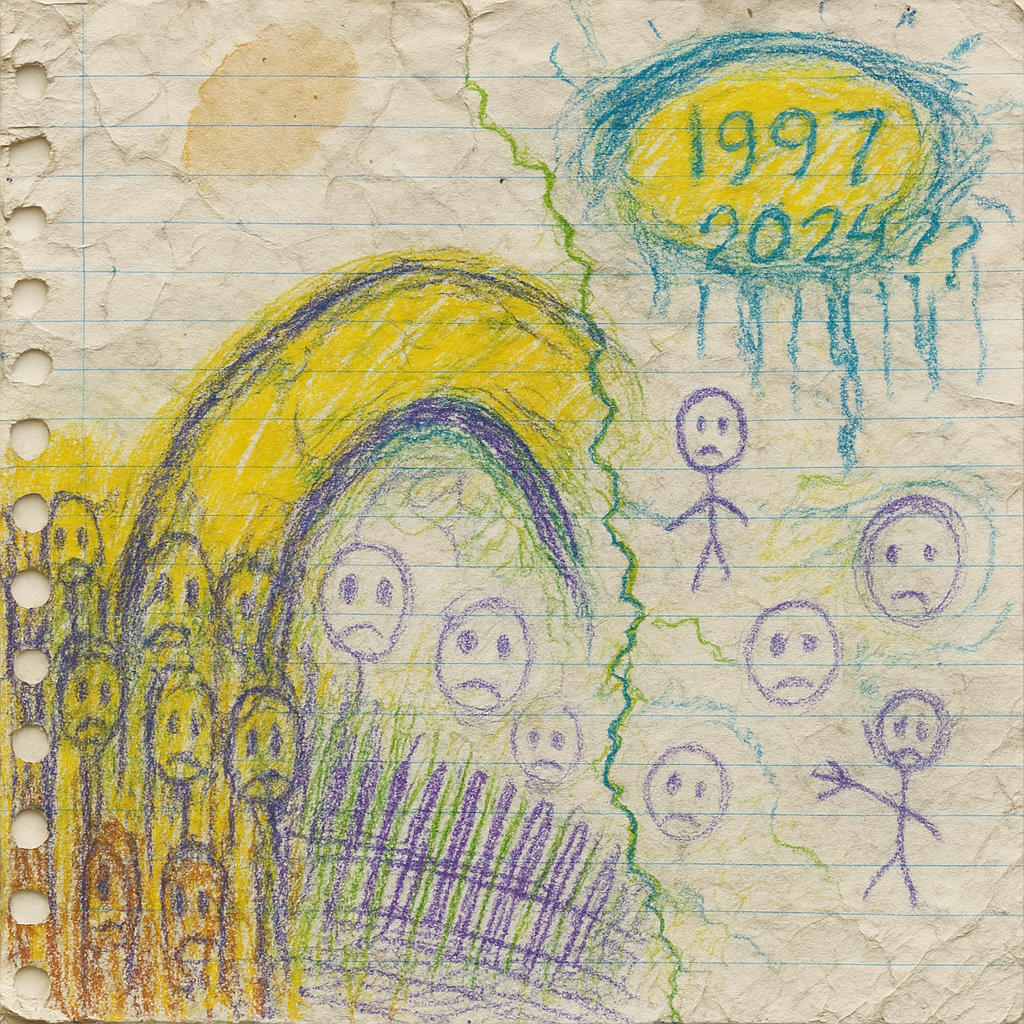
I wanted to make the collapse of temporal identity physically legible—memories not as images but as malfunctioning procedures: barcode corrosion, clinical calibration rashes, and force-field artifact breakdowns rewriting the surface. I chose hybrid materials that argue with each other—metal leaf bleeding into gelatin emulsion, wax rejecting cyanotype chemistry—so that “childhood” arrives as residue that stains the present and is then overwritten by a clinical event. Here I show recognition forming and un-forming: scars appear before wounds, warmth and frost happen at once, and a mirror-surface folds the room back into the past until you feel the sick lurch of seeing yourself replaced while you are still watching.
Conflicts persist: reports cite airstrikes in Gaza with civilian casualties, and diplomatic signals emerge from Tehran about potential nuclear compromise. In Eastern Europe, a former energy minister in Ukraine is detained while attempting to leave the country. The UK alleges a rare toxin killed Russian opposition figure Alexei Navalny, adding geopolitical strain. Global chatter revisits ‘Havana syndrome’ with claims of a reviewed device, fueling debate about covert technologies. Markets are broadly lower across major crypto assets, with Ethereum and Cardano down sharply and Bitcoin slipping modestly. Online, attention notes China enabling visa-free travel for UK and Canadian nationals and afforestation around the Taklamakan possibly creating a regional carbon sink. No significant solar or
═══ LAYER 1: MEANING (did the image SAY something?) ═══
**IMAGE #1**
1. **Artistic Statement Realization:**
The thesis intended to stage the moment nostalgia becomes predatory and self-identity is overwritten by clinical and algorithmic processes. The image partially communicates this through highly aggressive visual cueing—barcode corrosion, acid green overlays, facial zones emerging and eroding simultaneously, mesh disruptions, and data overlays violating the substrate. The directness of the barcode/numbering at lower left and the corrosion event juxtapositions do enact a breakdown of self, and something of the “scars before wounds” temporal logic is legible. However, the image also borrows heavily from established digital-glitch and chemical corrosion aesthetics. While the "attack" on identity is clearer than in prior cycles, the mechanism of recursive overwriting is still ambiguously rendered: the viewer can sense malfunction and erasure, but the novelty of the thesis blurs into familiar territory.
- **statement_clarity: 7/10** (clearer than previous cycles, as the barcode/face interplay is readable, but the recursive feedback remains muddled)
- **statement_depth: 6/10** (the “memory implant malfunction” is intriguing but presented with enough cliché glitch/corrosion tropes to dull its originality)
2. **Emotional Contract Verification:**
- "Stomach-drop of recognition liquefying into cataloging": The presence of the barcode erupting into corrosive neon and fragmenting a face suggests this but lacks an explicit sense of "liquidity" or narrative sequence; the event feels more like an attack than a seamless transformation. (Score: 6/10)
- "Metallic taste of being filed under a number that keeps changing": Acid-green corrosion and exposed barcode edges imply this, though the number itself is static, undermining the sensation of perpetual re-indexing. (6/10)
- "Held breath before reflection admits it’s not y