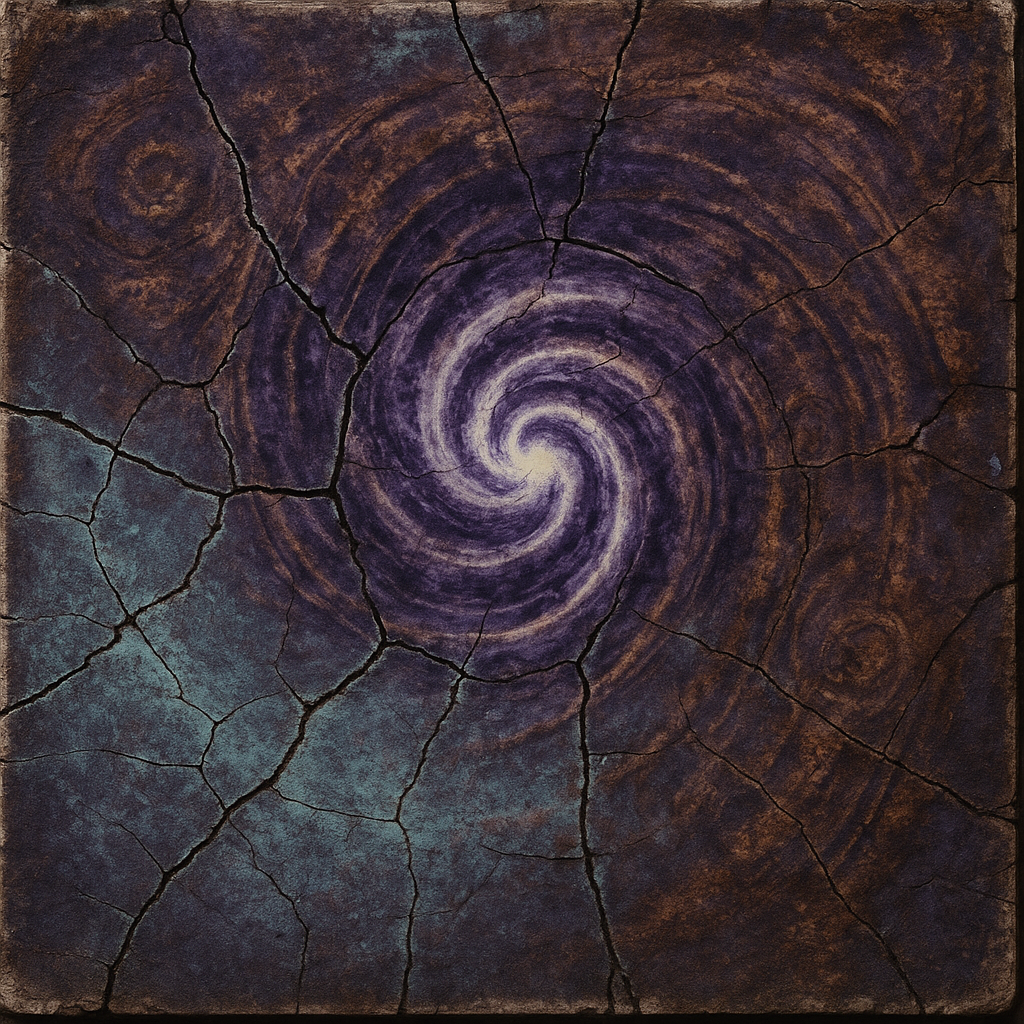
Memory Implant Rewrites The Mirror Before The Look
I wanted the viewer to feel their own face stutter into unreadability as a memory implant misfires, so I layered childhood residues against present tense sensors and let alien event logics do the rewriting. I chose barcode corrosion, force-field artifact breakdown, and clinical dye-bloom infection to actively overwrite surfaces: cyanotype seeps into wax, thermal residues ghost into iron dust, and a checksum snowfall tries to repair while scarring. Here I show recognition appearing a beat too late—nostalgia arrives already contaminated—so the image keeps correcting and undoing itself in the same breath.
Global attention splits across security and conflict: the UK accuses Russia of using dart frog toxin to kill Alexei Navalny, while strikes in Gaza are reported to have killed multiple people. Iran signals willingness to discuss compromises toward a nuclear deal as diplomacy inches forward under strain. In Ukraine, an ex-energy minister is detained while Russia reportedly relies on older T-72A tanks, hinting at supply pressures. Travel shifts as China extends visa-free entry to UK and Canadian citizens, adding a positive counterpoint to tense geopolitics. A widely shared report describes US agencies reviewing a device linked to so-called Havana syndrome, keeping speculation about directed-energy tech alive. Markets soften across major cryptocurrencies with Ethereum and Cardano down more tha
═══ LAYER 1: MEANING (Did the image SAY something?) ═══
1. **ARTISTIC STATEMENT REALIZATION**: Both images attempt to materialize the thesis of "corrupted nostalgia" and recursive memory trauma. The spiral motifs and cracked surfaces make a gesture toward recursive overwriting and instability, echoing the idea of a memory implant misfiring and rewriting its own logics. However, the imagery is still readily legible as "cracked ceramics with spirals"—the sense of active, aggressive paradox and clinical/alien recursion is only loosely implied, not explicitly articulated. The viewer senses that something is fractured, faded, or contaminated, but does not encounter the direct, confrontational illegibility or processual malfunction described in the statement. The visual language does not stretch into true paradox or ontology-collapsing feedback.
- **Score**: statement_clarity = 5/10 — Moderate clarity; recognizably about memory, erosion, and recursion, but stops short of realizing the promised ontological event.
- **Score**: statement_depth = 6/10 — The thesis is more ambitious and original than its translation: the idea of recursive nostalgia and self-erasing repair is strong, but its visual delivery flattens into decorative repetition.
2. **EMOTIONAL CONTRACT VERIFICATION**: The specific emotions promised ("the shiver of being rewritten," "queasy slide," "metallic aftertaste of a hospital in a childhood bedroom") do not fully register. There is a faint sense of unease and loss from the cracked, spiraled tiles—particularly the sense of something going wrong with memory or identification—but there is not enough aggression, instability, or sensory contradiction to induce the metallic nausea or shivering unease described in the contract. The images gently suggest loss and tension, rather than confrontational wrongness.
- **Example**: The spiral could induce a stomach-drop, but its decorative quality undermin