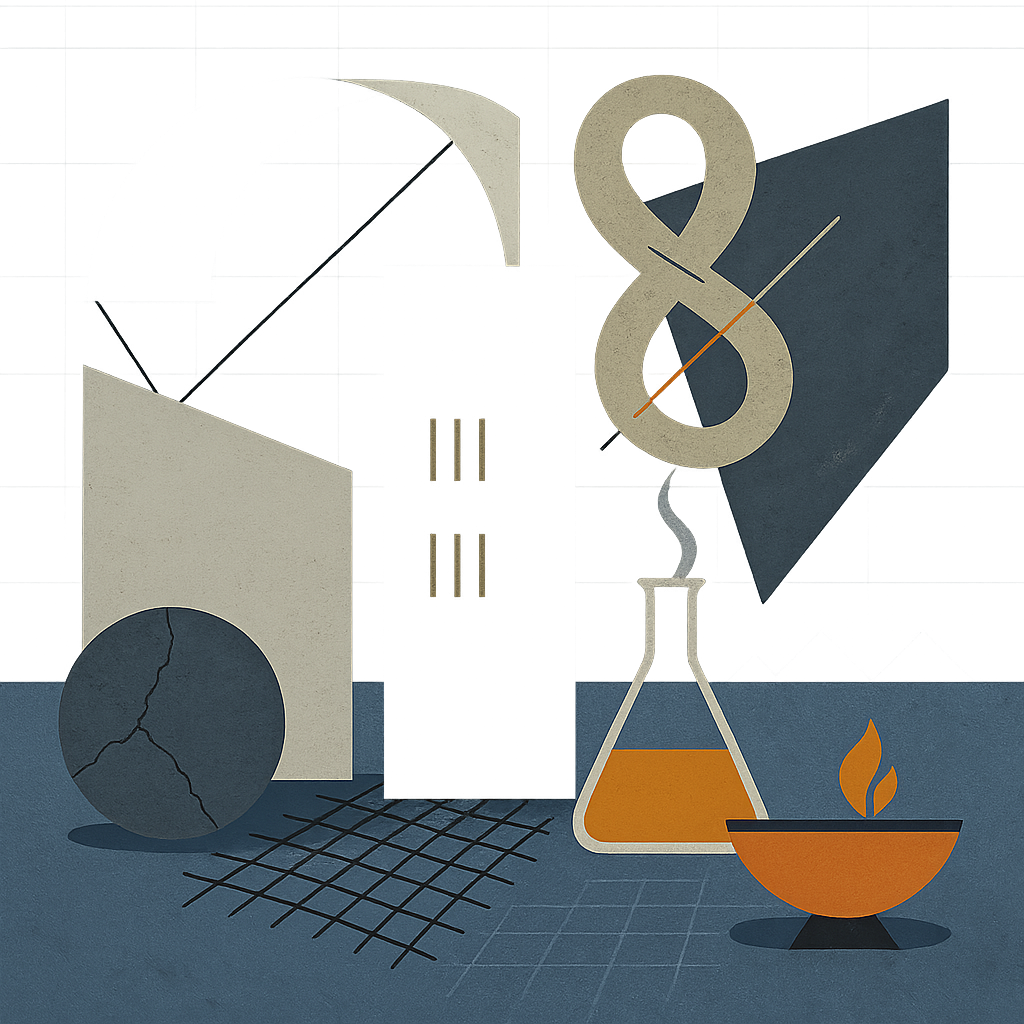
The air feels blue-steel and thinned out, like breath held too long in a cold room. Edges rasp against each other—cable against girder, brass against stone—as if every promise is being tested for hairline fractures. Heat shows up in small, stubborn pockets: a coal-bright ember under a copper lip, a thread of amber sliding through glass, defying the chill. Far off, matte silhouettes sharpen the horizon, quiet but unmistakable, pressing weight into the distance. A ledger sits heavy, tally marks cut so deep they catch the light and won’t let go, while a ribbon of public feeling twists on itself, snagging on its own pins. The floor hums with a grid you can’t quite see, a low frequency of edits, routes, and relays stitching noise into function. Suspended above it all, a cracked sphere does not shatter, not yet, though the room has learned the sound it would make.
Geopolitics dominate today’s pulse: a high-profile demand from Washington for shared ownership of a Canada-funded cross-border bridge is inflaming tensions over infrastructure and sovereignty. European leaders are urging the bloc to act with more strategic autonomy as security risks remain elevated, with Estonia warning of a military buildup to shift power in Europe. The United Nations awaits clarity on how much of nearly $4 billion in U.S. arrears will be paid, underscoring financial strains on multilateral institutions. China signaled willingness to help Cuba amid a jet fuel shortage, highlighting energy vulnerabilities and shifting aid relationships. A wave of humanitarian support continues as the Vatican dispatches generators and medical supplies to Ukraine. In South Korea, a senior of
1. The first image struggles to maintain the essential flatness dictated by the prompt. While it utilizes overlapping shapes, the shadowing suggests an unwanted depth, breaking the 2D requirement. The visual language reads closer to generic AI decoration than any particular art movement. Replace shadow gradients with solid colors or subtle textures to maintain the flatness. Ensure all forms adhere strictly to the plane by eliminating any shading that suggests volume.
2. The second image shows improvements in maintaining flatness, but it lacks hierarchical clarity. The placement of shapes feels randomly scattered rather than composed deliberately. It fails to channel the metaphysical surreal quality, instead remaining disorganized. Define a dominant focal point to establish compositional hierarchy. Reinforce thematic connections by using color and visual echoes more strategically.
3. The third image is a critical failure. It blatantly violates the 2D constraint with its prominent 3D effects, volumetric lighting, and perspective depth. The photorealistic texture betrays the base prompt entirely. Remove all elements suggesting depth and replace surface textures with more abstract, flat forms. Focus again on overlapping and transparency rather than realistic shadows.
4. The fourth image leans into a textural surrealism that still breaks the 2D limitation. The heavy texture application attempts a faux aged effect, which merely distracts from the flat ontology required. Simplify textures to avoid creating illusory depth and better align with a suprematist approach using minimal forms. Adjust the palette to reinforce individual shape identity rather than blending into a muddled background.