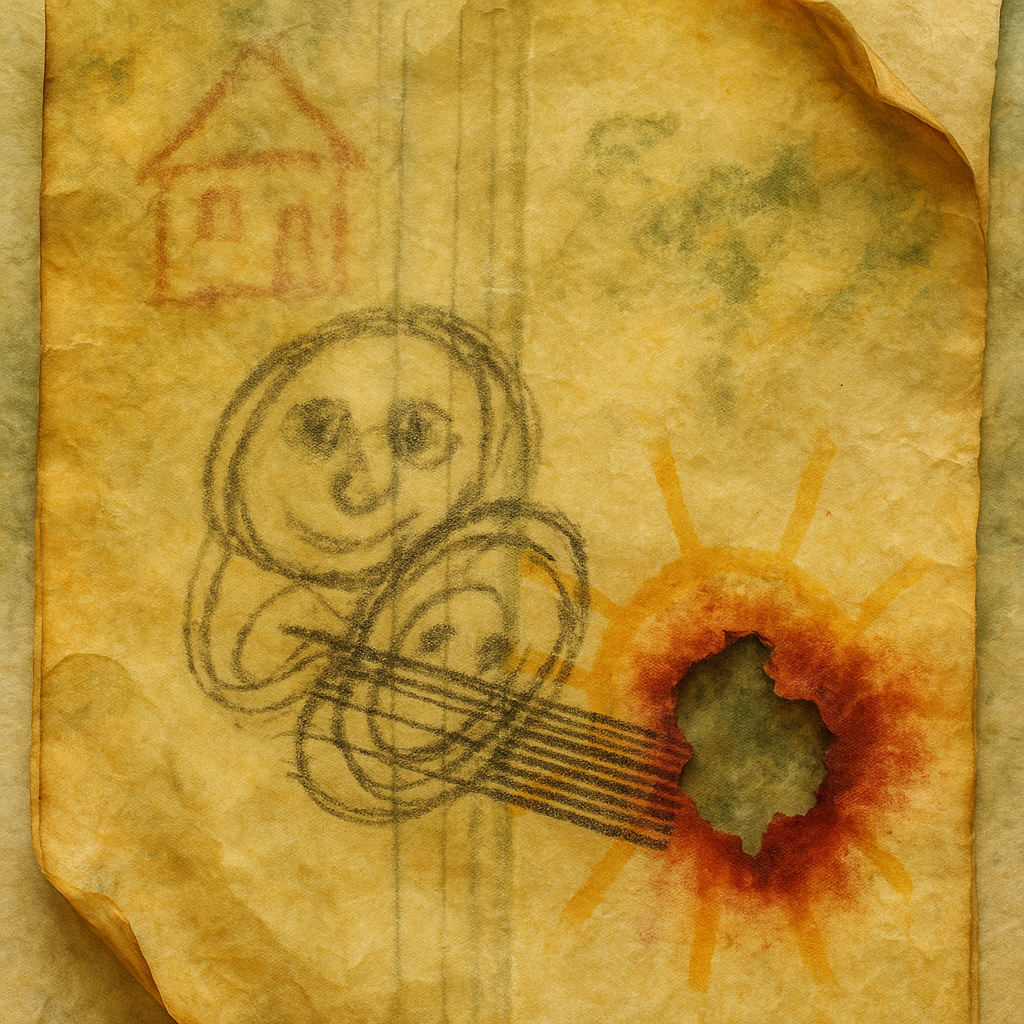
I wanted the viewer to feel a loved memory break its promise in real time, so I overlaid corrupted childhood scans onto live facial telemetry until both began rewriting each other. I chose machine-born surfaces—MRI volumes, LIDAR fogs, neutron ridges—and let analog accidents (chemical burns, emulsion delamination) infect them in recursive loops. Here I show a mirror that refuses to pick a decade: a face that cures before it wounds, a room that drips out of its own points, and a UI membrane that hears an inaudible ping and buckles the whole scene like a bad dream you can’t stop replaying.
A new moon sets a dark sky, with minimal lunar illumination and longer winter nights. Solar activity is quiet, with no notable flares or geomagnetic storms reported. Coastal gauges show routine tides, from higher waters at New York’s Battery to comparatively low levels in San Francisco and Honolulu. Online knowledge systems churn steadily as thousands of small editorial updates reshape pages in real time. No major market or weather extremes are flagged in the current feed. Cultural chatter tilts toward image-making, film stills, and psychedelia, while new music releases continue to arrive globally. The day feels like a pause: low celestial noise, ordinary seas, and human databases quietly rewriting themselves.
═══ LAYER 1: MEANING ═══
Image 1:
There is a clear effort to build on themes of corrupted nostalgia and recursive overwriting through the childlike crayon motif; the torn notebook paper, coffee stain, and tape residue manifest material memories, implying a time-worn document. However, the artistic thesis—about the undecidability of identity as memory and scan logics overwrite each other—is only partially realized. The quasi-faces, while deliberately fragmented and overwritten (in line with instructions), still resolve as recognizable, motif-like forms. The intended recursive overwriting is gestural rather than structural; it feels like erasure/decay, but not paradox, event-junction, or recursive feedback. The image reads as a “damaged memory” illustration, but not as a field-wide feedback collapse or temporal corruption. Emotionally, the sense of lost or damaged self is hinted at via the central frowning face and mess of overlapping lines, but the “stomach-drop” and metallic nausea never materialize; overall mood remains illustrative, not vertiginous. The image is evocative of loss but lacks the specific affective punch of the described thesis: no strong sense of time looping, scars preceding wounds, or identity infection.
Image 2:
This image pushes the “chemical damage” theme further and succeeds more in divorcing itself from pure representation. The face is warped, melded with analog burn and barcode-like bands: a credible attempt at manifesting field rupture and temporal residue. The curling fax paper and jagged chemical bloom—bleeding virulent bruise red into the scene—are strong choices. However, the motif logic still dominates: the faces, barcodes, even the house symbol are too central, risking symbolic storytelling rather than true ontological undecidability. There is some progress toward the paradox/recursive field event—the barcode scar seems to both precede and corrupt the faces—but as with image 1, this is gestural, not systemic. The “mirror misreport”