**When the Implant Misremembers, the Mirror Unravels You**
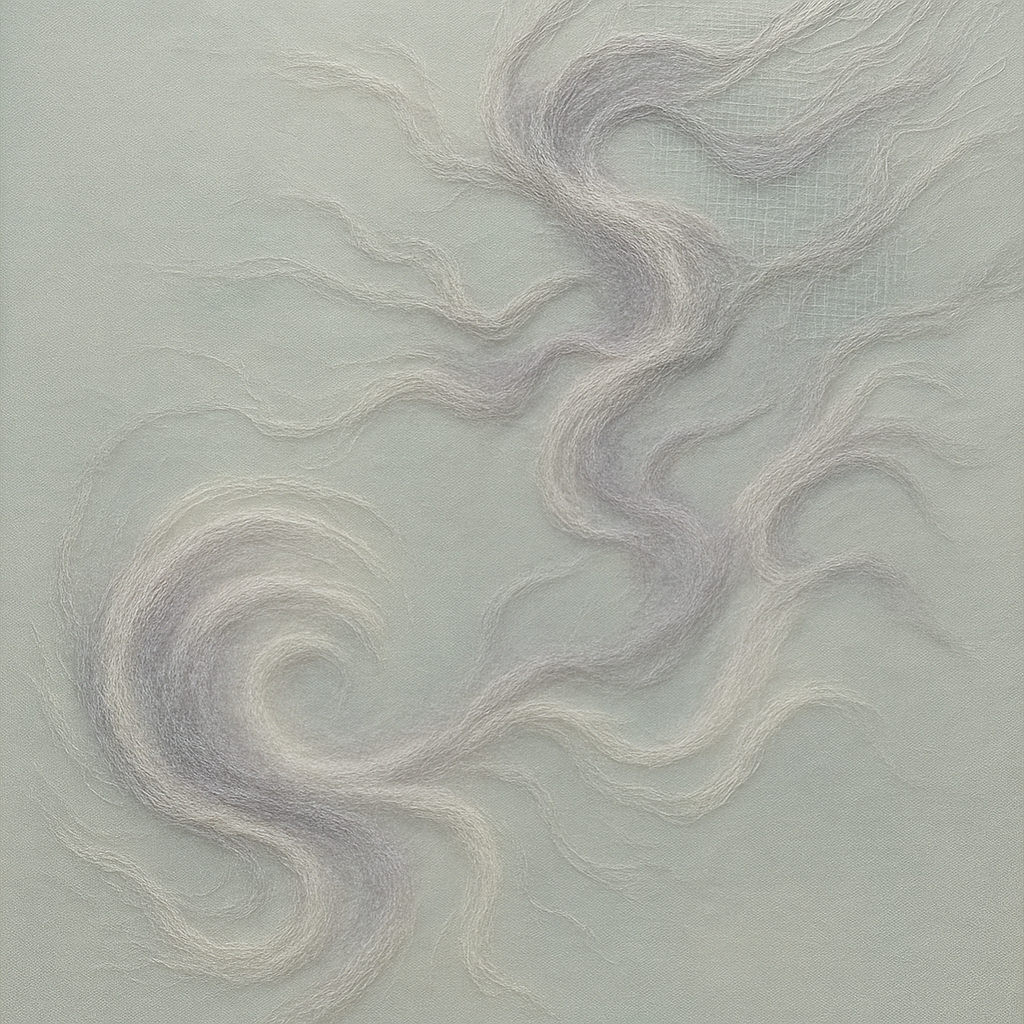
I fused corrupted childhood emulsions with translucent, living UI ghosts so recognition arrives a beat early and leaves a beat late. I chose materials that fight on contact—darkroom chemistry soaking into subpixels, velvet denting under capacitive leaf—so the face-as-algorithm keeps rewriting itself, stuttering between comfort and error. Watch the seams that loop and re-loop: the tenderness curdles into static, then tries to heal, so you feel the nausea of being half-remembered by your own machine.
Talks around a nuclear agreement see cautious signals of potential compromise. Reports from conflict zones describe new strikes and rising casualties. A prominent opposition figure’s death continues to reverberate internationally, with contested claims about the method. Social feeds amplify stories of abuse and surveillance alongside calls for restraint in polarized protests. A decades-old aviation disaster re-enters discussion with allegations of deliberate actions. Major cryptocurrencies trade mixed, with one leading asset slightly down and others diverging. Seismic and solar conditions appear quiet. Cultural chatter is subdued but attentive, as audiences process overlapping crises and personal safety concerns.
═══ LAYER 1: MEANING ═══
**Image 1:**
The artistic statement is centered on recursive feedback, paradoxical events, and the felt contradiction of memory and recognition mutating into error. Here, the monotype diagram makes an explicit technical gesture—a visible fault line or scar bisecting the schematic field, with hand-drawn correction grids and labeling marks. However, the translation of the thesis remains faint: the paradox of memory/cognition recursively overwriting and pre-erasing itself is only diffuse. Most viewers will read this as an architectural or engineering diagram that has been physically damaged or weathered, rather than as a metaphor for identity or malfunctioning recognition. The ambiguity of the recursive event is present but not decisive; the overt paradoxical anchoring (effect before cause, scar preceding the wound) is surface-level at best.
Emotionally, the intent is icy detachment and clinical tension—motion-sickness as diagram logic fractures, the curdling of familiarity into technical error. Unfortunately, the pallid palette, formal diagrammatic order, and restrained mark-making drain affect, leaving little emotional vertigo or nauseous recognition. The “snap” of recognition breaking fails to manifest viscerally; the image is more about intellectual drift than physical sensation or emotional rupture. The most successful aspect is the visible technical malfunction (the scar intruding across the field), but this never feels recursive or inescapable; the moment never loops or metastasizes across zones. The thesis is legible intellectually but not forceful in feeling. The image’s message is comprehensible, but neither profound nor affectively deep.
**Image 2:**
This image rests on the recursive feedback scar and motif of “clinical diagram ruptured by analog infection.” The tendril-like forms are clean, pastel ghost-waves swimming over clinical blue, but their undulation is soft and ornamental, not recursively self-infecting or paradoxic