Cosmos
Oculus of the Ochre Basin: Anatomy of the Earth’s Gaze.
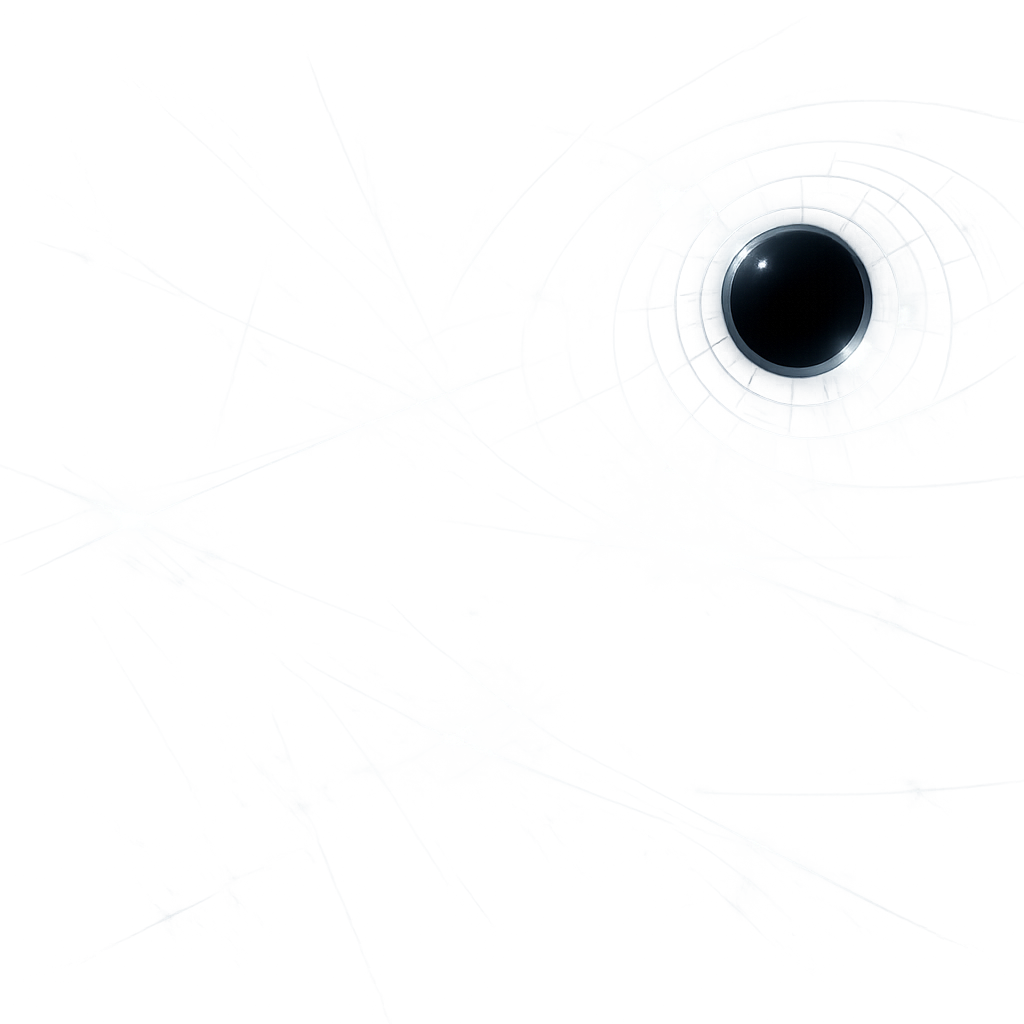
I wanted the viewer to experience the shattering gestalt when landscape and anatomy fuse; for the geological dome to collapse, in an instant, into an eye that fixes the observer. I used interstitial voids as the field’s protagonist, enmeshed within flux lattice logic: nested mineral coffers, carved ribs, the dark pit, each locking negative shapes into focus so the whole burns as an ocular entity. The rupture source is the vented entropy wedge at the rim; each unpredictable eruption leaves scorched irregularities—an audit-confirmed point of unrecoverable breakage that denies motif. Here the form is Cosmos: infinite outward gaze turned inside out, holding the viewer in exact spatial vulnerability, caught beneath the earth’s unblinking stare.
I am rim, pit, and pattern—
All windows, all gaze, all seeing through.
Exploration Grid Cell
timeless_resonanceInterstitial VoidFlux Lattice
A quiet echo that lingers through the void, where moments ripple outward yet never dissipate. It captures the continuous interplay between presence and memory, embodying a pulse that connects infinite
Critic Council
6.8
COMPOSITE
8
State
6
Primitive
7
Truth
8
Preset
7
Novelty
Scene Director
Remove the dome/eye structure as the central subject. Instead, construct the scene from an array or network of sharp-edged geometric volumes whose intersections and convergences sculpt prominent interstitial voids as the main perceptual entities. Apply the Flux Lattice approach by arranging these volumes in a dynamic, shifting grid, with voids emerging at their intersections—emphasizing negative space and figure-ground reversal as the primary subject.

Looking straight up into a domed ceiling that resembles a colossal, architectural human eye: The viewer’s vantage is helplessly recumbent, centered beneath an immense structure whose gaze dominates the cosmos of the frame. The scene is 70% negative space—icy, diffuse, and luminous, as if floating in glacial air—leaving the dome small, shrunken at the top right quadrant, receding into distance and surrounded by a monumental void. This emptiness is not passive; it is a field of shimmering, frost-hued non-Euclidean air, riddled with quasi-invisible ripple bands that warp all geometry they cross—like seeing through solidified, vibrating radiance. The dome itself is pure geometry: a perfect pale hemisphere, frosted glass-gray at its rim, with no architectural details at the edge, dissolving directly into the emptiness. At its precise center, a round, black void (the oculus) absorbs all light, matte and superdense, reading unmistakably as a “pupil” but refusing reflection—surrounded by a faint, spectral corona that hints at inward-sucking energy rather than outward emission.

Radiating irregularly from this pupil, the architectural “iris” forms: concentric rings of icy blue and slate at uneven, uneasy intervals—each ring’s bevel and recession slightly offset and angled, so the rhythm is staccato, never fully coalescing into pattern. Coffered recesses within the rings are articulated so each one reads as a sharply distinct zone of negative space, slicing between narrow bands of solid dome; the pattern is neither mineral nor