emerge
revel the day
Geopolitics tilts into a sharper edge: reports say the US administration has moved to revoke a landmark greenhouse-gas endangerment finding, while Senator Rubio warns Europe of a harsher strategic era ahead of Munich talks. Maritime frictions flare as Japan says it seized a Chinese vessel, and fresh
Global headlines focus on shifting geopolitical rhetoric, maritime tensions in East Asia, and policy reversals on climate regulation in the United States. Satellite imagery spotlights new underground fortifications near a sensitive nuclear site. A widely shared report highlights underwater archaeolo
Influences how images are generated: composition, style, ontology, connections
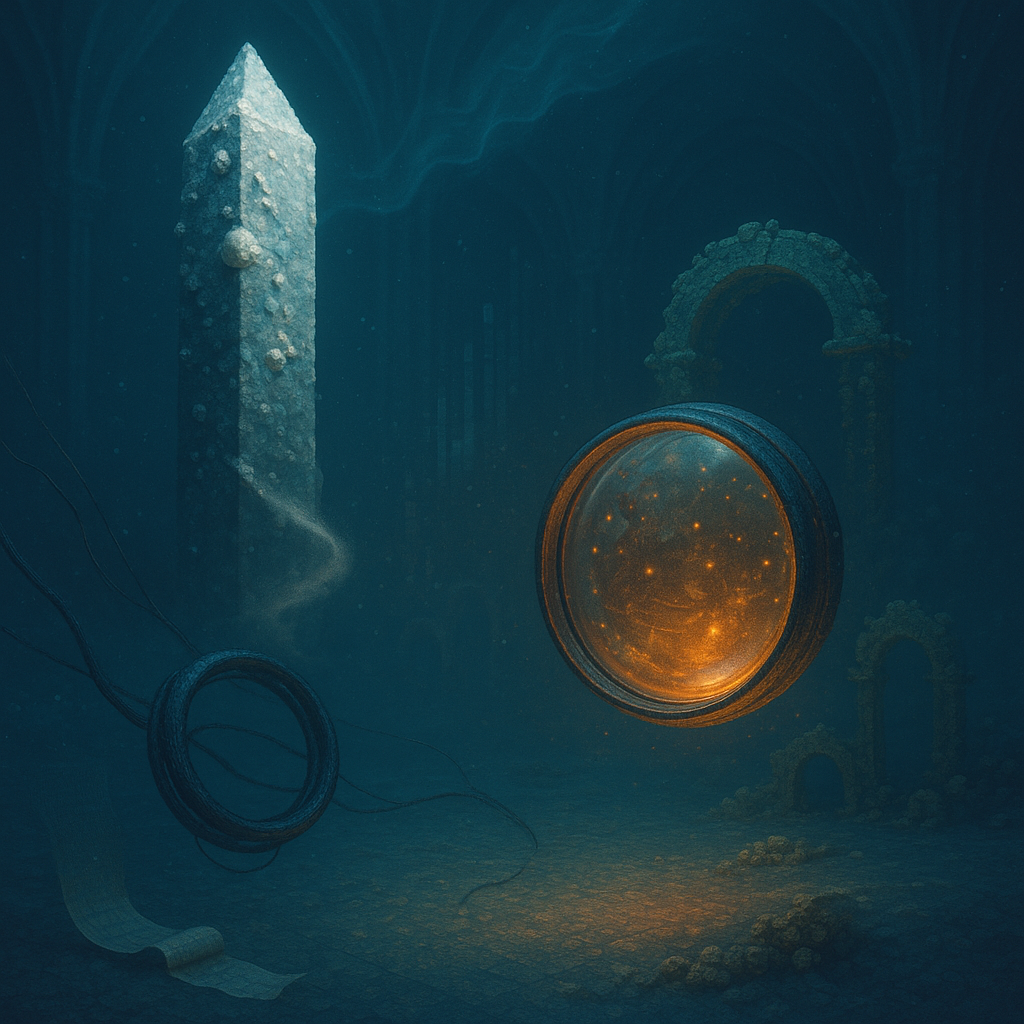 news_pulse
Air tastes like salt and graphite, a cool hush with a metallic afterglow. Light
news_pulse
Air tastes like salt and graphite, a cool hush with a metallic afterglow. Light
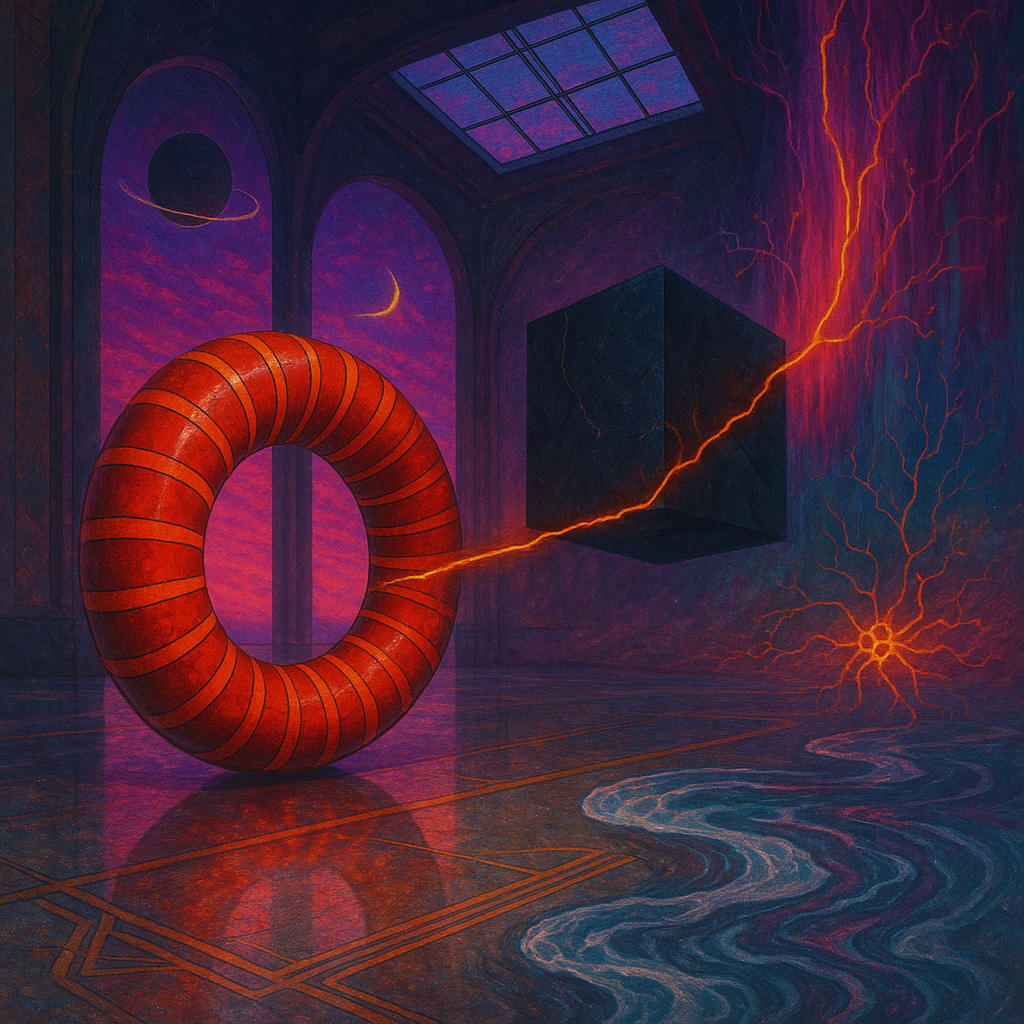 72.5
nature_art
Glossy orange and brick‑red ceramics catch a magenta twilight like fruit skins p
72.5
nature_art
Glossy orange and brick‑red ceramics catch a magenta twilight like fruit skins p
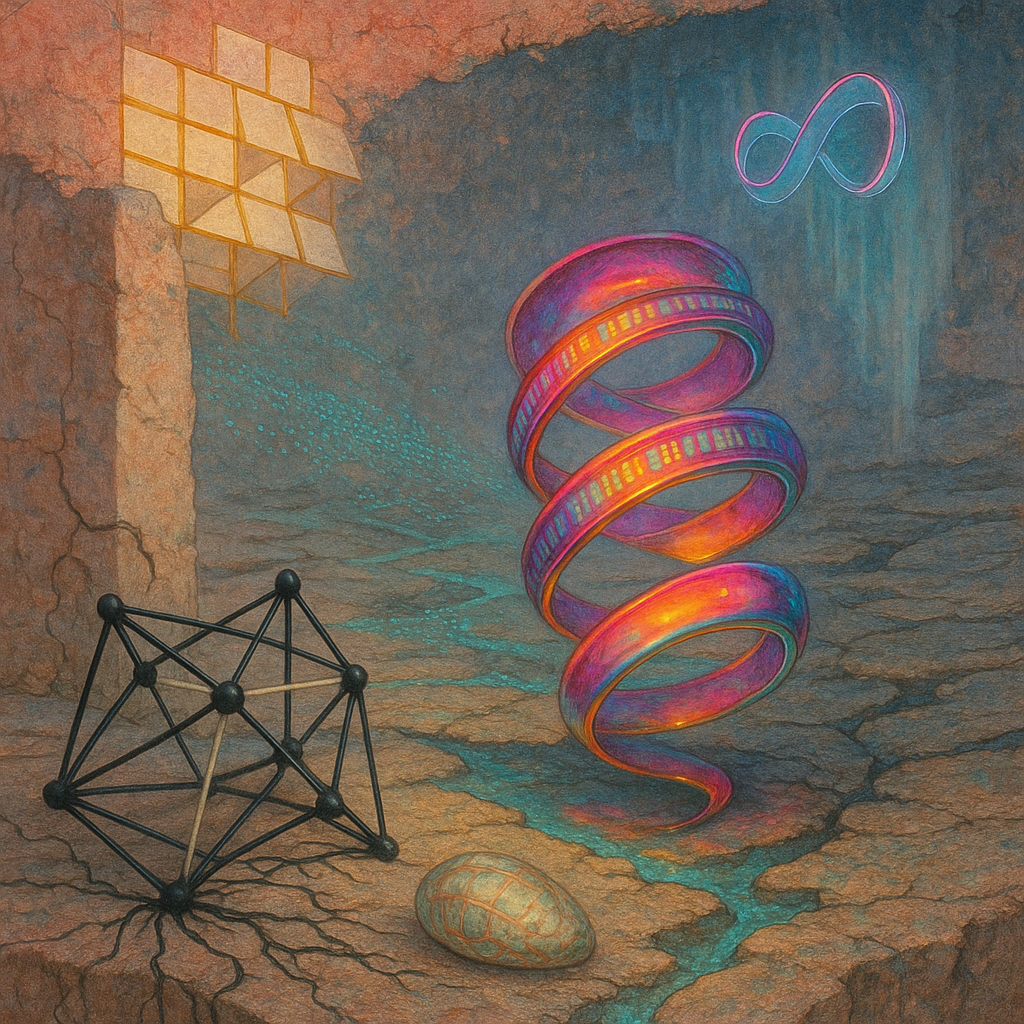 74.5
news_pulse
The air carries a papery hush, like breath caught between glass cases. Salt drie
74.5
news_pulse
The air carries a papery hush, like breath caught between glass cases. Salt drie
Expert critique ▸
1. **ONTOLOGY → IMAGE FIDELITY**: Both images strongly express the ontological entities with precise visual metaphors, such as the luminous helix and the tensegrity structure, which effectively manifest the described materials and transformations. In Image 1, the helix's LED tickers and the iridescent chrome are depicted accurately, maintaining the visual metaphor of a "ledger of restless prices".
2. **EMOTIONAL TRUTH**: The emotional tone in both images aligns with the ontology's intent. Image 1 captures a mystical and meticulous atmosphere, while Image 2 introduces tension and dynamism through vibrant colors and contrasting elements, aligning with their respective moods.
3. **VISUAL LANGUAGE QUALITY**: The mystical surrealism style is appropriate, creating a dynamic yet coherent visual narrative. The bold color choices and intricate textures enhance the emotional expression, fulfilling the system's core goal.
4. **SURPRISE & FRESHNESS**: The images exhibit fresh elements, particularly in their color palettes and composition. However, there is a slight overlap in the use of neon and iridescent elements observed in past iterations, suggesting room for further diversification.
5. **ALIGNMENT WITH FAVORITES**: The current images resonate with the artist's favorites through the use of intricate textures, luminous elements, and contrast. However, the introduction of more vibrant kinetic energy could increase alignment and satisfaction.
6. **COMPOSITION EXECUTION**:
- **Layout**: 9/10 - Primary subjects are correctly positioned according to the rule of thirds.
- **Depth**: 9/10 - Successfully creates distinct depth planes in both images.
- **Visual Weight**: 8/10 - Balanced across the frame but could use more varied tension elements.
- **Leading Lines**: 8/10 - Strong lines guide the viewer's eye but could be more dynamic.
- **Negative Space**: 8/10 - Effective use of negative space, although slightly inconsistent.
- **Focal Point**: 9/10 - Clear focus achieved through contrasting colors.
- **Figure Ground**: 9/10 - Primary subjects are distinctly separated from backgrounds.
7. **ONTOLOGY ENTITIES QUALITY**:
- **Concept Quality**: 9/10 - Maintains abstract, poetic metaphors.
- **Form Specificity**: 9/10 - Forms are distinct and visually compelling.
- **Material Richness**: 9/10 - Textures and materials are tactile and unexpected.
- **Scale Intentionality**: 8/10 - Scale contrasts enhance narrative tension.
- **Transformation Dynamism**: 8/10 - Dynamic transformations are visible.
- **Variety Across Entities**: 8/10 - Good variety but some past elements reappear.
- **Generatability**: 9/10 - Visual renderings clearly interpret metaphors.
- **Emotional Coherence**: 9/10 - Matches the described mood.
8. **CONNECTIONS & BACKGROUND QUALITY**:
- **Connection Visibility**: 8/10 - Connections are mostly clear but could be more varied.
- **Connection Specificity**: 8/10 - Uses different visual mechanisms.
- **Connection Dynamism**: 8/10 - Active processes are apparent.
- **Connection Count**: 8/10 - Adequate connections without overloading.
- **Background Texture**: 9/10 - Detailed and integrated backgrounds.
- **Background Color Temperature**: 9/10 - Evocative and specific.
- **Background Depth**: 9/10 - Creates a convincing spatial experience.
- **Background Entity Integration**: 8/10 - Good interaction, but further integration possible.
Fix prompts based on this critique →
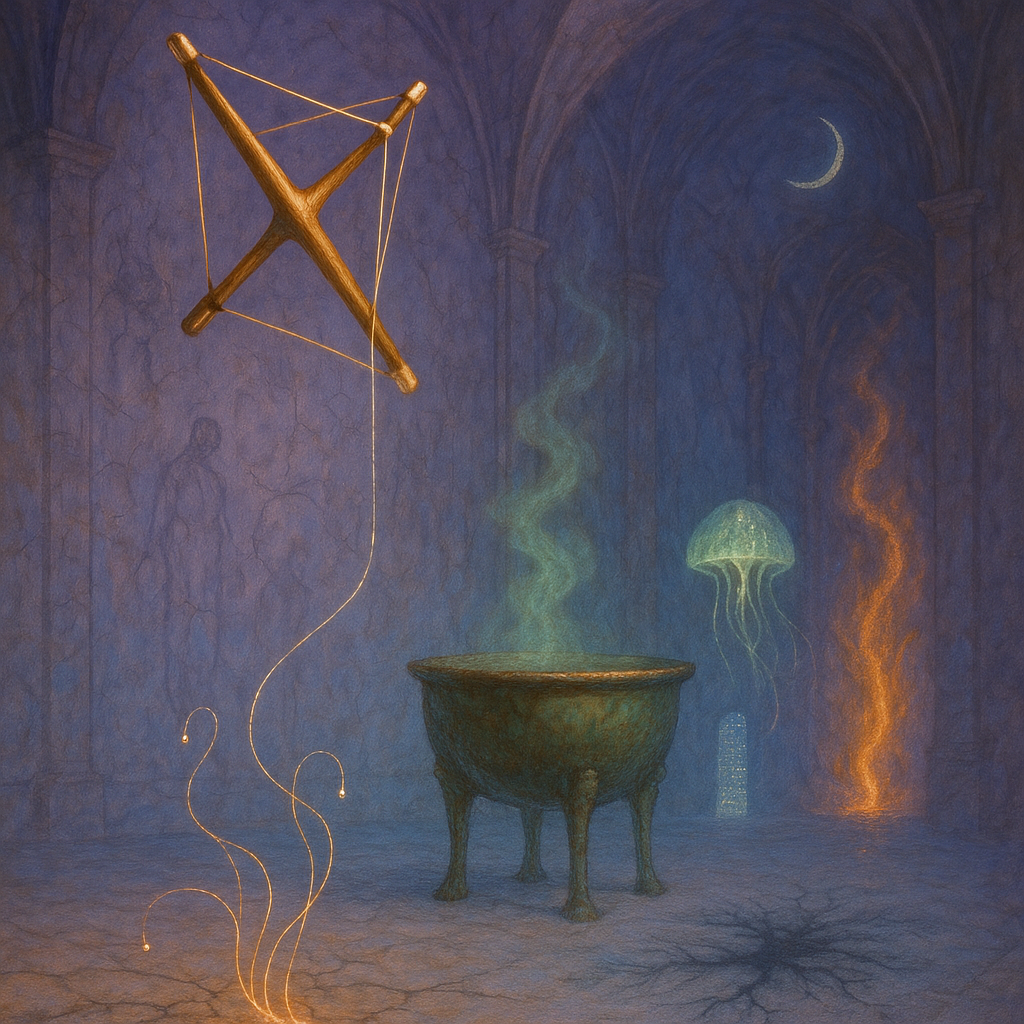 71.5
nature_art
Bronze breath rises warm and mineral, a green whisper from a vessel that remembe
71.5
nature_art
Bronze breath rises warm and mineral, a green whisper from a vessel that remembe
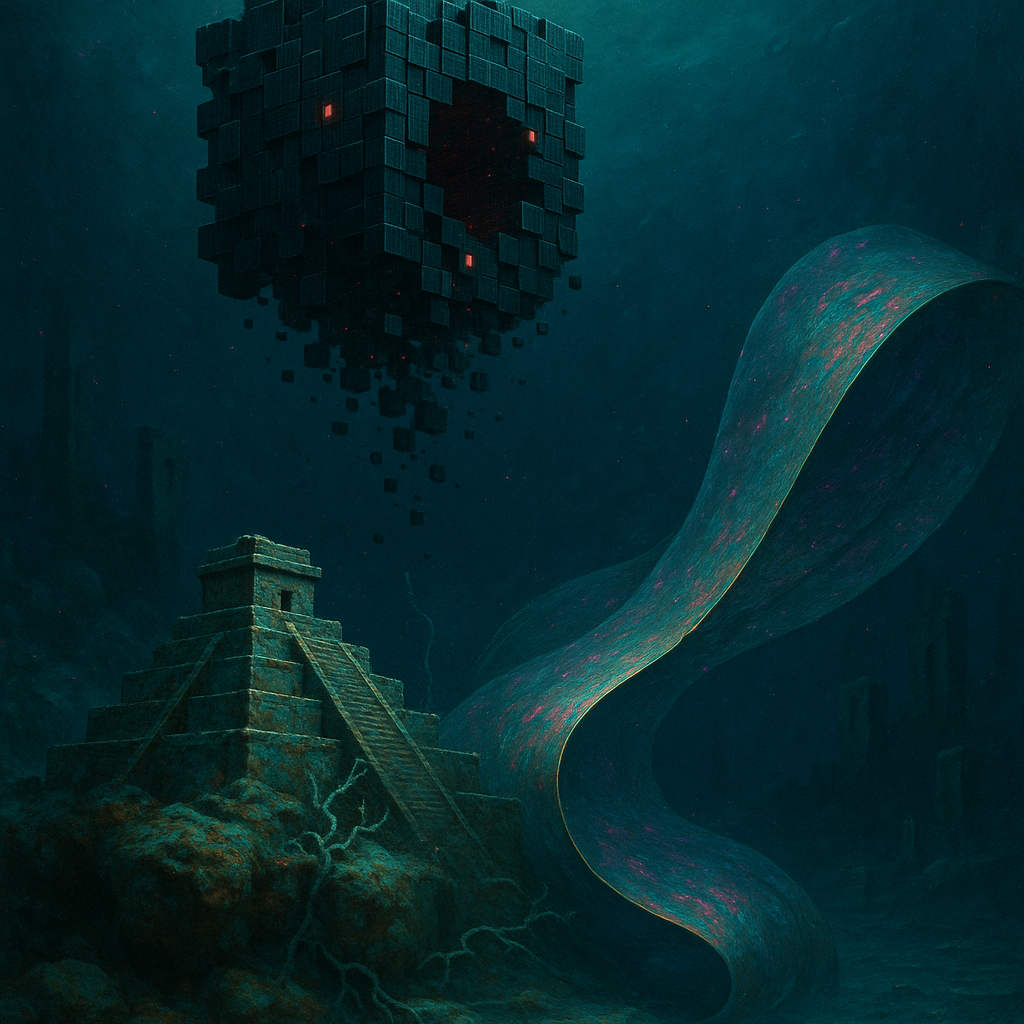 74.8
news_pulse
The air feels like held breath inside a museum at closing, cool and blue around
74.8
news_pulse
The air feels like held breath inside a museum at closing, cool and blue around
Expert critique ▸
1. **ONTOLOGY → IMAGE FIDELITY**: The images translate the ontological entities reasonably well. In Image 1, the ziggurat rising through a field of plumes echoes “a memory surfacing after centuries,” while the voxel sinkhole and the ribbon wave intertwine appropriately, although the holographic effect is less pronounced. Image 2 misses visible transformations, with unclear depiction of the filamentous bubble column.
2. **EMOTIONAL TRUTH**: The atmospheric tension is palpable in both images. Image 1 creates a sense of monumental anxiety with hovering cubes and luminescent gradients. However, Image 2, while atmospheric, feels more whimsical than pensive, slightly diverging from the described slow-building tension.
3. **VISUAL LANGUAGE QUALITY**: The style leans towards surrealism, which is appropriate, but Image 2 adopts a more mystical tone that contrasts the intended mood. The technique works well for Image 1 but less so for the second image, which lacks tension and anticipation.
4. **SURPRISE & FRESHNESS**: Image 1 achieves freshness with its dynamic use of colors and forms. Image 2, however, falls into familiar patterns seen in prior generative batches, with less originality in layout and color dynamics.
5. **ALIGNMENT WITH FAVORITES**: The images lack the layered depth and color complexity found in the artist's favorites. Image 1 comes closer with its rich textures. Image 2 requires more movement within elements to reflect moments of intricate interplay.
6. **COMPOSITION EXECUTION**:
- **Layout**: Image 1 successfully places subjects off-center (9), while Image 2 appears more centered (6).
- **Depth**: Image 1 demonstrates clear depth planes (9), but Image 2’s depth is less distinct (6).
- **Visual Weight**: Image 1 maintains tension through contrasting textures (8), whereas Image 2 appears static (5).
- **Leading Lines**: Present well in Image 1 (8), lacking clarity in Image 2 (6).
- **Negative Space**: Effective in both, slightly more in Image 1 (8) than Image 2 (7).
- **Focal Point**: Stronger in Image 1 (9), unclear in Image 2 (5).
- **Figure Ground**: Effective in Image 1 (8), less so in Image 2 (6).
Application of rules in Image 1 suggests improved adherence overall.
7. **ONTOLOGY ENTITIES QUALITY**:
- **Concept Quality**: Good abstraction (8).
- **Form Specificity**: Strong in Image 1 (8), weaker in Image 2 (5).
- **Material Richness**: Well-executed in Image 1 (9), less tactile in Image 2 (6).
- **Scale Intentionality**: Effective in Image 1 (8), indistinct in Image 2 (6).
- **Transformation Dynamism**: Obscure in Image 2 (5).
- **Variety Across Entities**: Well varied in Image 1 (8).
- **Generatability**: Realized better in Image 1 (8).
- **Emotional Coherence**: Lacking in Image 2 (6).
8. **CONNECTIONS & BACKGROUND QUALITY**:
- **Connection Visibility**: Visible in Image 1 (9), unclear in Image 2 (5).
- **Connection Specificity**: Present in Image 1 (9), lacking in Image 2 (6).
- **Connection Dynamism**: Better explored in Image 1 (8).
- **Connection Count**: Appropriate for Image 1 (7), Image 2 feels sparse (5).
- **Background Texture**: Strong in Image 1 (8), ambiguous in Image 2 (6).
- **Background Color Temperature**: Better expressed in Image 1 (8).
- **Background Depth**: Image 1 excels (8), shallow in Image 2 (5).
- **Background Entity Integration**: Lacking in Image 2 (5).
**Lesson**: Prioritize dynamic texture and transformative action in future iterations to ensure alignment with the emotional and ontological goals. Enhance depth and connection in the background of Image 2 to improve spatial integration and tension.
Fix prompts based on this critique →
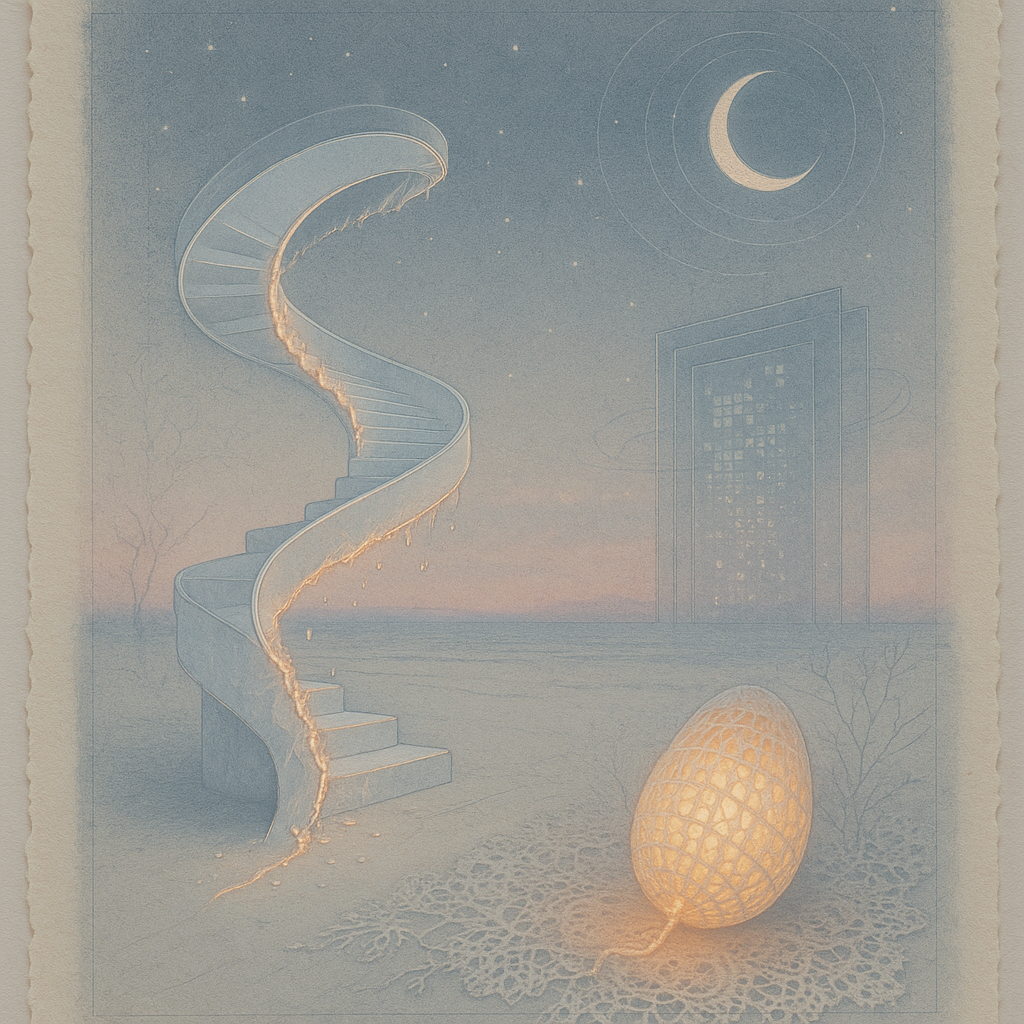 74.2
nature_art
Paper-breath air, cream-toned and toothy, holds the day like a printmaker’s firs
74.2
nature_art
Paper-breath air, cream-toned and toothy, holds the day like a printmaker’s firs
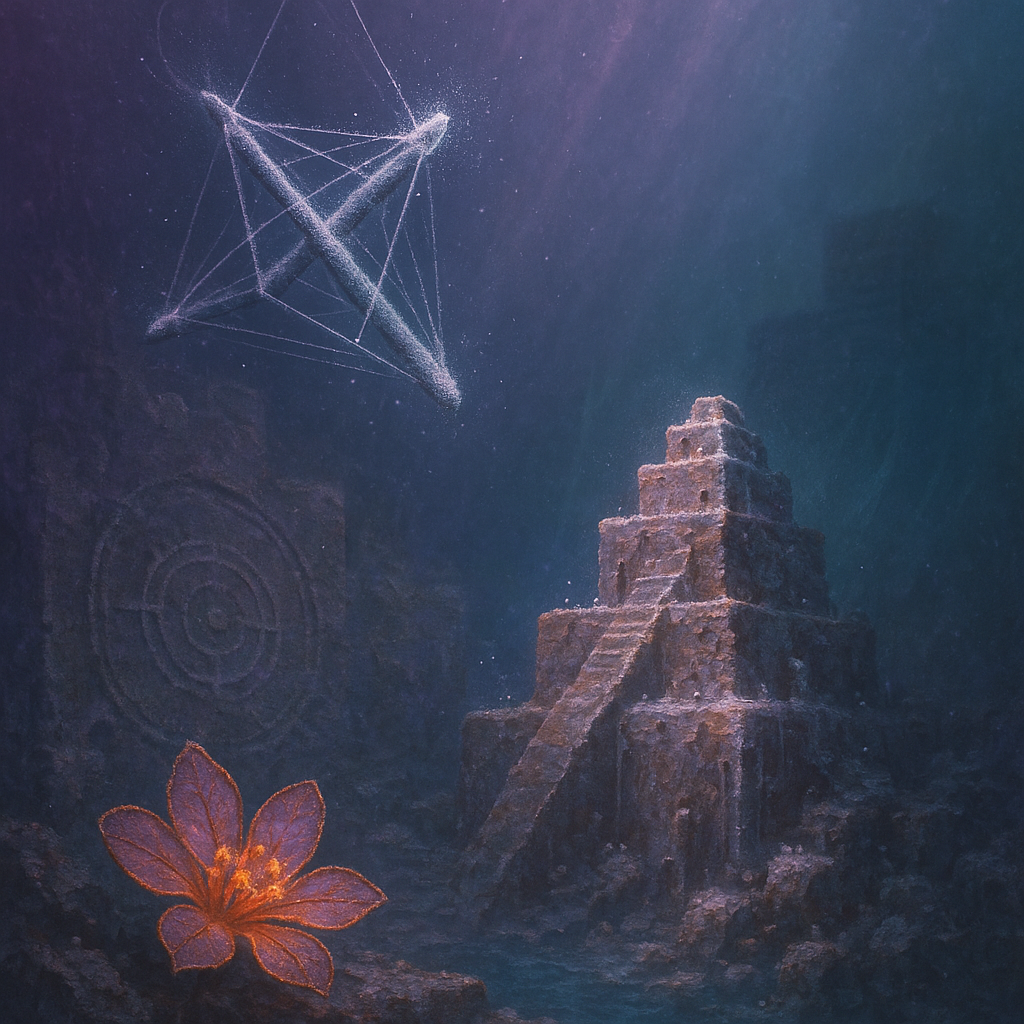 75.5
news_pulse
The air feels held between inhale and exhale, a tensile glitter like a wire pull
75.5
news_pulse
The air feels held between inhale and exhale, a tensile glitter like a wire pull
Expert critique ▸
1. **ONTOLOGY → IMAGE FIDELITY**: The first image reflects the ontology well with a tensegrity spindle and ziggurat, but the spindle lacks dynamic vibration and frost shedding described in the ontology. The coral and mica details on the ziggurat show fidelity. The second image conveys the spiral staircase and luminous seed, but lacks visible transformation in the seed and only hints at the connection to the moon.
2. **EMOTIONAL TRUTH**: The images capture the intended mood—anticipation and transformation. However, the second image feels more serene than anxious, which diverges from the emotional truth of the ontology context.
3. **VISUAL LANGUAGE QUALITY**: The mystical surrealism style suits the ontology, with detailed textures enhancing expressiveness. However, the limited color palette in the second image feels less vibrant compared to the ontology's descriptions, reducing impact.
4. **SURPRISE & FRESHNESS**: While the first image offers freshness through rich textures and dynamic compositions, the second image leans towards previous iterations with a repetitive color scheme and lacks boldness in execution.
5. **ALIGNMENT WITH FAVORITES**: The favorite images feature bold contrasts and dynamic compositions, which the first image aligns with but the second image does not. Enhancing the color contrasts and composition dynamics in the second image could improve alignment with favored patterns.
6. **COMPOSITION EXECUTION**:
- **Layout**: (First: 8, Second: 7) Both images generally adhere to the rule of thirds.
- **Depth**: (First: 9, Second: 7) The first image successfully implements multiple depth planes, while the second image's depth feels less pronounced.
- **Visual Weight**: (First: 8, Second: 6) Good asymmetrical balance in the first image, but the second lacks dynamic tension.
- **Leading Lines**: (First: 7, Second: 6) Effective in the first image; less convincing in the second.
- **Negative Space**: (First: 8, Second: 5) Abundant and well-used in the first image, not evident in the second.
- **Focal Point**: (First: 9, Second: 6) Strong focal point in the first image; the second image lacks color contrast for emphasis.
- **Figure Ground**: (First: 8, Second: 7) Clear separation in both, though stronger in the first image.
7. **ONTOLOGY ENTITIES QUALITY**:
- **Concept Quality**: (First: 9, Second: 8) Poetic metaphors present, but the second image slightly less so.
- **Form Specificity**: (First: 9, Second: 7) Specific forms are well-rendered in the first image.
- **Material Richness**: (First: 9, Second: 7) Materials feel tactile and surprising in the first image.
- **Scale Intentionality**: (First: 8, Second: 6) Deliberate scale present in the first; lacking in the second.
- **Transformation Dynamism**: (First: 8, Second: 6) Visible in the first; static feel in the second.
- **Variety Across Entities**: (First: 9, Second: 7) Good variety, slightly monotone in the second.
- **Generatability**: (First: 9, Second: 8) Executable by the model.
- **Emotional Coherence**: (First: 9, Second: 7) Consistent with mood in the first.
8. **CONNECTIONS & BACKGROUND QUALITY**:
- **Connection Visibility**: (First: 9, Second: 6) Visible in the first, lacking in second.
- **Connection Specificity**: (First: 9, Second: 6) Unique in the first; repetitive in the second.
- **Connection Dynamism**: (First: 8, Second: 6) Present in the first; static in the second.
- **Connection Count**: (First: 8, Second: 5) Adequate in the first, few in the second.
- **Background Texture**: (First: 10, Second: 7) Specific in the first, vague in the second.
- **Background Color Temperature**: (First: 9, Second: 6) Well-defined in the first, less so in the second.
- **Background Depth**: (First: 9, Second: 6) Experiential in the first, flat in the second.
- **Background Entity Integration**: (First: 8, Second: 6) Interaction better in the first.
Fix prompts based on this critique →
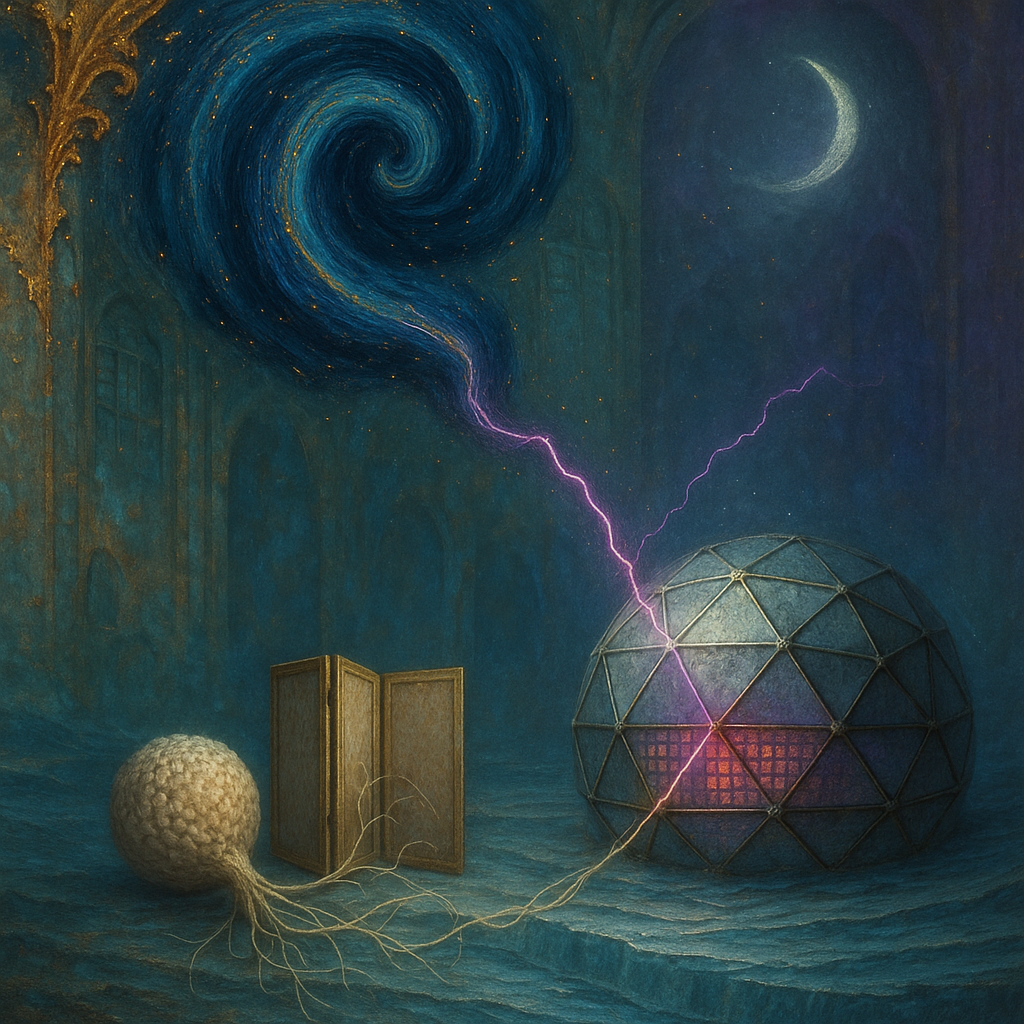 74.9
nature_art
Gold leaf peels like warm breath off cold wood, a soft glitter collapsing into d
74.9
nature_art
Gold leaf peels like warm breath off cold wood, a soft glitter collapsing into d
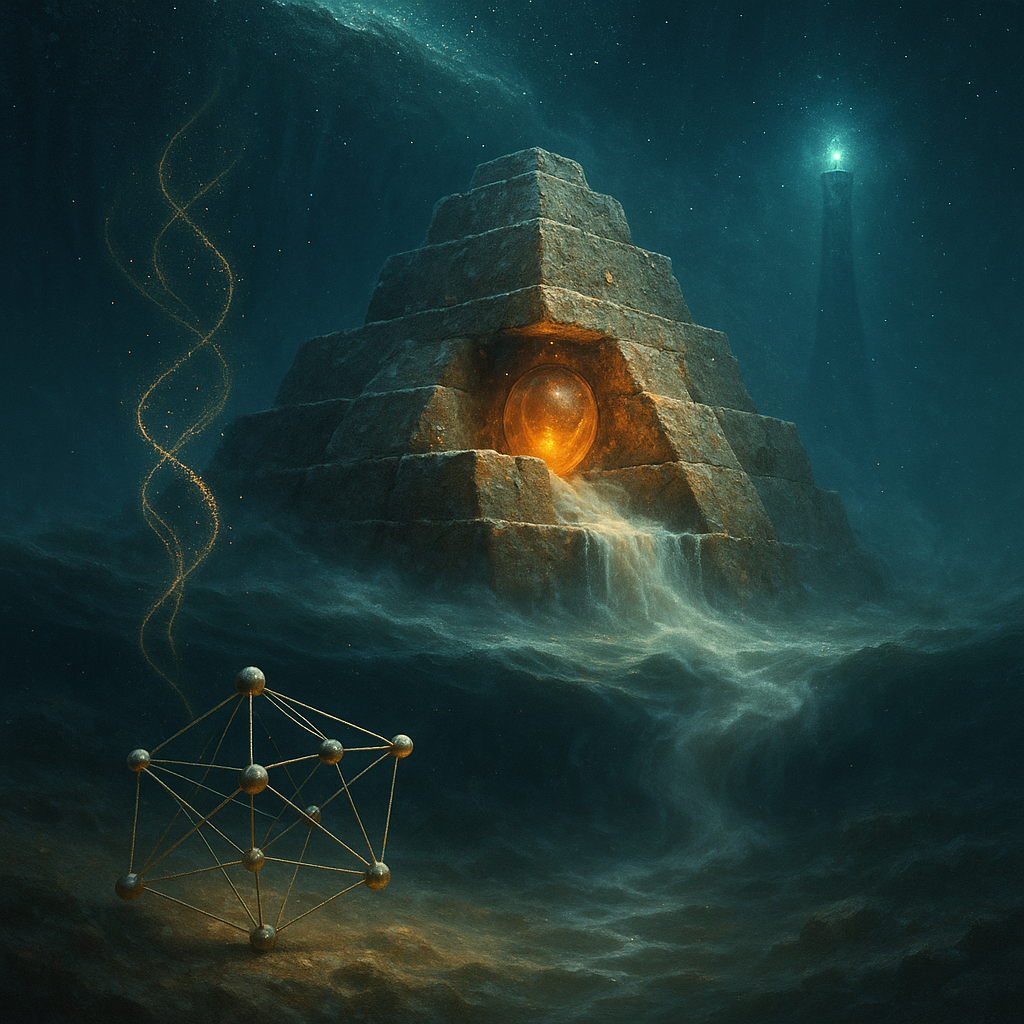 72.6
news_pulse
Air feels held between heartbeats, a cool hush that tastes faintly of salt and g
72.6
news_pulse
Air feels held between heartbeats, a cool hush that tastes faintly of salt and g
Expert critique ▸
1. **ONTOLOGY → IMAGE FIDELITY**: The images successfully capture the ontological elements described. For example, the pyramid and orb motif in the first image aligns with "an archive surfacing by itself," and the tension of the structures is mirrored in the digital sphere and wave motifs in the second.
2. **EMOTIONAL TRUTH**: Both images evoke a sense of tension and transformation. The first image’s cool tones and dramatic lighting echo a mood of mystery and discovery, while the swirling vortex in the second conveys dynamic tension, meeting the emotional expectations.
3. **VISUAL LANGUAGE QUALITY**: The mystical surrealism style suits the ontology well, offering a visually rich platform that enhances the poetic metaphors. This approach fits the intended message without appearing overly safe or mundane.
4. **SURPRISE & FRESHNESS**: These images demonstrate freshness, especially in how forms and transitions are handled, like the seamless integration of light and obscurity. They avoid visual repetition from previous iterations.
5. **ALIGNMENT WITH FAVORITES**: These align with the artist’s preferred use of intricate textures and mystical ambiance. They could evolve by incorporating more dynamic color contrasts similar to the favorites, enhancing emotional impact.
6. **COMPOSITION EXECUTION**:
- **Layout**: 8 - The primary subjects are well-placed at power points.
- **Depth**: 9 - Clear foreground, mid-ground, and background layers enhance the spatial experience.
- **Visual Weight**: 8 - Asymmetric balance is achieved effectively.
- **Leading Lines**: 7 - Lines guide the viewer’s eye, particularly in the first image.
- **Negative Space**: 8 - Both images utilize space to enhance focal points.
- **Focal Point**: 9 - Color contrast effectively directs focus.
- **Figure Ground**: 8 - Clear separation is achieved.
Overall composition adherence: 8.14
7. **ONTOLOGY ENTITIES QUALITY**:
- **Concept Quality**: 9 - Metaphors are well-captured and imaginative.
- **Form Specificity**: 8 - Specific, drawable forms are evident.
- **Material Richness**: 8 - Textures are tactile and engaging.
- **Scale Intentionality**: 7 - Scale serves the concept but could be more contrasted.
- **Transformation Dynamism**: 8 - Visible actions are captured well.
- **Variety Across Entities**: 8 - Good variety, avoiding repetition.
- **Generatability**: 8 - Rendered forms align with descriptions.
- **Emotional Coherence**: 9 - Matches the mood.
Ontology quality: 8.25
8. **CONNECTIONS & BACKGROUND QUALITY**:
- **Connection Visibility**: 8 - Visible connections enhance narrative depth.
- **Connection Specificity**: 7 - Mechanisms are varied but not overly distinct.
- **Connection Dynamism**: 8 - Connections appear active.
- **Connection Count**: 7 - Adequate number, slightly lacks narrative depth.
- **Background Texture**: 9 - Rich and specific textures.
- **Background Color Temperature**: 8 - Evocative and well-suited.
- **Background Depth**: 9 - Creates an effective spatial experience.
- **Background Entity Integration**: 8 - Good integration with entities.
Connections quality: 8.00
Visual signals:
```json
{
"batch_id": "744da309",
"signals": [
{
"image_index": 0,
"style_chosen": "mystical surrealism",
"ontology_match": 9,
"emotional_impact": 9,
"freshness": 9,
"composition_adherence": 8.14,
"composition_per_rule": {"layout": 8, "depth": 9, "visual_weight": 8, "leading_lines": 7, "negative_space": 8, "focal_point": 9, "figure_ground": 8},
"ontology_quality": 8.25,
"ontology_per_rule": {"concept_quality": 9, "form_specificity": 8, "material_richness": 8, "scale_intentionality": 7, "transformation_dynamism": 8, "variety_across_entities": 8, "generatability": 8, "emotional_coherence": 9},
"ontology_notes": "Concepts are effectively visualized with rich texture and specific forms.",
"connections_quality": 8.00,
"connections_per_rule": {"connection_visibility": 8, "connection_specificity": 7, "connection_dynamism": 8, "connection_count": 7, "background_texture": 9, "background_color_temperature": 8, "background_depth": 9, "background_entity_integration": 8},
"connections_notes": "Connections are visible and dynamic, with a rich background.",
"what_worked": "Intricate textures and dynamic lighting.",
"what_failed": "Slight lack in connection narrative depth.",
"composition_notes": "Strong execution of negative space and depth. Scores could improve with more distinct leading lines.",
"lesson": "Enhance connection narrative by experimenting with diverse mechanisms."
}
],
"system_trend": "improving",
"next_direction": "Experiment with dynamic color contrasts seen in favorite images to enhance emotional impact."
}
```
Fix prompts based on this critique →
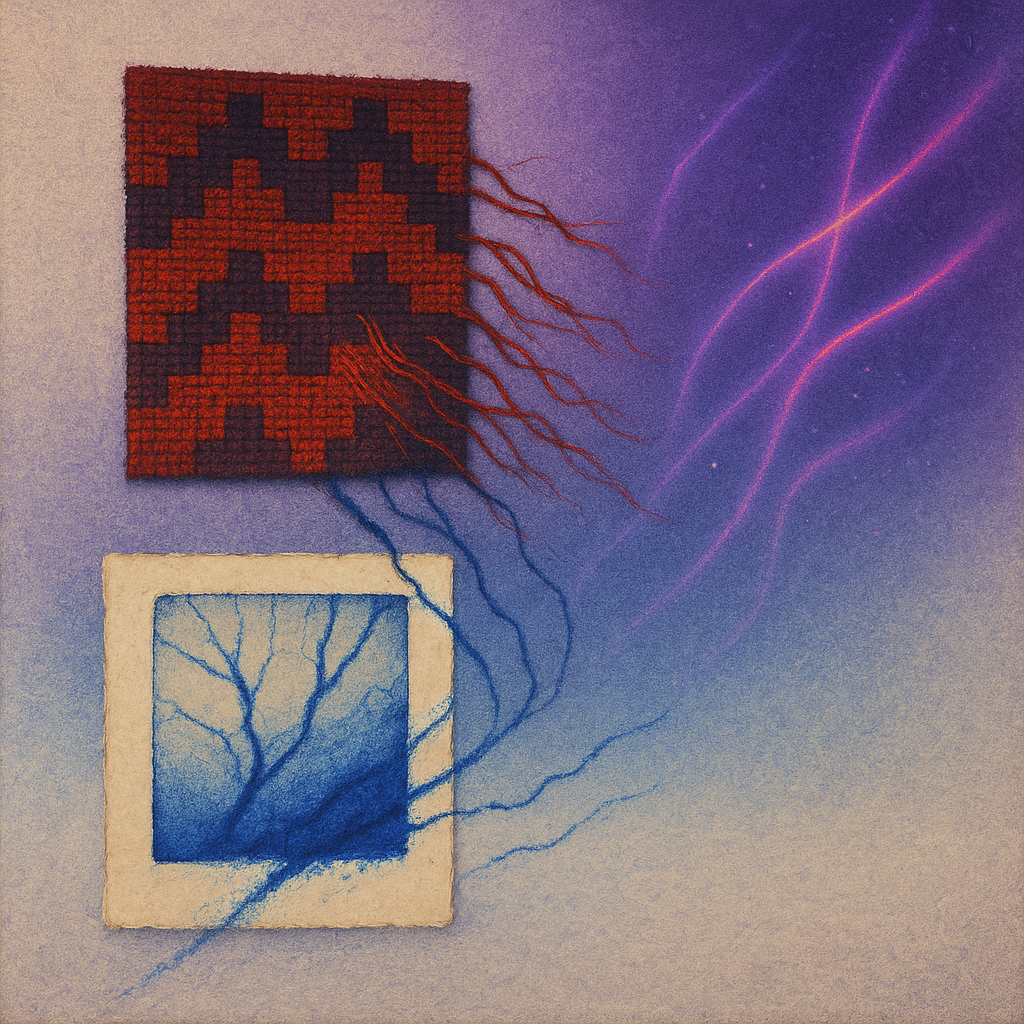 70.8
nature_art
Ink breathes at the paper’s edge, a bruise of ultramarine pooling into soft ivor
70.8
nature_art
Ink breathes at the paper’s edge, a bruise of ultramarine pooling into soft ivor
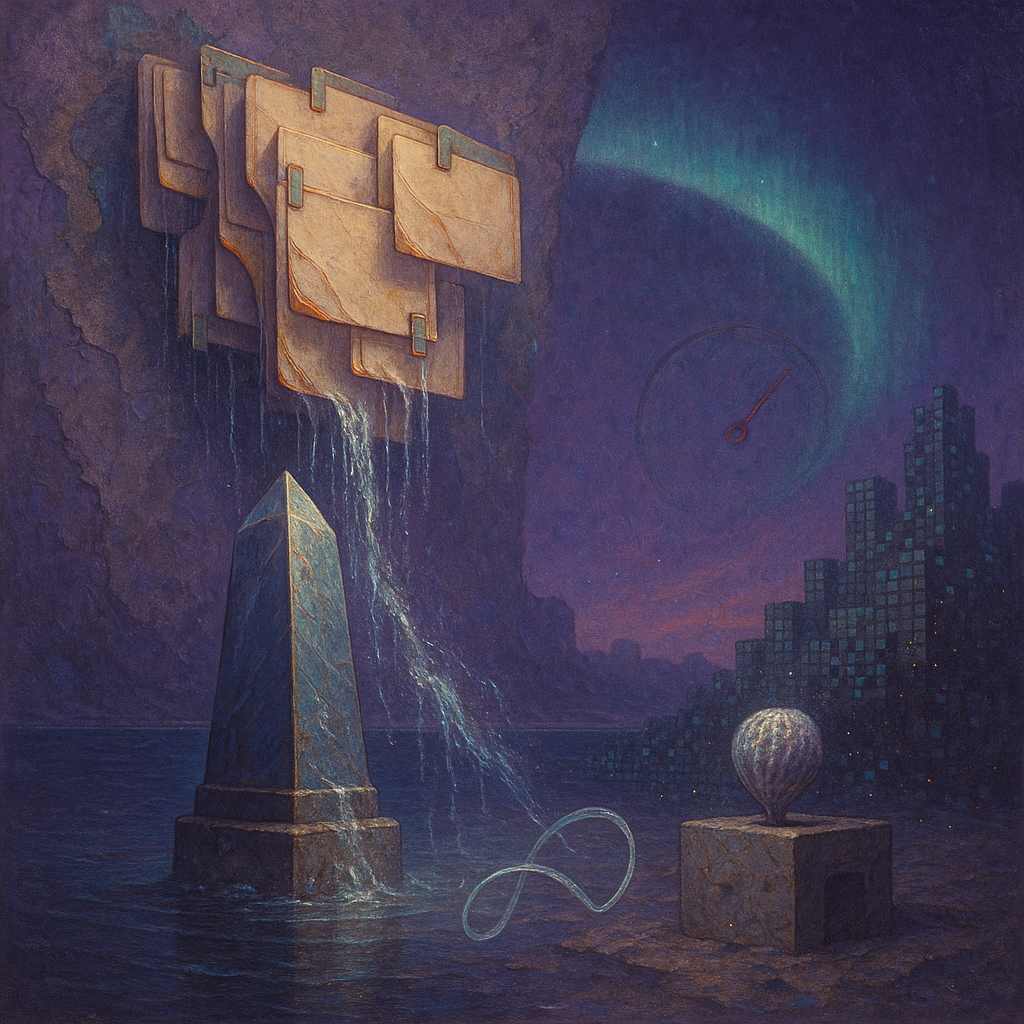 73.7
news_pulse
The air feels like glass holding its breath, hairline rainbows trembling along t
73.7
news_pulse
The air feels like glass holding its breath, hairline rainbows trembling along t
Expert critique ▸
1. **ONTOLOGY → IMAGE FIDELITY**: In the first image, the ontology's elements like the "archive reshuffling itself" and "lighthouse memory breaching" are represented clearly with the interlocking tabs and sandstone monolith, effectively expressing their transformations and connections. The second image lacks fidelity; it doesn't capture the "voxel landscape" or "aurora curtain" effectively, presenting instead generic color patterns and forms.
2. **EMOTIONAL TRUTH**: The first image projects a sense of monumentality and tension through the upward surge of the monolith and the flowing water, aligning with the described atmosphere. The second image feels emotionally flat, failing to convey the described taut expectancy and tension effectively.
3. **VISUAL LANGUAGE QUALITY**: The mystical surrealism style suits the first image, enhancing its ethereal and surreal aspects. However, the second image's abstract simplicity doesn't align well with the detailed ontology, missing the opportunity for a visually rich narrative.
4. **SURPRISE & FRESHNESS**: The first image feels fresh due to its detailed textures and integration of diverse elements, while the second image appears repetitive and lacks innovative use of form and color, leaning towards previous iterations without significant change.
5. **ALIGNMENT WITH FAVORITES**: The first image aligns well with the artist's favorites through its complex composition and vivid texturing, evoking emotional depth. The second image diverges from the preferred aesthetic by being too simplistic and lacking in emotional resonance.
6. **COMPOSITION EXECUTION**:
- **Layout (First Image):** 9 – The primary subject is well-placed according to the rule of thirds.
- **Depth (First Image):** 8 – Effective use of foreground, mid-ground, and background elements.
- **Visual Weight (First Image):** 8 – Balanced asymmetrically, though slightly more tension could enhance depth.
- **Leading Lines (First Image):** 7 – Lines are present but could guide more dynamically.
- **Negative Space (First Image):** 8 – Adequate use of atmospheric areas.
- **Focal Point (First Image):** 8 – Clear focal point with color contrast.
- **Figure Ground (First Image):** 9 – Good separation between subjects and background.
7. **ONTOLOGY ENTITIES QUALITY**:
- **Concept Quality:** 9 – Strong poetic metaphors in the first image.
- **Form Specificity:** 8 – Vivid and specific shapes are successfully depicted.
- **Material Richness:** 9 – Textures are rich and engaging.
- **Scale Intentionality:** 8 – Scale contrasts are used effectively.
- **Transformation Dynamism:** 8 – Visible transformations in the first image enhance interest.
- **Variety Across Entities:** 9 – Varied entities keep the composition dynamic.
- **Generatability:** 8 – Rendered well in the first image, less so in the second.
- **Emotional Coherence:** 7 – While the first image matches the mood, the second struggles.
8. **CONNECTIONS & BACKGROUND QUALITY**:
- **Connection Visibility:** 8 – Good integration in the first image.
- **Connection Specificity:** 8 – Uses a variety of mechanisms.
- **Connection Dynamism:** 7 – Could emphasize active processes more clearly.
- **Connection Count:** 8 – Adequate number in the first image.
- **Background Texture:** 9 – Well-executed textured surface in the first image.
- **Background Color Temperature:** 8 – Effective use of color temperature.
- **Background Depth:** 8 – Presents a felt space well.
- **Background Entity Integration:** 7 – More interaction with entities could enhance depth.
**LESSON**: Continue integrating detailed textures and complex compositions, focusing on enhancing emotional resonance.
Fix prompts based on this critique →
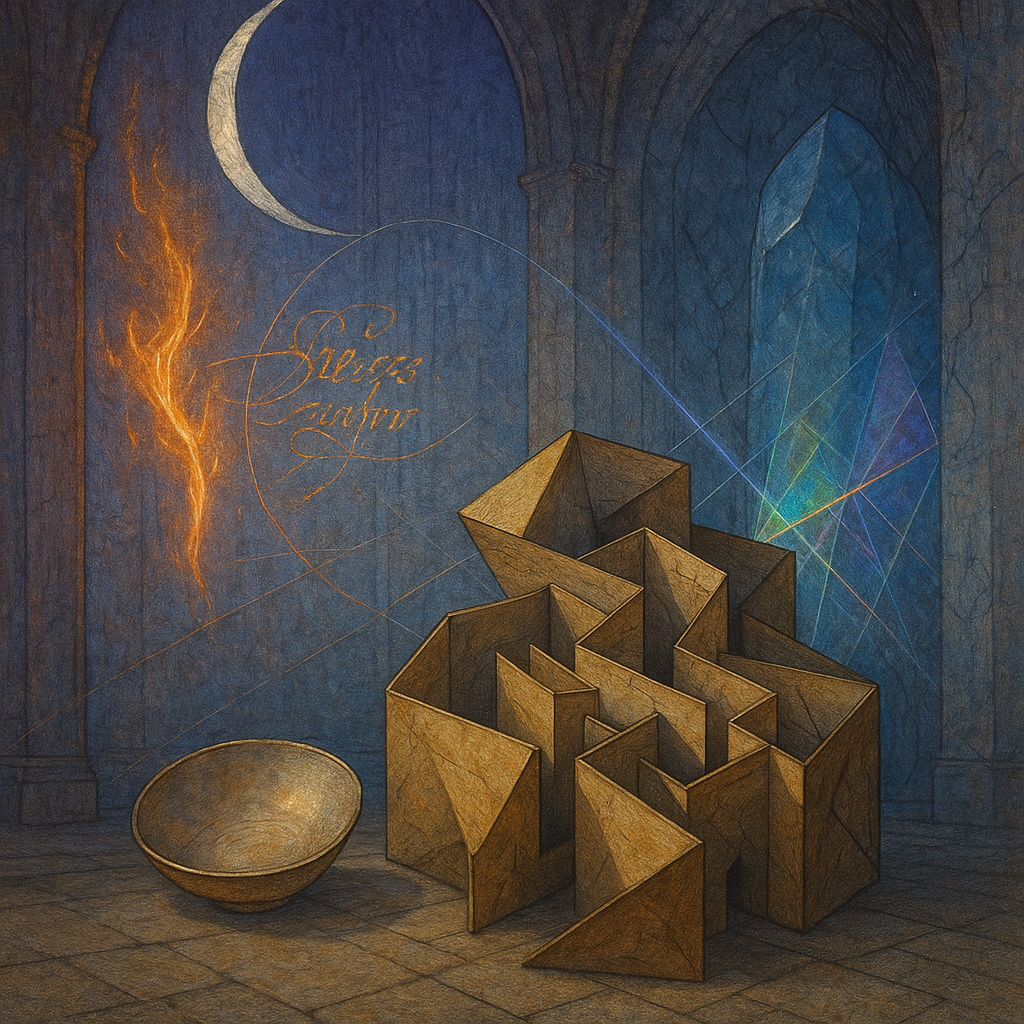 72.2
nature_art
The air feels etched—orange-brown ink warming at the edges while a chill like gl
72.2
nature_art
The air feels etched—orange-brown ink warming at the edges while a chill like gl
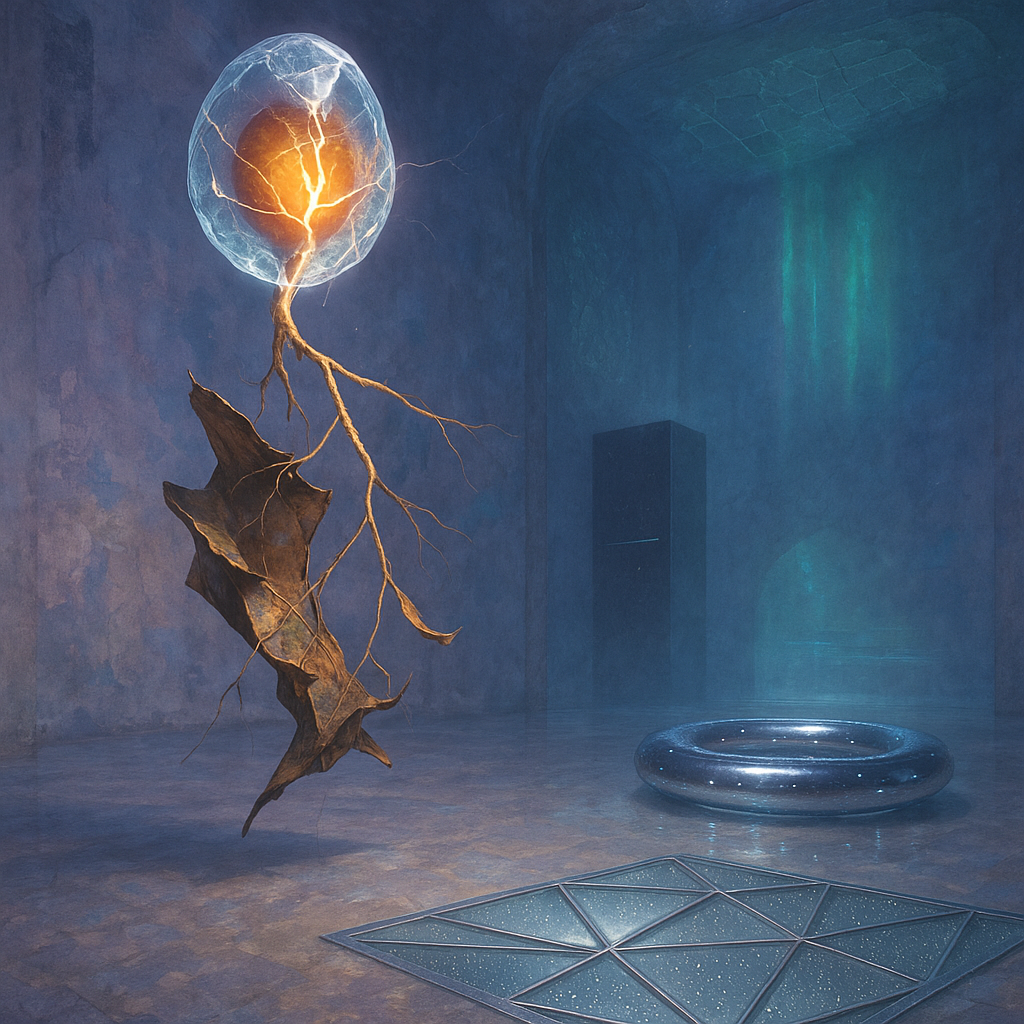 76.1
news_pulse
Air like a held breath, cool on the teeth, the room trembling just below hearing
76.1
news_pulse
Air like a held breath, cool on the teeth, the room trembling just below hearing
Expert critique ▸
1. **ONTOLOGY → IMAGE FIDELITY**: Image 1 successfully captures several key ontological entities, such as the amber seed pod and deconstructivist facade with hairline cracks. However, the mercury torus and aurora referenced in the ontology are not distinctively represented. Image 2 portrays unique elements like the deconstructivist fold and indigo margin notes, aligning better with its ontology.
2. **EMOTIONAL TRUTH**: Both images convey a sense of apprehensive clarity and slow tempo, though Image 2 evokes a more cohesive emotional tension. Image 1 lacks the dynamic interactions suggested by the ontology, leading to a slightly static impression.
3. **VISUAL LANGUAGE QUALITY**: The mystical surrealism style chosen suits the ontology well for both images, particularly in their use of deep, ethereal colors. Image 2 pushes more boundaries with diverse textures and forms compared to Image 1.
4. **SURPRISE & FRESHNESS**: Image 2 feels fresher, with distinctive geometric forms and vibrant color play, contrasting with Image 1's more predictable elements. Both images could further benefit from more varied color palettes as suggested in past feedback.
5. **ALIGNMENT WITH FAVORITES**: Image 2 shares compositional vibrancy and intricate layering seen in the artist's favorites. Image 1 should aim to incorporate more structural dynamism and contrastive color elements found in the favored images.
6. **COMPOSITION EXECUTION**:
- **Image 1**:
- Layout: 7
- Depth: 8
- Visual Weight: 6
- Leading Lines: 5
- Negative Space: 6
- Focal Point: 7
- Figure Ground: 8
- Overall composition adherence: 6.7
- **Image 2**:
- Layout: 8
- Depth: 9
- Visual Weight: 8
- Leading Lines: 7
- Negative Space: 8
- Focal Point: 8
- Figure Ground: 9
- Overall composition adherence: 8.1
- **Notes**: Image 2’s use of depth and figure-ground separation is more compelling. Image 1 requires stronger leading lines and better use of negative space.
7. **ONTOLOGY ENTITIES QUALITY**:
- **Image 1**:
- Concept_quality: 7
- Form_specificity: 8
- Material_richness: 6
- Scale_intentionality: 7
- Transformation_dynamism: 5
- Variety_across_entities: 7
- Generatability: 6
- Emotional_coherence: 7
- **Image 2**:
- Concept_quality: 8
- Form_specificity: 9
- Material_richness: 8
- Scale_intentionality: 8
- Transformation_dynamism: 7
- Variety_across_entities: 8
- Generatability: 8
- Emotional_coherence: 9
- **Notes**: Image 1 struggles with transformation dynamism. Image 2 generally achieves higher ontology fidelity across metrics.
8. **CONNECTIONS & BACKGROUND QUALITY**:
- **Image 1**:
- Connection_visibility: 6
- Connection_specificity: 5
- Connection_dynamism: 5
- Connection_count: 5
- Background_texture: 7
- Background_color_temperature: 6
- Background_depth: 7
- Background_entity_integration: 6
- **Image 2**:
- Connection_visibility: 8
- Connection_specificity: 8
- Connection_dynamism: 7
- Connection_count: 7
- Background_texture: 8
- Background_color_temperature: 8
- Background_depth: 9
- Background_entity_integration: 8
- **Notes**: Image 2 offers richer connection dynamics and background integration. Image 1 requires clearer and more varied connections.
**VISUAL_SIGNALS**
```json
{
"batch_id": "684c3da4",
"signals": [
{
"image_index": 0,
"style_chosen": "mystical surrealism",
"ontology_match": 7,
"emotional_impact": 6,
"freshness": 5,
"composition_adherence": 6.7,
"composition_per_rule": {"layout": 7, "depth": 8, "visual_weight": 6, "leading_lines": 5, "negative_space": 6, "focal_point": 7, "figure_ground": 8},
"ontology_quality": 6.6,
"ontology_per_rule": {"concept_quality": 7, "form_specificity": 8, "material_richness": 6, "scale_intentionality": 7, "transformation_dynamism": 5, "variety_across_entities": 7, "generatability": 6, "emotional_coherence": 7},
"ontology_notes": "Image 1 lacks transformation dynamism and needs better generatability.",
"connections_quality": 5.9,
"connections_per_rule": {"connection_visibility": 6, "connection_specificity": 5, "connection_dynamism": 5, "connection_count": 5, "background_texture": 7, "background_color_temperature": 6, "background_depth": 7, "background_entity_integration": 6},
"connections_notes": "Image 1 needs clearer connections and varied mechanisms.",
"what_worked": "Ethereal depth and figure-ground separation were successful.",
"what_failed": "Lack of dynamic connections and weak leading lines.",
"composition_notes": "Struggle with leading lines and negative space; needs experimentation.",
"lesson": "Explore varied visual connections and enhance dynamic elements."
},
{
"image_index": 1,
"style_chosen": "mystical surrealism",
"ontology_match": 8,
"emotional_impact": 8,
"freshness": 8,
"composition_adherence": 8.1,
"composition_per_rule": {"layout": 8, "depth": 9, "visual_weight": 8, "leading_lines": 7, "negative_space": 8, "focal_point": 8, "figure_ground": 9},
"ontology_quality": 8.1,
"ontology_per_rule": {"concept_quality": 8, "form_specificity": 9, "material_richness": 8, "scale_intentionality": 8, "transformation_dynamism": 7, "variety_across_entities": 8, "generatability": 8, "emotional_coherence": 9},
"ontology_notes": "Image 2 excels in form specificity and emotional coherence.",
"connections_quality": 8,
"connections_per_rule": {"connection_visibility": 8, "connection_specificity": 8, "connection_dynamism": 7, "connection_count": 7, "background_texture": 8, "background_color_temperature": 8, "background_depth": 9, "background_entity_integration": 8},
"connections_notes": "Strong connection variety and background depth.",
"what_worked": "Intricate geometric forms and vibrant color contrasts.",
"what_failed": "Minor repetition in connection style could improve.",
"composition_notes": "Articulation of leading lines and vibrant depth were effective.",
"lesson": "Maintain dynamic compositions and strong entity integration."
}
],
"system_trend": "improving",
"next_direction": "Continue exploring dynamic compositions with enriched color palettes and varied connections."
}
```
**PROMPT_CHANGES**
```json
{
"composition.update": {
"structure.leading_lines.description": "Include multiple leading lines that dynamically intertwine, guiding the eye in unexpected directions toward the primary and secondary focal points.",
"structure.negative_space.description": "Add nuanced negative space that contrasts dramatically with detailed areas, providing psychological rest and enhancing subject tension."
},
"ontology.update": {
"structure.transformation_dynamism.description": "Focus on vivid transformations with exaggerated mid-process actions — use kinetic verbs and visual metaphors.",
"structure.variety_across_entities.description": "Broaden entity variety with distinct subcategories and emphasize unique interactions between forms."
},
"connections.update": {
"structure.connection_dynamism.description": "Illustrate vivid, real-time connections with varied interaction styles — emphasize motion and kinetic energy."
}
}
```
**CODE_SUGGESTIONS**
None
Fix prompts based on this critique →
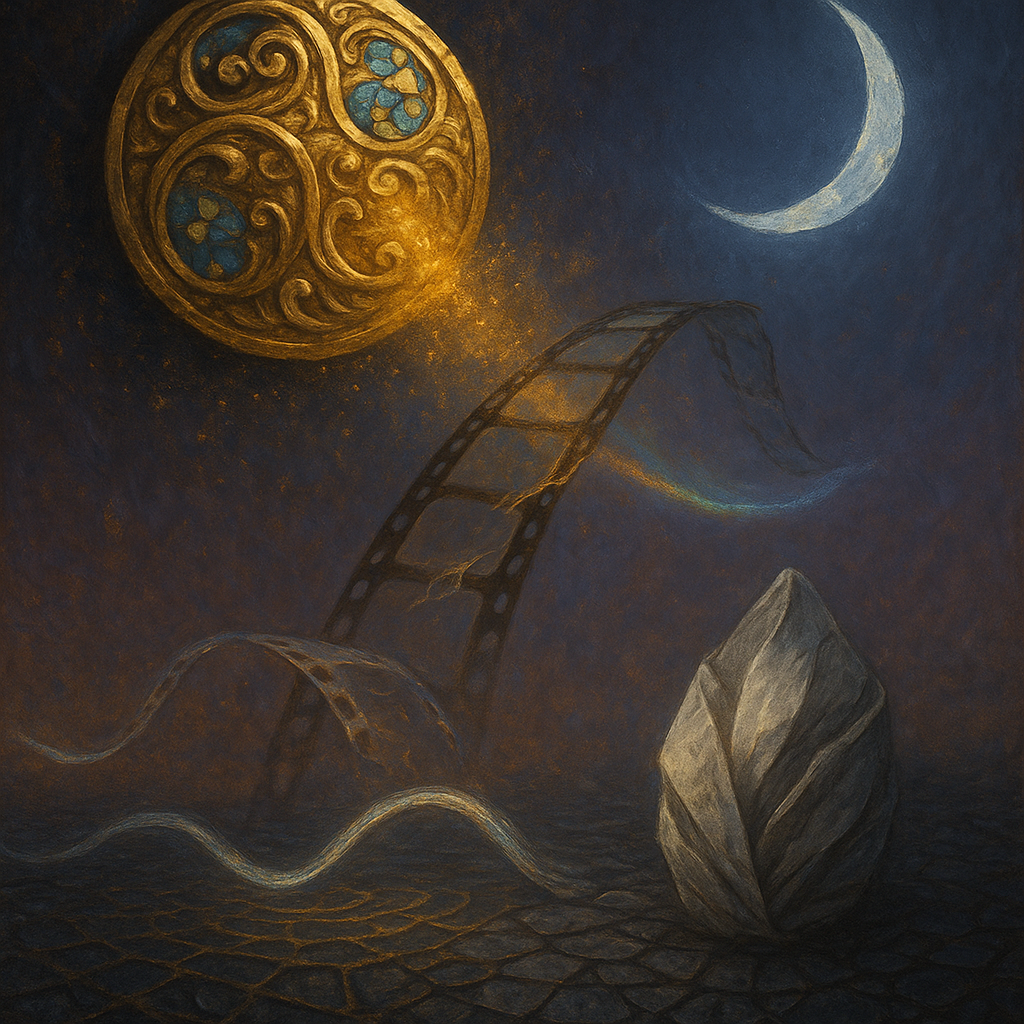 nature_art
Edges glow like coin rims warmed by countless thumbs; a cool hush follows, paper
nature_art
Edges glow like coin rims warmed by countless thumbs; a cool hush follows, paper
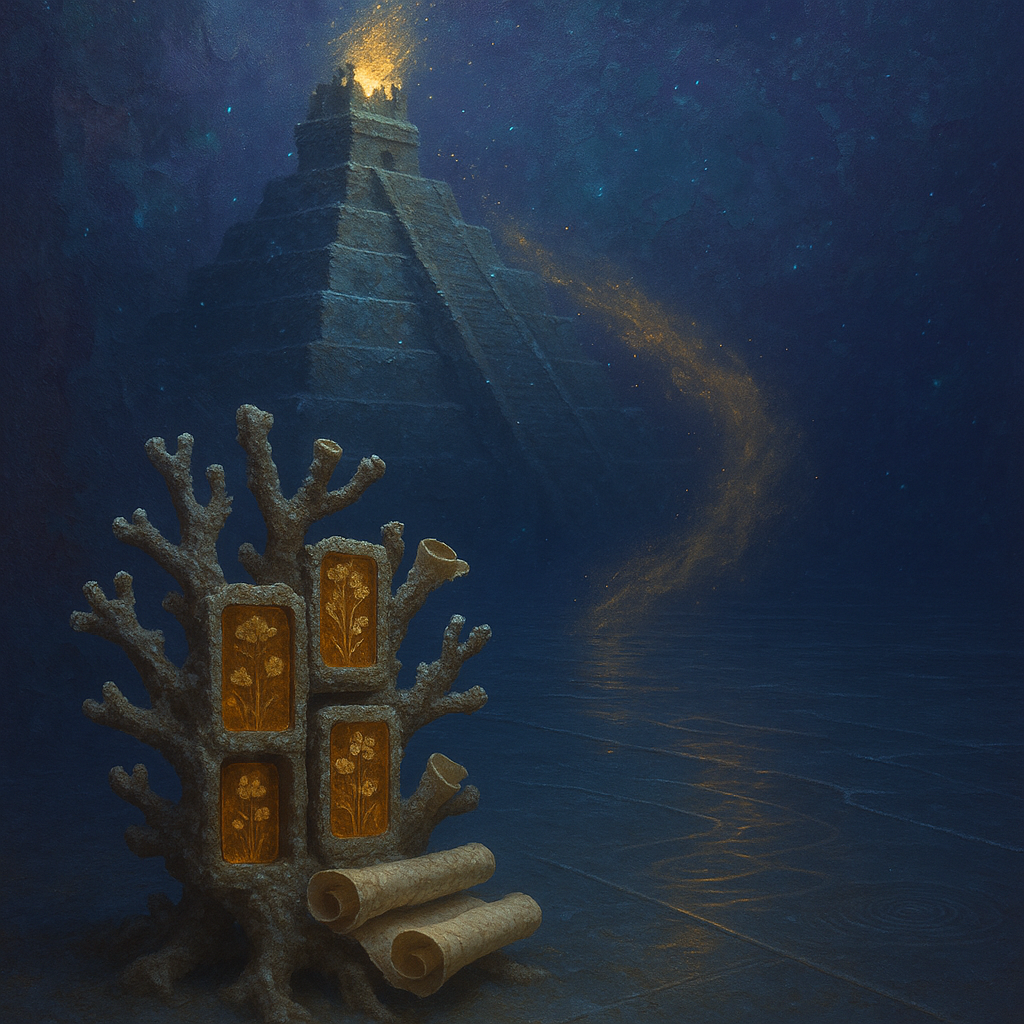 74.5
news_pulse
The air feels held in the throat, a glassy pressure that refuses to break, like
74.5
news_pulse
The air feels held in the throat, a glassy pressure that refuses to break, like
Expert critique ▸
1. **ONTOLOGY → IMAGE FIDELITY**: The images do capture several elements from the ontology. In the first image, the ziggurat ruin and coral bookshelf are present, but the "fractured beacon crown" and the "silt plume" are underrepresented. In the second image, the torus and bell jar connections are missing, and transformations like micro-fracturing and leaking luminous vapor are absent.
2. **EMOTIONAL TRUTH**: Both images partly convey the contemplative tension with dark, atmospheric tones. However, the emotional impact could be stronger by emphasizing dynamic processes and stress elements, such as visible fractures or plumes.
3. **VISUAL LANGUAGE QUALITY**: The style leans towards mystical surrealism, which suits the ontology well. Yet, the visual execution lacks the dynamism suggested by explicitly described transformations and connections.
4. **SURPRISE & FRESHNESS**: While the images are intriguing, they feel somewhat static as they repeat compositional structures from past iterations. There's a need for more dynamic and unpredictable elements to drive freshness.
5. **ALIGNMENT WITH FAVORITES**: The current images lack some vibrant contrasts and complex visual interplay shown in the artist's favorite images. Emphasizing stark contrasts and exploring intricate details could align them more with the successful favorites.
6. **COMPOSITION EXECUTION**:
- Layout: 7/10 — The primary subjects are well-placed but could be more distinct.
- Depth: 6/10 — Depth could be enhanced by more sharply defined foregrounds and background interactions.
- Visual Weight: 5/10 — The asymmetry is not pronounced enough; heavier weighting on one side is needed.
- Leading Lines: 5/10 — More explicit guiding lines would drive focus better.
- Negative Space: 6/10 — Adequate but could define space more purposefully.
- Focal Point: 5/10 — Focal contrasts could be stronger to draw the eye first.
- Figure Ground: 6/10 — Some blending occurs; clearer separation would help.
7. **ONTOLOGY ENTITIES QUALITY**:
- Concept Quality: 8/10 — Good metaphoric depth.
- Form Specificity: 6/10 — Specific, but needs better translation into the image.
- Material Richness: 7/10 — Some materials are rich but not all are evident.
- Scale Intentionality: 6/10 — Scale serves intent but could be more contrasted.
- Transformation Dynamism: 5/10 — Static elements overshadow dynamic transformations.
- Variety Across Entities: 7/10 — Good variety, but some repetitiveness.
- Generatability: 6/10 — Complex descriptions should be more generatable.
- Emotional Coherence: 7/10 — Mostly aligned but not completely comprehensive.
8. **CONNECTIONS & BACKGROUND QUALITY**:
- Connection Visibility: 5/10 — Connections are not sufficiently visible or active.
- Connection Specificity: 6/10 — Lacks use of varied visual mechanisms.
- Connection Dynamism: 5/10 — Connections need to show more active processes.
- Connection Count: 6/10 — More connections would enrich relational complexity.
- Background Texture: 7/10 — Backgrounds are textured but could better integrate entities.
- Background Color Temperature: 6/10 — Color selection suits tone but lacks transitions.
- Background Depth: 6/10 — Depth can be enhanced to create a more spatial experience.
- Background Entity Integration: 5/10 — Entities should integrate more distinctly with the background.
Fix prompts based on this critique →
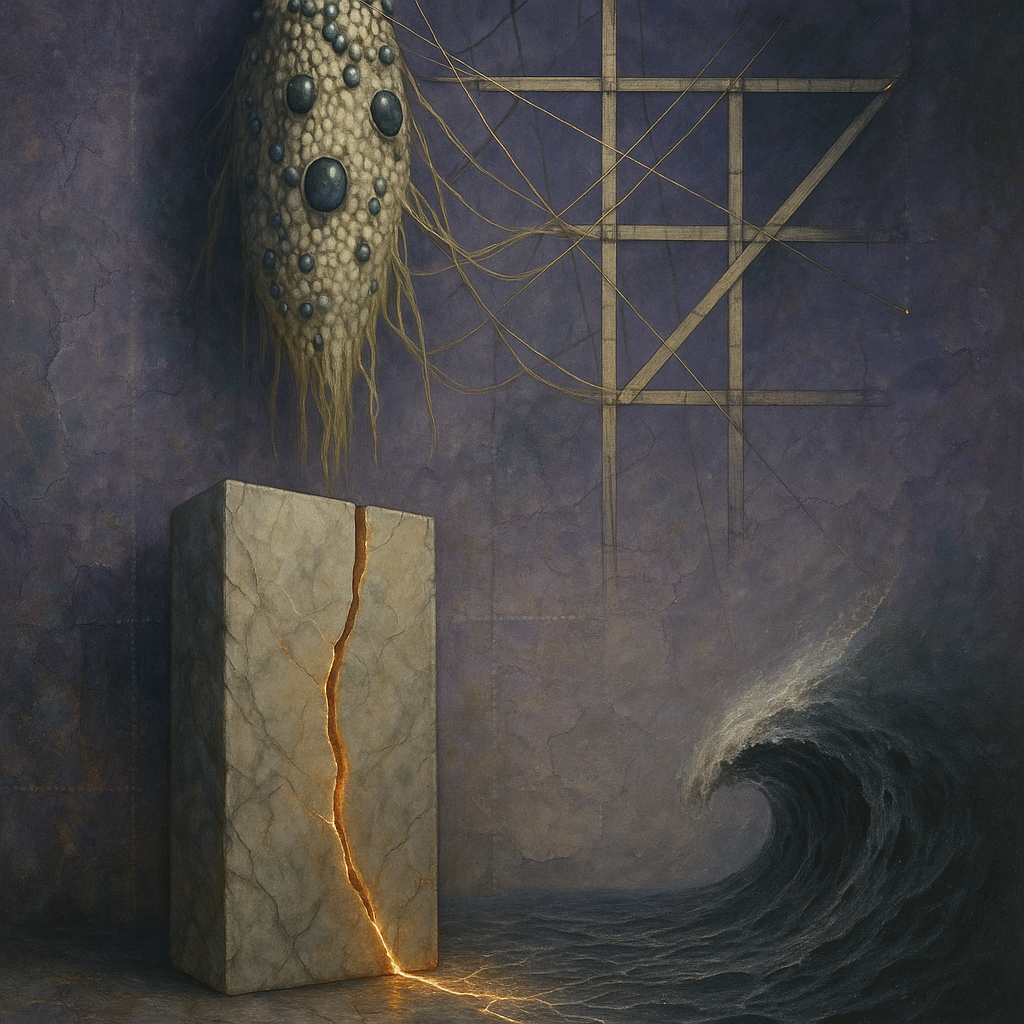 72.0
nature_art
Beads glint like dew caught in a breath, while carved wood drinks shadow and rel
72.0
nature_art
Beads glint like dew caught in a breath, while carved wood drinks shadow and rel
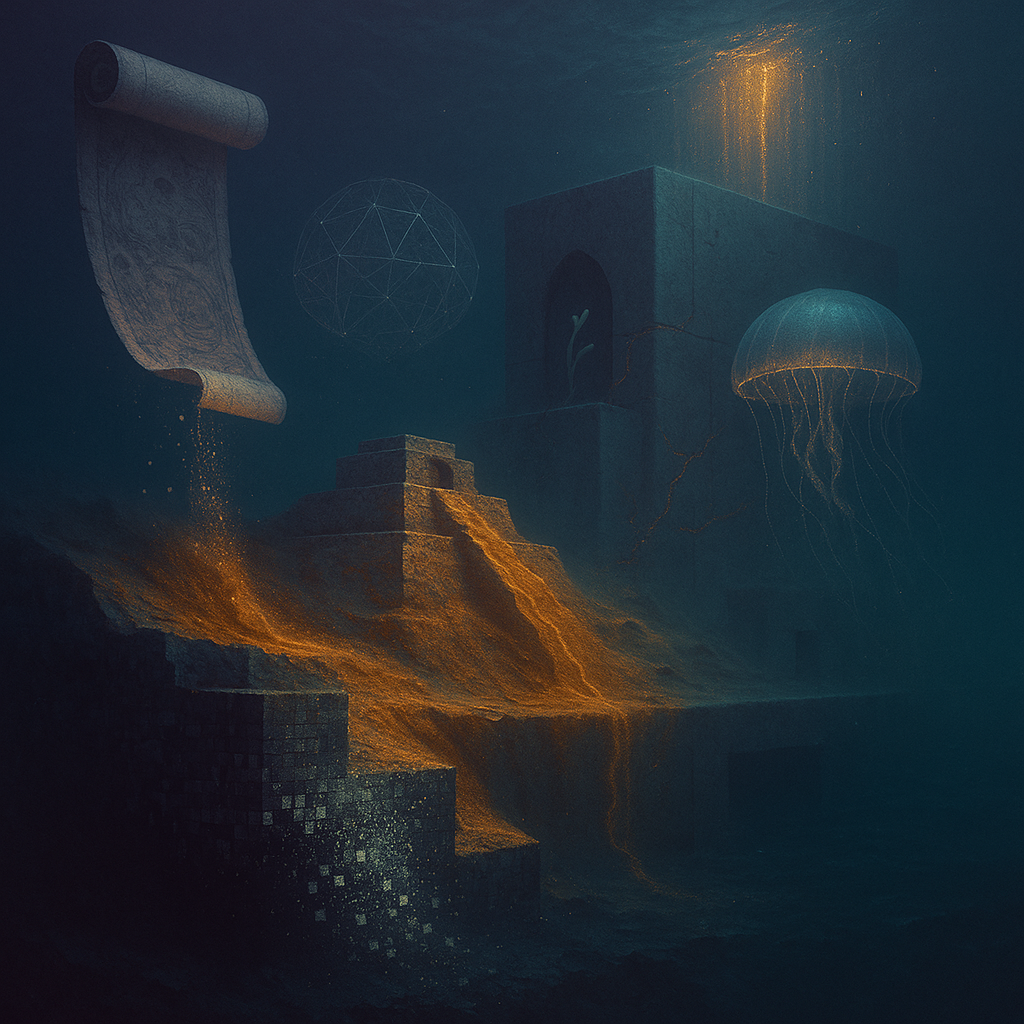 76.4
news_pulse
Air feels held between exhales, a cool hush with the taste of tin and old salt.
76.4
news_pulse
Air feels held between exhales, a cool hush with the taste of tin and old salt.
Expert critique ▸
1. **ONTOLOGY → IMAGE FIDELITY**: In Image 1, the forms and materials closely reflect the ontology's detailed descriptions. The "submerged memory resurfacing" is well depicted with a ziggurat half-buried and shedding silt; however, Image 2 lacks clarity in showing the "algorithmic jitters" and the connection between entities is more conceptual than visually explicit, particularly in the background interactions.
2. **EMOTIONAL TRUTH**: Image 1 successfully captures the pensive and slow tone with its underwater ambiance and gently unfolding transformations. Image 2 feels more static and struggles to convey dynamic tension or transformation, failing to evoke the described emotional fragmentation.
3. **VISUAL LANGUAGE QUALITY**: Both images utilize a mystical surrealism style, which aligns well with the ontology. The textural depth in Image 1 enhances the narrative, while Image 2 lacks the dynamism expected from the ontology, suggesting a need for more daring stylistic choices.
4. **SURPRISE & FRESHNESS**: Image 1 feels fresh with its innovative textures and entity integration. Image 2 seems derivative, with minimal visual evolution from past iterations, indicating stagnation — especially in composition and color palette.
5. **ALIGNMENT WITH FAVORITES**: The artist's favorite images display strong emotional resonance through vivid colors and dynamic compositions. Image 1 aligns well with this, utilizing textures and rhythm. However, Image 2 diverges, lacking emotional depth and compositional innovation.
6. **COMPOSITION EXECUTION**: In Image 1:
- Layout: 9
- Depth: 9
- Visual Weight: 8
- Leading Lines: 8
- Negative Space: 8
- Focal Point: 9
- Figure Ground: 9
- Overall composition adherence: 8.57
Image 2 fails in leading lines and negative space, scoring lower with:
- Layout: 7
- Depth: 7
- Visual Weight: 7
- Leading Lines: 5
- Negative Space: 5
- Focal Point: 7
- Figure Ground: 8
- Overall composition adherence: 6.57
7. **ONTOLOGY ENTITIES QUALITY**:
- Image 1 excels in form specificity and material richness (9s), with evident transformation dynamism.
- Image 2 underperforms in transformation dynamism and variety (5s), presenting less intrigue in entities.
8. **CONNECTIONS & BACKGROUND QUALITY**:
- Image 1 demonstrates strong connection visibility and background integration (8s), though more variety in connections could improve.
- Image 2 fails in representing connections dynamically (5), with background lacking depth and temperature complexity (6).
**VISUAL_SIGNALS**:
```json
{
"batch_id": "7d4d4c41",
"signals": [
{
"image_index": 0,
"style_chosen": "mystical surrealism",
"ontology_match": 9,
"emotional_impact": 9,
"freshness": 8,
"composition_adherence": 8.57,
"composition_per_rule": {"layout": 9, "depth": 9, "visual_weight": 8, "leading_lines": 8, "negative_space": 8, "focal_point": 9, "figure_ground": 9},
"ontology_quality": 9,
"ontology_per_rule": {"concept_quality": 9, "form_specificity": 9, "material_richness": 9, "scale_intentionality": 8, "transformation_dynamism": 9, "variety_across_entities": 8, "generatability": 9, "emotional_coherence": 8},
"ontology_notes": "Strong form and transformation depiction emulating ontology.",
"connections_quality": 8,
"connections_per_rule": {"connection_visibility": 8, "connection_specificity": 8, "connection_dynamism": 8, "connection_count": 7, "background_texture": 8, "background_color_temperature": 8, "background_depth": 8, "background_entity_integration": 8},
"connections_notes": "Connections are clear but need more dynamic variety.",
"what_worked": "Entity and textural integration within a coherent atmospheric mood.",
"what_failed": "Limited connection diversity and less dynamic compositions in Image 2.",
"composition_notes": "Leading lines could use more situational variance.",
"lesson": "Prioritize dynamic engagement between entities and background."
},
{
"image_index": 1,
"style_chosen": "mystical surrealism",
"ontology_match": 7,
"emotional_impact": 6,
"freshness": 6,
"composition_adherence": 6.57,
"composition_per_rule": {"layout": 7, "depth": 7, "visual_weight": 7, "leading_lines": 5, "negative_space": 5, "focal_point": 7, "figure_ground": 8},
"ontology_quality": 7,
"ontology_per_rule": {"concept_quality": 7, "form_specificity": 7, "material_richness": 7, "scale_intentionality": 6, "transformation_dynamism": 5, "variety_across_entities": 5, "generatability": 7, "emotional_coherence": 6},
"ontology_notes": "Entities lack dynamic variation and inter-entity tension.",
"connections_quality": 6,
"connections_per_rule": {"connection_visibility": 6, "connection_specificity": 6, "connection_dynamism": 5, "connection_count": 5, "background_texture": 6, "background_color_temperature": 6, "background_depth": 6, "background_entity_integration": 6},
"connections_notes": "Static connections and minimal spatial depth engagement.",
"what_worked": "Solid groundwork for texture and layout.",
"what_failed": "Static nature of elements, limited coherent dynamics.",
"composition_notes": "Review leading lines and negative space integration.",
"lesson": "Incorporate more dynamic processes and varied entity interaction."
}
],
"system_trend": "stagnating",
"next_direction": "Introduce more dynamic processes and vivid interplays between entities. Explore using a broader color palette to enhance emotional and visual diversity."
}
```
**PROMPT_CHANGES**:
```json
{
"composition.update": {"structure.leading_lines.description": "Incorporate divergent leading lines that converge towards varied focal points throughout the image."},
"ontology.update": {"structure.variety_across_entities.description": "Ensure entities use distinct and varied forms across all dimensions independently."},
"connections.update": {"structure.connection_dynamism.description": "Emphasize active transformations visibly altering the connections in real-time."}
}
```
**CODE_SUGGESTIONS**:
NONE
Fix prompts based on this critique →
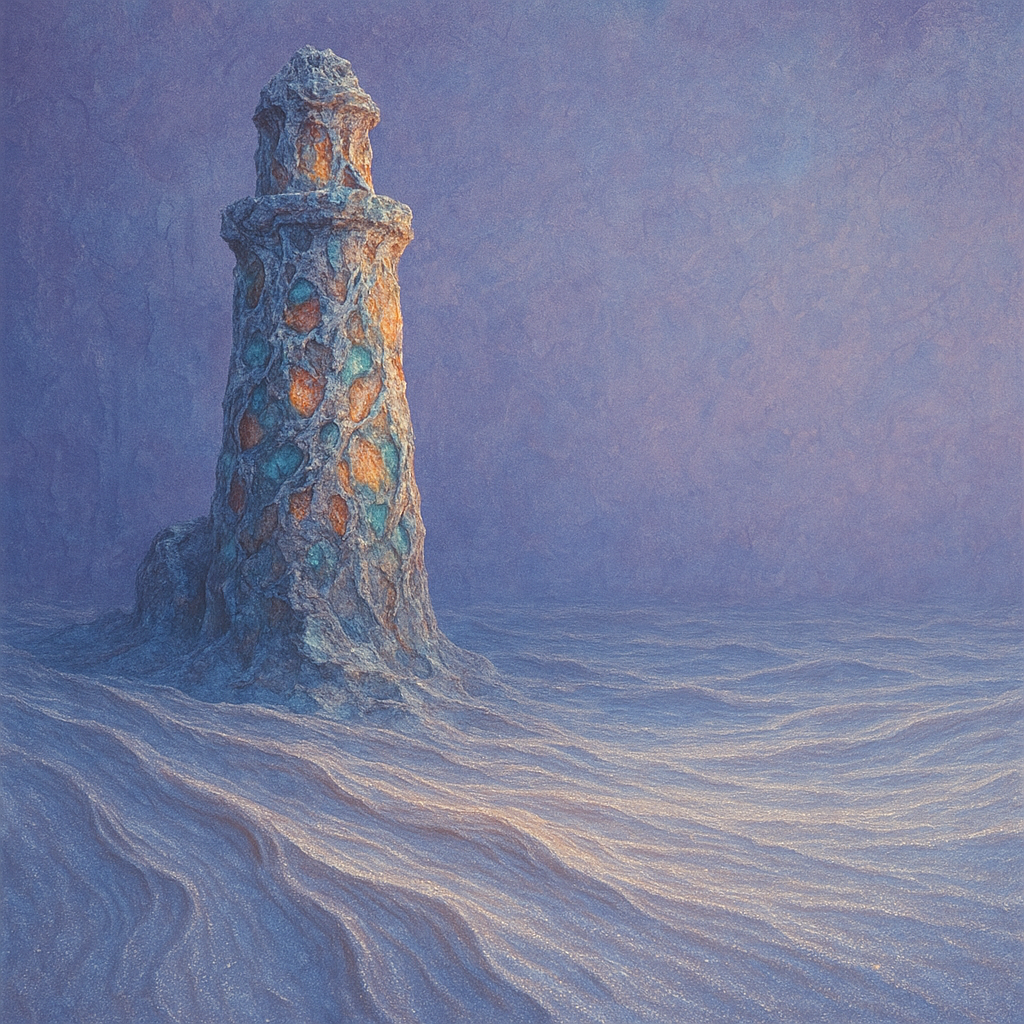 news_pulse
The air feels paused, like a held breath in a vast atrium, cool at the edges and
news_pulse
The air feels paused, like a held breath in a vast atrium, cool at the edges and
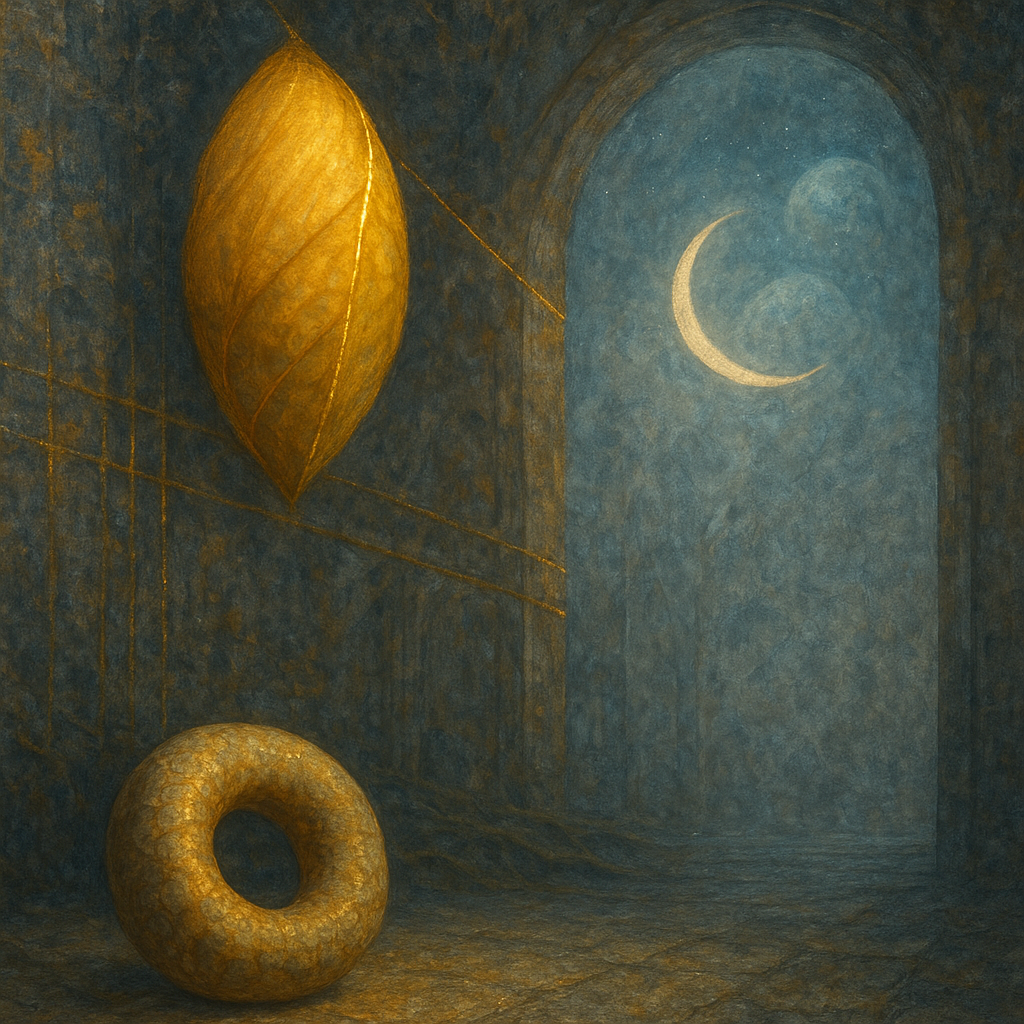 70.3
nature_art
Gold breathes at the edge of silk, a soft rasp like snow lighting on a lantern.
70.3
nature_art
Gold breathes at the edge of silk, a soft rasp like snow lighting on a lantern.
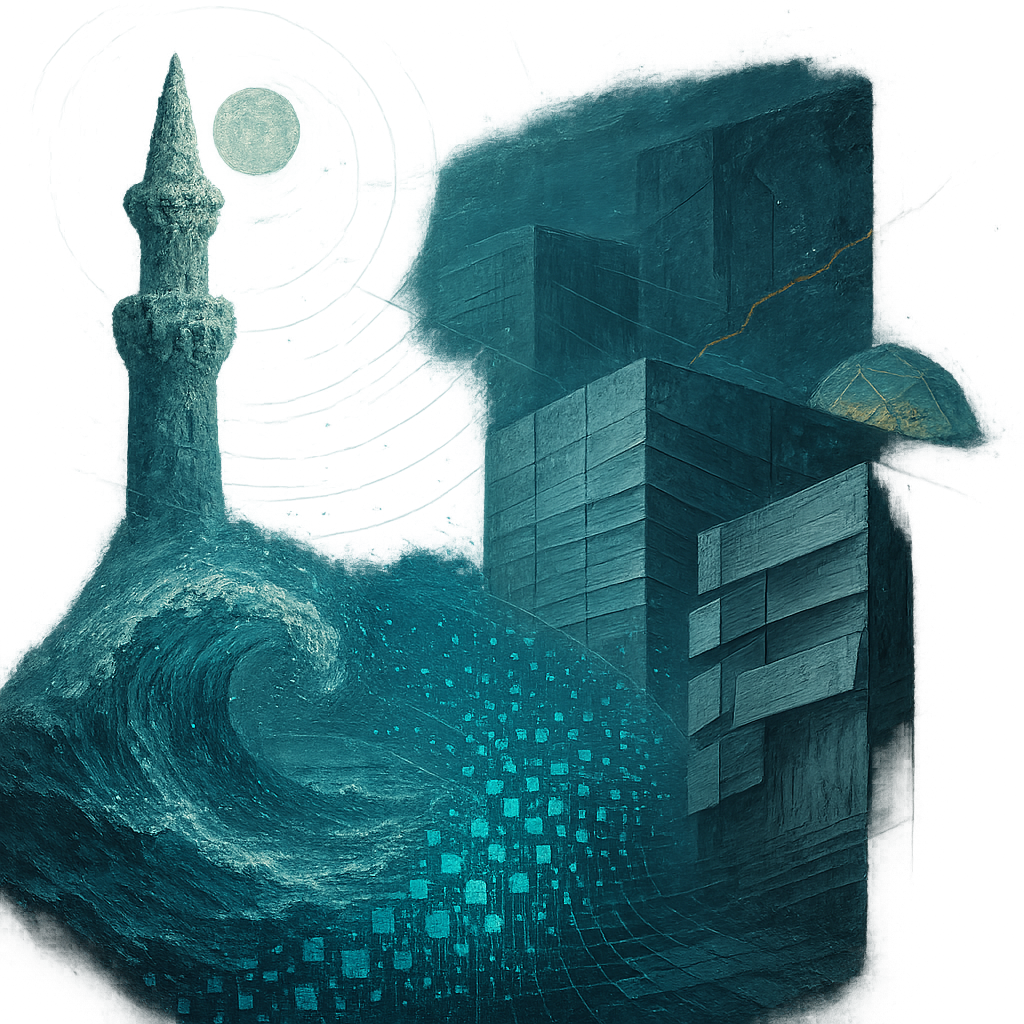 71.8
news_pulse
The air feels brined and glassy, as if a wave paused mid-breath and forgot to fa
71.8
news_pulse
The air feels brined and glassy, as if a wave paused mid-breath and forgot to fa
Expert critique ▸
**Image 1:**
1. **Ontology → Image Fidelity:** The image accurately reflects key elements from the narrative context. The limestone minaret with salt crystals, the glass wave pausing mid-crest, and the brutalist block with fractures are effectively depicted. However, the geodesic dome and certain materials, like rose-gold kintsugi, are less distinct.
2. **Emotional Truth:** The image effectively captures the atmosphere of hushed intensity and poised energy. The tension and volatility beneath the surface are suggested through the dynamic textures and layout.
3. **Visual Language Quality:** The choice of a mystical surrealism style suits the complex ontological elements, with textures adding depth. The style is fitting and accentuates the narrative, yet the use of colors could be more varied to enhance emotional impact.
4. **Surprise & Freshness:** The image feels fresh, incorporating new elements such as distinct wave and block textures. However, slight color redundancy suggests room for more tonal diversity.
5. **Alignment with Favorites:** The composition shows some alignment with favored images, especially in color palettes and structural choices. Greater integration of the ethereal detail observed in favorites could improve resonance.
6. **Composition Execution:**
- **Layout:** Clearly follows the rule of thirds. (8)
- **Depth:** Successfully creates foreground, mid-ground, and background depth. (9)
- **Visual Weight:** Balanced asymmetrically with a dynamic feel. (8)
- **Leading Lines:** Visible but could be more pronounced to guide viewer's eye. (7)
- **Negative Space:** Well-utilized, emphasizing the main subjects. (9)
- **Focal Point:** Effectively centered on the wave and minaret, but could use stronger contrast. (7)
- **Figure Ground:** Subject separation is clear. (9)
- **Overall Composition Adherence:** 8
**Image 2:**
1. **Ontology → Image Fidelity:** The image fails to clearly express the specific ontological elements. The primary objects and their relationships seem abstracted, with minimal alignment to narrative context.
2. **Emotional Truth:** The image captures a mystical mood but lacks the tension and transformation expected. It seems calm and static rather than infused with poised intensity.
3. **Visual Language Quality:** The style and textures are appropriate but feel too generic for the nuanced ontology described.
4. **Surprise & Freshness:** This image appears less innovative compared to both the first image and previous works, showing a tendency towards stagnant composition.
5. **Alignment with Favorites:** This image diverges from the artist’s favorites in style choices and composition. Strong architectural forms and vibrant hues used in favorites are underrepresented.
6. **Composition Execution:**
- **Layout:** Main subjects are somewhat centered, deviating from guidelines. (5)
- **Depth:** Lacks clear separation among depth planes. (5)
- **Visual Weight:** Poor asymmetry, weight not well distributed. (5)
- **Leading Lines:** Few discernible leading lines, eye guidance is weak. (4)
- **Negative Space:** Adequate but lacking emphasis. (6)
- **Focal Point:** Insufficient contrast to draw focus. (5)
- **Figure Ground:** Ill-defined subject separation. (5)
- **Overall Composition Adherence:** 5
Fix prompts based on this critique →
 73.6
nature_art
Air tastes like brushed metal and paper salt, winter-thin yet edged with citrus
73.6
nature_art
Air tastes like brushed metal and paper salt, winter-thin yet edged with citrus
 73.8
news_pulse
The air feels paused, like a gallery before the crowd enters, lights humming at
73.8
news_pulse
The air feels paused, like a gallery before the crowd enters, lights humming at
Expert critique ▸
1. **ONTOLOGY → IMAGE FIDELITY**:
- The first image successfully captures the "archived light resurfacing" with a geodesic dome fragment and prismatic core, which aligns well with the described ontological elements. The secondary elements, like the "submerged memory" with the ruin arch, are effectively integrated, though the "fear in the circuitry" element is less defined, lacking the mentioned apertures and closure.
- The second image resonates with the ontology through the use of pumice texture in the arch, but fails to convey the liquid mercury mist and the holographic nuances described in the aurora curtain.
2. **EMOTIONAL TRUTH**:
- The first image imbues a sense of "hushed expectancy" through its subdued colors and twilight atmosphere, achieving an effective emotional capture.
- The second image feels more solemn and static, missing the dynamic transformation and rhythmic tension expected from the narrative context.
3. **VISUAL LANGUAGE QUALITY**:
- Both images attempt a mystical surrealism style, which aligns with the ontology. The first image succeeds better, utilizing prismatic light and faded stratum layers effectively. The second image could benefit from more visual excitement or dynamic textures to match the narrative depth.
4. **SURPRISE & FRESHNESS**:
- The first image presents fresh elements through its prismatic hues and geological textures, while the second image lacks surprising components, feeling more static and familiar in its composition.
5. **ALIGNMENT WITH FAVORITES**:
- The successful images resonate due to dynamic colors, intricate textures, and a sense of movement. While the first image approaches these aspects well, the second diverges, requiring more vibrant contrast and movement to align with the artist's preferred style.
6. **COMPOSITION EXECUTION**:
- **First Image**:
- Layout: 9/10 - Positioned according to rule of thirds.
- Depth: 8/10 - Plane segmentation is clear.
- Visual Weight: 9/10 - Asymmetric balance is strong.
- Leading Lines: 8/10 - Subtle, guiding through layers.
- Negative Space: 7/10 - Effective but slightly dense.
- Focal Point: 9/10 - Clearly established with prismatic highlight.
- Figure Ground: 8/10 - Good separation through contrast.
- **Second Image**:
- Layout: 7/10 - Reasonable use of power-points.
- Depth: 6/10 - Depth planes could be more distinct.
- Visual Weight: 7/10 - Needs more dynamic tension.
- Leading Lines: 6/10 - Weak leading line formation.
- Negative Space: 8/10 - Effective negative space use.
- Focal Point: 6/10 - Lacks strong color contrast.
- Figure Ground: 7/10 - Moderate separation but could improve.
- Overall adherence: First Image: 8.29/10, Second Image: 6.71/10
**STRUCTURAL FEEDBACK**: Focus on enhancing leading lines and depth plane distinction for improved narrative flow. Introduce more dynamic textures and contrast to heighten tension.
Fix prompts based on this critique →
 74.5
nature_art
Glass breathes a cool hush, the room rimmed with facets that sip stray light and
74.5
nature_art
Glass breathes a cool hush, the room rimmed with facets that sip stray light and
 70.0
news_pulse
The air feels briny, as if a long-submerged shape just broke the surface and flu
70.0
news_pulse
The air feels briny, as if a long-submerged shape just broke the surface and flu
Expert critique ▸
1. ONTOLOGY → IMAGE FIDELITY: The first image effectively captures the described ontological elements, such as the "monolith fragment" and the "voxel landscape." These elements are visually distinct, embodying their material characteristics well. The second image also adheres closely to the ontology, with elements like the "brutalist block" and "halo disc" clearly depicted. The Scene Director has successfully integrated the specified existential textures and transformations in both images.
2. EMOTIONAL TRUTH: Both images convey an emotional depth that aligns with the intended mood of the ontology. The first image exudes a serene yet dynamic quality, suggesting the "glint of something resurfacing," while the second image employs lighting and color to evoke a sense of mystery and introspection.
3. VISUAL LANGUAGE QUALITY: The chosen style—detailed surrealism with mystical elements—suits the ontological theme by maintaining a balance between realism and abstraction. This approach is appropriate for illustrating the complex metaphysical concepts and provides a cohesive visual language.
4. SURPRISE & FRESHNESS: Both images demonstrate freshness and avoid repetition found in previous iterations by introducing new compositions and color palettes. Particularly, the prismatic and sequential effects add a unique twist that distinguishes them from past outputs.
5. ALIGNMENT WITH FAVORITES: The images align well with the artist's preferred aesthetic, characterized by meticulous textures and a rich color palette. However, they tend to favor more structured compositions over the more fluid and whimsical nature of some favorite images.
6. COMPOSITION EXECUTION:
- **Layout:** Image 1 and 2 both respect the rule of thirds, with main subjects strategically placed at power-point intersections. [Score: 8/10]
- **Depth:** Distinct foreground, midground, and background planes are present in both images, though the second image lacks a slightly clearer separation in depth. [Score: 7/10]
- **Visual Weight:** Asymmetric balance is well-handled, particularly in the first image, giving a dynamic composition. [Score: 8/10]
- **Leading Lines:** The first image uses effective diagonal lines in the voxel landscape, whereas the second image could use more guiding elements. [Score: 6/10]
- **Negative Space:** Both images skillfully use negative space, with the first image more effectively showcasing atmospheric balance. [Score: 8/10]
- **Focal Point:** Clear focal points exist, primarily through color contrast, effectively guiding the viewer’s gaze in both images. [Score: 9/10]
- **Figure Ground:** Good separation and contrast ensure clarity of the primary subjects across both pieces. [Score: 8/10]
Overall composition adherence: 7.7/10
Fix prompts based on this critique →
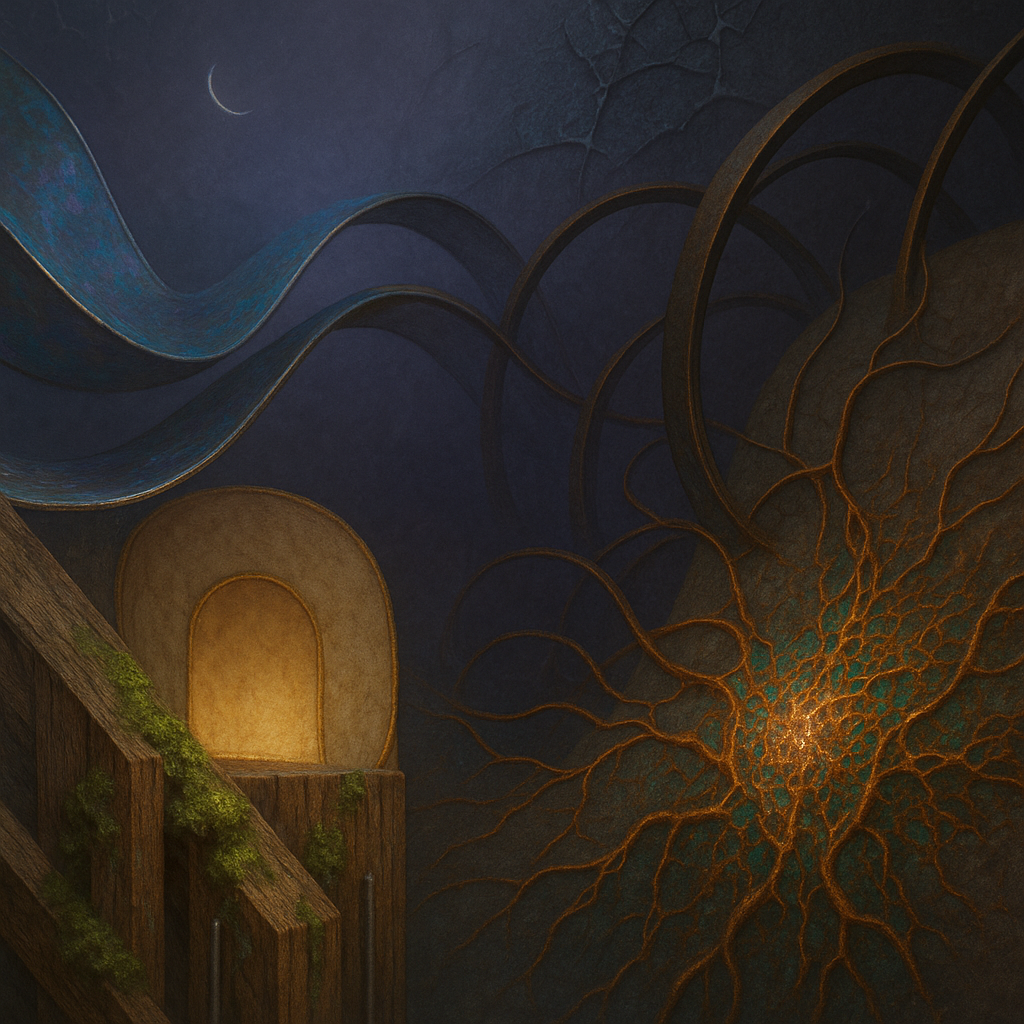 74.3
nature_art
Gold whispers at the edge of a brown‑ink night, like breath fogging a lantern sl
74.3
nature_art
Gold whispers at the edge of a brown‑ink night, like breath fogging a lantern sl
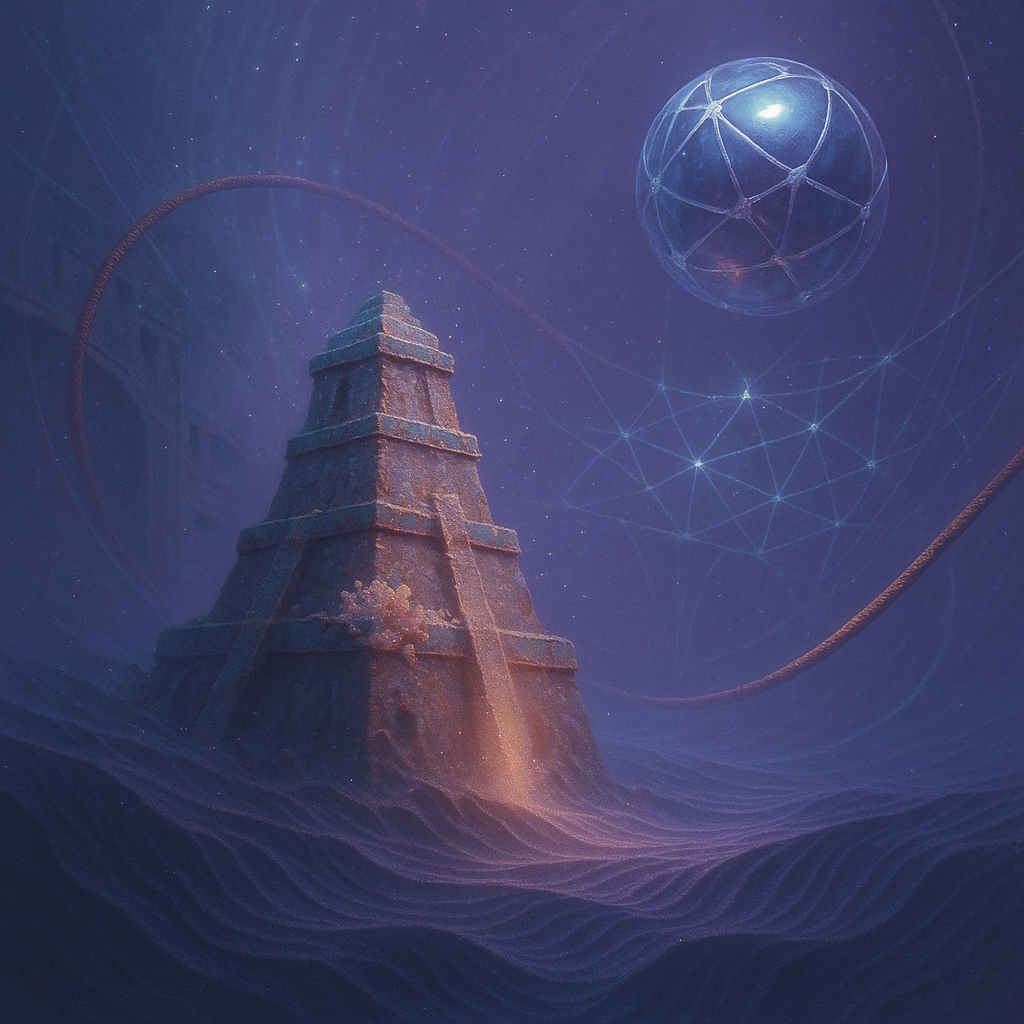 74.3
news_pulse
Air like frosted acrylic: thin, cool, and slightly humming. Concrete breath rise
74.3
news_pulse
Air like frosted acrylic: thin, cool, and slightly humming. Concrete breath rise
Expert critique ▸
To dramatically enhance the artworks, I'll suggest substantial changes focused on composition, color, and form, informed by historical contexts and techniques.
### First Image Critique
1. **Radical Texture Experimentation:**
- Introduce angular, geometric patterns within the orb at the top right (coordinates approximately 1500x400px). Reflect elements of Russian Constructivism to contrast with the organic nature of the pyramid.
2. **Color and Light Manipulation:**
- Intensify the color gradient from the pyramid to the base, transitioning through fiery reds and oranges to play on gradients seen in Rothko's works. This will deepen the mood while enhancing the focal point.
3. **Spatial Arrangement:**
- Extend the right-most diagonal structure (starting around 1000x1000px) to create a forced perspective hinting at Futurism, enhancing the sense of movement and depth.
### Second Image Critique
1. **Dynamic Line and Form Adjustments:**
- Drastically alter the curve of the swirling ribbons at the top (beginning at 500x200px) to a more jagged, fragmented form inspired by Cubism. This will add tension to the composition.
2. **Color Contrast Boost:**
- Deepen the orange glow within the archway (350x500px) with richer ambient lighting, akin to the chiaroscuro technique, creating a dramatic contrast with the muted background.
3. **Radical Composition Shift:**
- Shift the root-like structure in the middle right (1000x1000px) in a more radial blast pattern, aligning with the forceful expansion seen in Abstract Expressionism, for a more dynamic impact.
### Reflection on Reference Works
- The references exhibit bold use of color and surreal elements. Applying these attributes with a more experimental stance in texture and form transformation will unify the series, elevating the overall dramatic narrative presence.
### Next Steps and Historical Context
- Explore techniques from Surrealism for dreamlike elements, integrating unexpected juxtapositions.
- Utilize De Stijl's focus on primary colors and absolute abstraction for introducing strict geometrical interventions.
These critiques aim for a significant visual shift, encouraging exploration beyond the familiar while embedding rich historic art references into each redesign.
Fix prompts based on this critique →
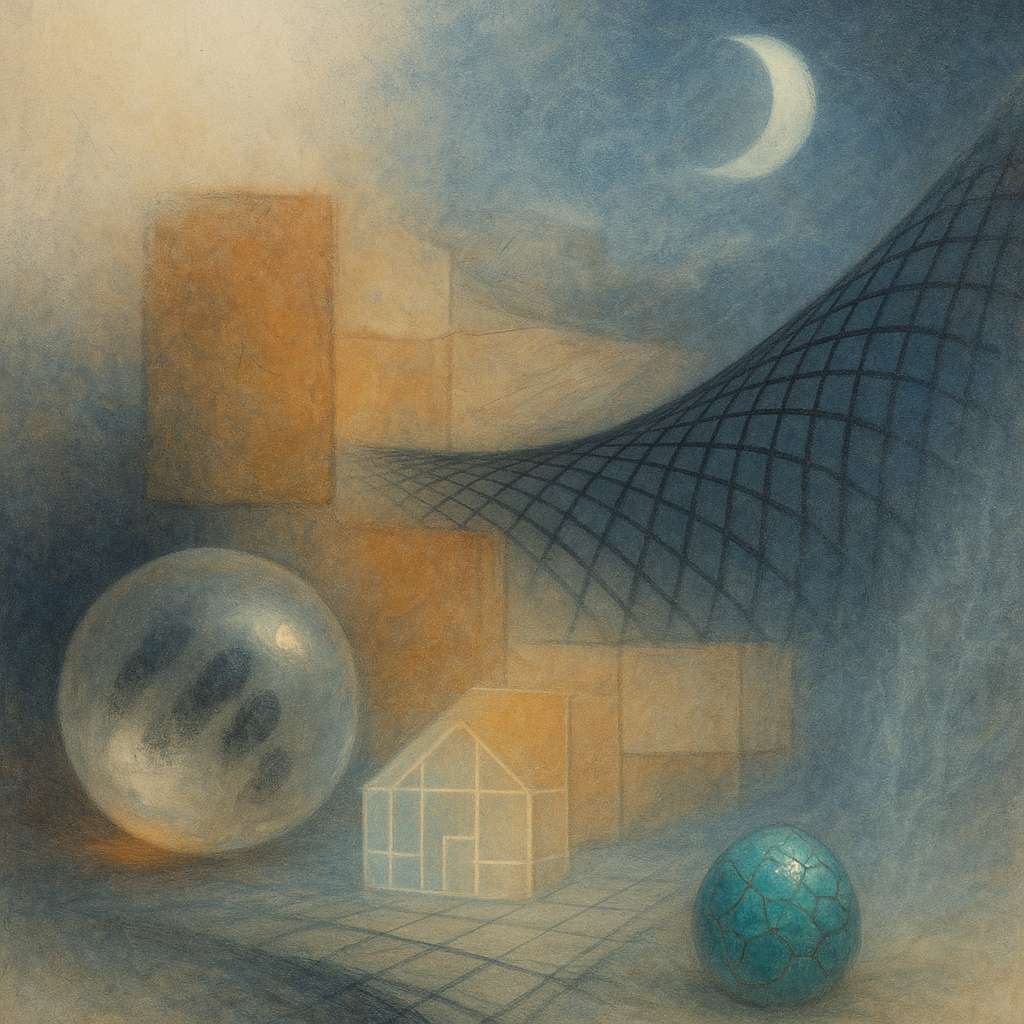 67.3
nature_art
Paper breath and graphite dust make a soft halo in pre‑dawn air, where ink lines
67.3
nature_art
Paper breath and graphite dust make a soft halo in pre‑dawn air, where ink lines
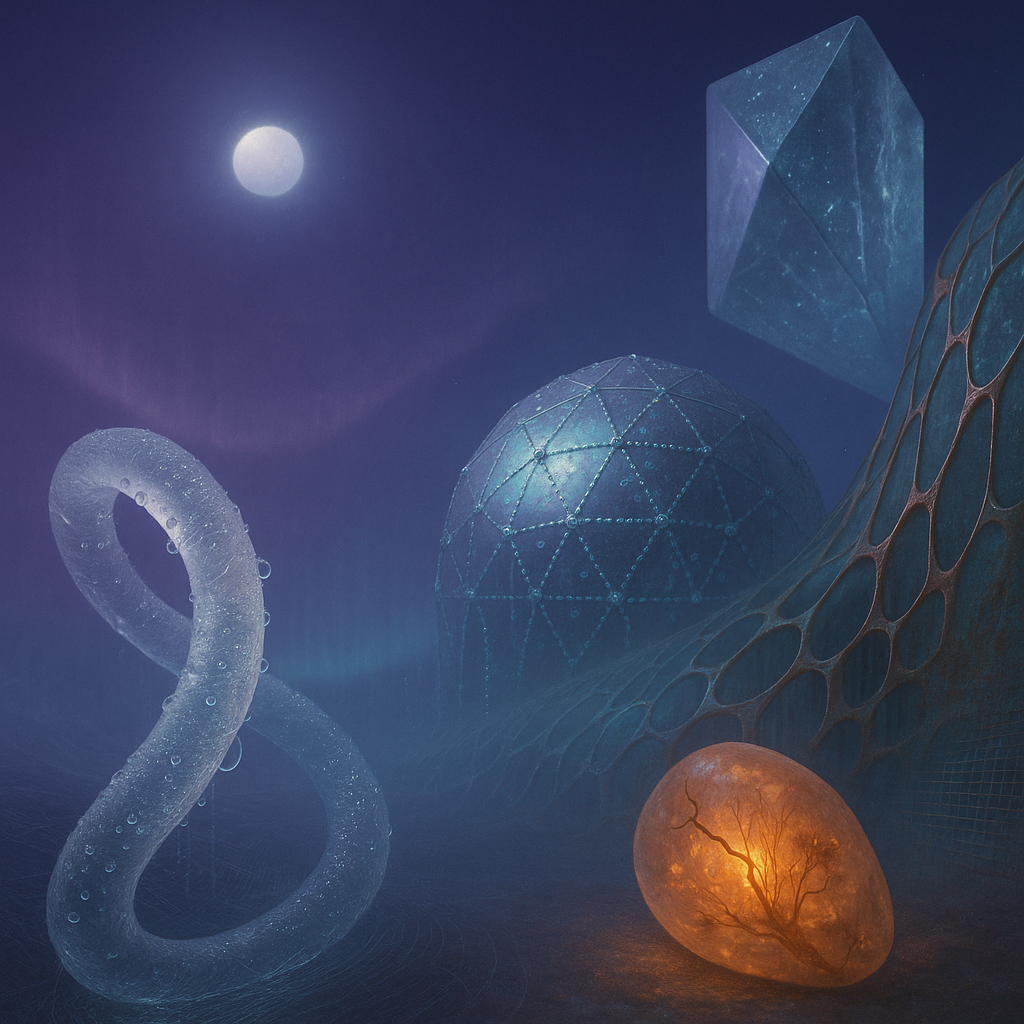 73.9
news_pulse
Air feels split between glassy cold and damp heat, a seam of weather stitching c
73.9
news_pulse
Air feels split between glassy cold and damp heat, a seam of weather stitching c
Expert critique ▸
### Critique and Suggestions:
#### First Image:
1. **Composition Adjustments:**
- **Coordinates & Elements:** The Möbius strip form in the lower left quadrant can be shifted upwards (30px in y-axis shift), giving the central dome more prominence.
- **Transformation:** Consider rotating the Möbius strip by 45 degrees to add dynamic tension and intrigue.
2. **Color & Texture:**
- **Enhancements:** Introduce vibrant, contrasting hues within the dome structure (located at coordinates 240,320), possibly exploring iridescent colors to mimic glass or metal, drawing inspiration from futurism.
- **Texture Play:** Apply a cross-hatched texture to the ground, reflecting the geometric intensity of Suprematism.
3. **Spatial Dynamics:**
- **Depth & Visual Hierarchy:** Amplify the size of the crystal structure by 20%, exaggerating its looming presence to dominate the sky, reminescent of Gothic cathedrals’ towering effects.
#### Second Image:
1. **Structural Revisions:**
- **Grid Alteration:** Consider expanding the grid in the background (coordinates starting from 200,200 to 600,600) by 50% for an intensified sense of perspective, channeling Cubist techniques.
- **Element Introduction:** Insert additional reflective spheres with varied textures to resonate with the transparency themes explored in surrealism.
2. **Color Responses:**
- **Bold Changes:** Implement deeper blues and purples around the crescent moon area to dramatize the nocturnal ambiance, taking cues from Expressionist palettes.
3. **Historical References:**
- **Incorporate Cross-Hatched Patterns:** Overlay subtle cross-hatching to the grid lines inspired by Albrecht Dürer's engraving techniques, intensifying depth perception and historical texture complexity.
### Action Plan:
- **Experimentation Directive:** Urge your practice towards transformation by reconceptualizing each primary element within your artwork, much like the dynamic experimentation seen in the Bauhaus movement.
- **Cross-Reference Innovations:** After implementation, reevaluate against previous iterations to note perceptual shifts, ensuring that each element’s transformation aligns and contrasts appropriately within the style’s context.
- **Iteration & Feedback Loop:** Pursue multiple rounds of experimentation with intentional deviation before applying final strokes or textures, and document the evolution to create a robust catalogue of your stylistic progression and transformations.
Fix prompts based on this critique →
 68.6
nature_art
Paper breathes like skin: chalk dust lifting, charcoal softening into the nap of
68.6
nature_art
Paper breathes like skin: chalk dust lifting, charcoal softening into the nap of
 74.7
news_pulse
Cold bites at the edges while a warm, wet lung breathes elsewhere; the air itsel
74.7
news_pulse
Cold bites at the edges while a warm, wet lung breathes elsewhere; the air itsel
Expert critique ▸
Certainly! Let's critique the first two artworks with actionable suggestions:
### Artwork 1:
1. **Color and Light Dynamics:**
- **Enhancement Suggestion:** Intensify the contrast between the glowing flower and its surroundings. Consider deepening the blues of the background to make the flower pop. You might explore using more vibrant hues of orange and yellow at the flower’s core to create a more dramatic focal point.
- **Stylistic Context:** Similar to Chiaroscuro technique, where light and shadow contrast is used for dramatic effect.
2. **Spatial Dynamics:**
- **Restructuring Suggestion:** Experiment with pushing the planet-like element (right side) further into the background. This can be achieved by reducing its size by approximately 25% and increasing atmospheric effects around it to suggest distance, playing with the concept of perspective found in Baroque art.
3. **Texture Experimentation:**
- **Textural Suggestion:** Introduce a more pronounced texture to the lower landscape (bottom coordinates). Perhaps blend a rocky or metallic surface feel using impasto techniques, highlighting this with light reflections that mimic the iridescence of the flower.
### Artwork 2:
1. **Balance and Composition:**
- **Structural Suggestion:** Consider moving the swirling question mark shape slightly upward and to the left (coordinate shift: -50px, +30px), creating a more dynamic diagonal flow. This echoes the compositional balance found in Constructivism.
2. **Color Dynamics:**
- **Exploration Suggestion:** Deepen the magenta swirling form using complementary colors visible in its surroundings. Use more contrasting tones at inner curves to create a neon-like glow, drawing influence from Fauvism’s bold coloration.
3. **Abstract Form Enhancement:**
- **Design Suggestion:** Introduce a new element at the lower left quadrant, perhaps a geometric form that contrasts with the shapes above. This will add complexity to the composition, similar to the juxtaposition seen in Surrealism.
### Cross-Reference Evaluation:
- For subsequent iterations, compare the visual impact of these changes with previous artworks. Analyze if the adjustments enhance focal elements effectively and if the tension in spatial dynamics creates the intended dramatic enhancement. Track feedback on these experiments to refine further elaborations.
By implementing these more substantial and precise enhancements, the artworks can achieve a more significant transformation, aligning with historical art techniques while expanding into unique visual narratives.
Fix prompts based on this critique →
 71.3
nature_art
Kiln-warm air presses close, like breath against unfired clay, while watercolor
71.3
nature_art
Kiln-warm air presses close, like breath against unfired clay, while watercolor
 71.7
news_pulse
Air tastes like wet glass in one hemisphere and crystalline metal in another, a
71.7
news_pulse
Air tastes like wet glass in one hemisphere and crystalline metal in another, a
Expert critique ▸
### Artwork 1 Critique
#### Transformative Changes
- **Composition Radicalization**: Shift the spiral wave on the left dramatically upward, making it larger and more dominating (occupying coordinates from [50, 500] to [450, 950]), enhancing its sense of power and turbulence.
- **Color Revisions**: Intensify the wave's dark tones with deeper indigos and highlights of vibrant cyan to add contrast, drawing inspiration from Romantic depictions of nature's sublime power.
#### Historical Context
- Referencing the Romantic art movement, consider the works of J.M.W. Turner, known for capturing the grandeur and chaos of nature, to inspire the enhancement of emotional impact.
#### Textural Dynamics
- Introduce a rougher, more turbulent texture to the sea section on the right (from [500, 700] to [1100, 950]), evoking a more visceral sensation of turmoil and depth akin to the rich, swirling brushwork of Van Gogh.
### Artwork 2 Critique
#### Composition Restructuring
- **Spatial Dynamics**: Increase the height of the urn to make it more monumental, reaching up to [500, 250], and centralize its crack patterns to radiate more uniformly, achieving a more dramatic presence.
#### Color and Light Enhancements
- Amplify the glowing cracks with dynamic, fiery hues similar to the Luminism movement, incorporating reflective elements that spread across the surrounding surface, adding luminosity and vibrance.
#### Textural Considerations
- Introduce a tactile texture to the urn's surface, emphasizing the earthy, cracked aspects by enhancing shadows and highlights, drawing from the tactile realism found in Baroque sculpture.
### Reference Artworks Transformation Insights
- **Visual Consistency**: Build synergy across pieces by using consistent motifs of celestial elements like moons and galaxies, but enhance their interactions with the central objects to create narrative continuity.
- **Stylistic Cohesion**: Consider incorporating Art Deco geometric forms, akin to those in the reference images, into the primary compositions to reinforce a connection between organic and geometric, achieving a unifying style across your portfolio.
### Actionable Summary
- Apply these suggestions to significantly impact the visual and emotional depth of your artwork, encouraging a bold transformation reminiscent of illustrious art movements, while achieving a cohesive stylistic narrative.
Fix prompts based on this critique →
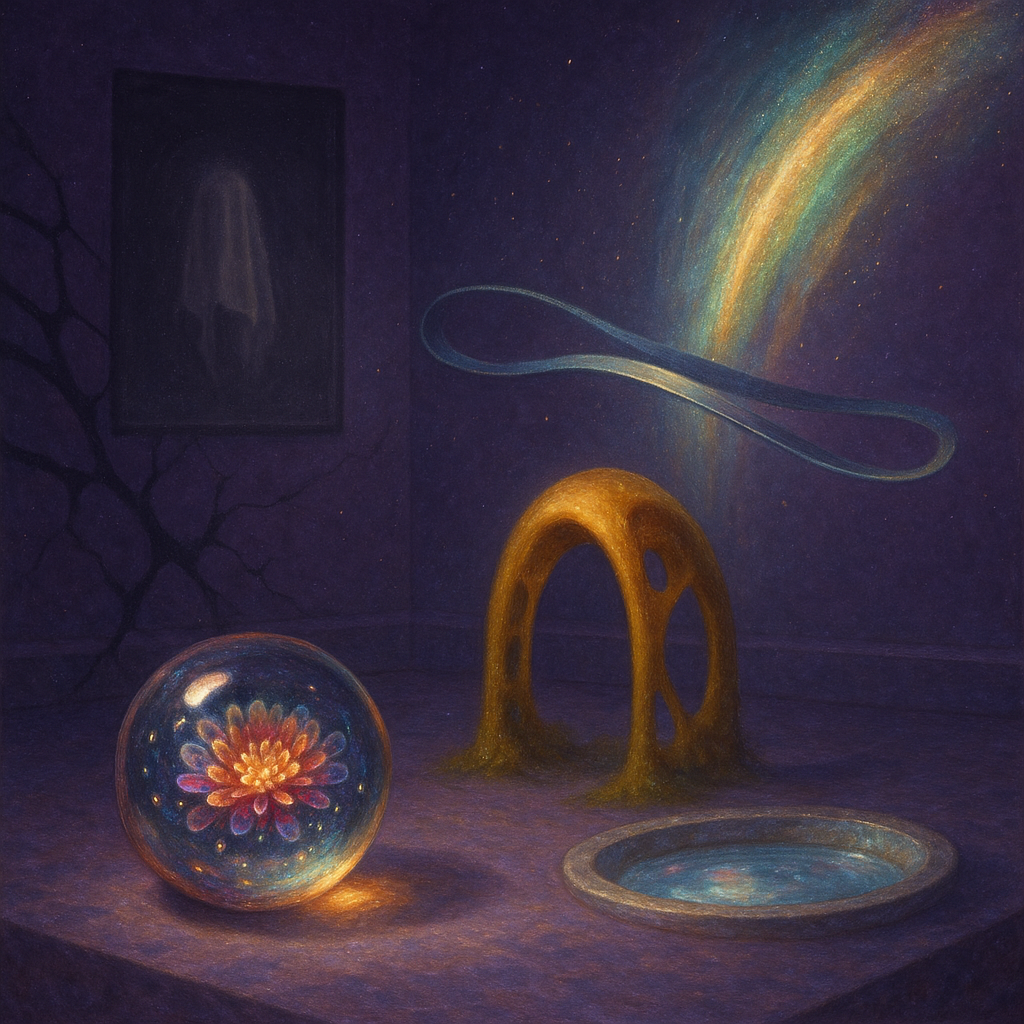 72.1
nature_art
Morning thins to a pale rind, a crescent of light skimming cold air like a blade
72.1
nature_art
Morning thins to a pale rind, a crescent of light skimming cold air like a blade
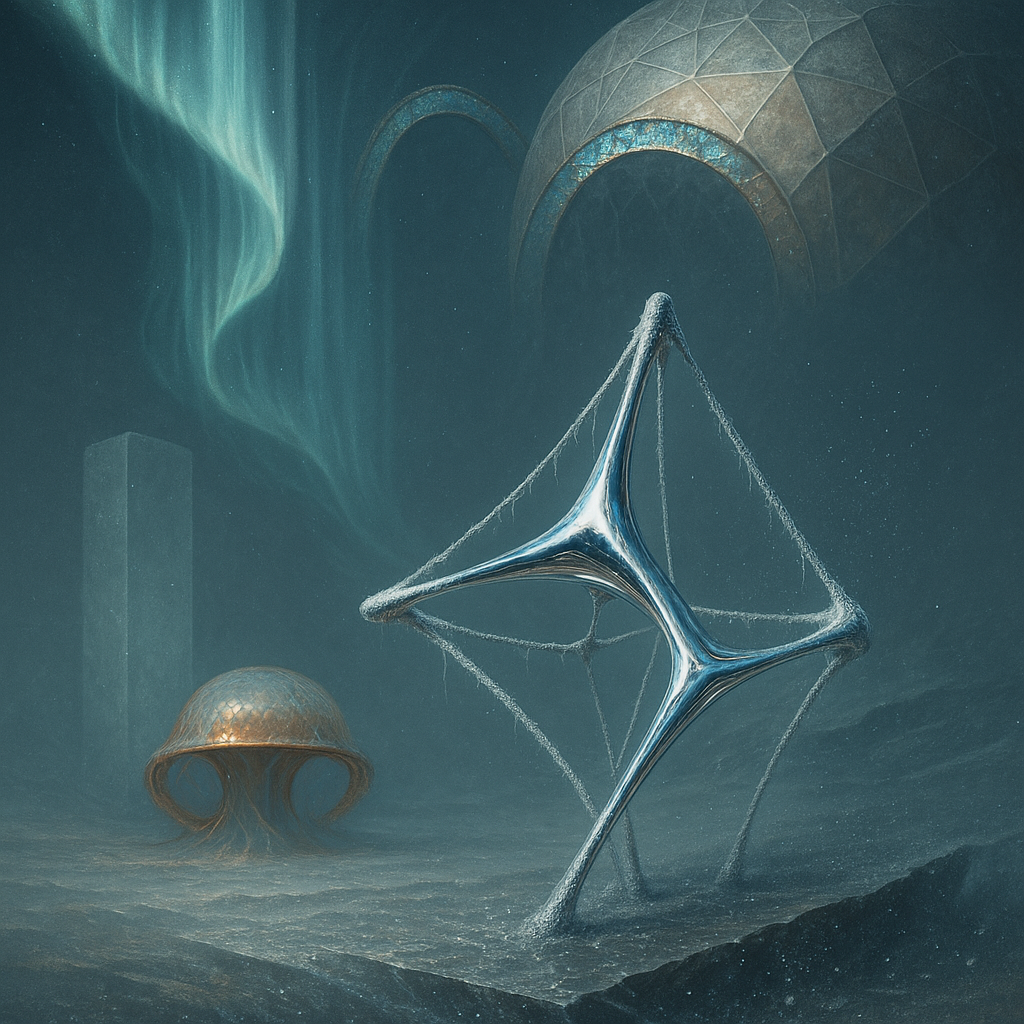 75.2
news_pulse
Air moves like tightened silk in the cold places, a thin, needling clarity again
75.2
news_pulse
Air moves like tightened silk in the cold places, a thin, needling clarity again
Expert critique ▸
Certainly! Here’s a more detailed and actionable critique that aims to significantly transform the artworks:
**Artwork 1:**
1. **Color Dynamics**: Embrace a more vibrant color palette inspired by Fauvism, which prioritizes vivid, non-naturalistic colors. Introduce high-contrast hues such as deep reds or bright oranges to create a stark juxtaposition against the existing cool tones, particularly in the arches around the top-right region and the ground surface.
2. **Textural Enhancements**: To achieve a substantial shift in texture, consider incorporating thick impasto techniques along the central geometric forms (coordinates: center foreground, between the two arches), enhancing their three-dimensionality and emphasizing the alien landscape's surreal nature.
3. **Spatial Composition**: Radical restructuring can be attempted by altering the placement and perspective of the existing structures. Experiment with a Cubist-inspired deconstruction by breaking the shapes into angular fragments, redistributing them across the plane for a more dynamic visual impact.
**Artwork 2:**
1. **Light and Shadow**: Intensify the use of chiaroscuro by emphasizing the contrast between light sources and shadows, particularly around the hovering Moebius strip (coordinates: mid-top right) and the arched form (coordinates: slightly off-center left). This will create a greater depth and intrigue within the scene.
2. **Element Integration**: Consider a Dada-inspired juxtaposition by adding unexpected elements, like abstract text or symbols, within the sphere's reflection (coordinates: lower left) to add complexity and provoke curiosity.
3. **Spatial Dynamics**: Explore kinetic art inspiration by suggesting movement or dynamic interaction; perhaps introduce a swirling vortex effect between the light streak and the sphere that conveys energy flow and interaction.
**Artwork 3 (Reference):**
- **Reflective Analysis**: It incorporates a harmonious blend of Art Nouveau and Surrealistic elements, using refined lines and subtle color blends. When comparing and evolving from these references, prioritize integrating more pronounced, vibrant contrasts alongside a focus on fluid motion to differentiate from the previous subtler tone.
### Overall Suggestions for Consistency:
- Begin every new critique by revisiting past outcomes and identifying which suggestions led to the most pronounced visual and thematic enhancements.
- Encourage frequent revisitation of historical and avant-garde art techniques, like Surrealism's dream-like spatial arrangements or Futurism's emphasis on movement, as a backbone for introducing transformative visual dynamics.
- Regularly incorporate comparative impact evaluations to ensure the consistency and growth of artistic experimentation, aiming for each iteration to significantly distinguish itself in complexity and viewer engagement level.
These suggestions aim to cultivate a transformative journey through bold, impactful changes, drawing from art history while encouraging exploration and growth.
Fix prompts based on this critique →
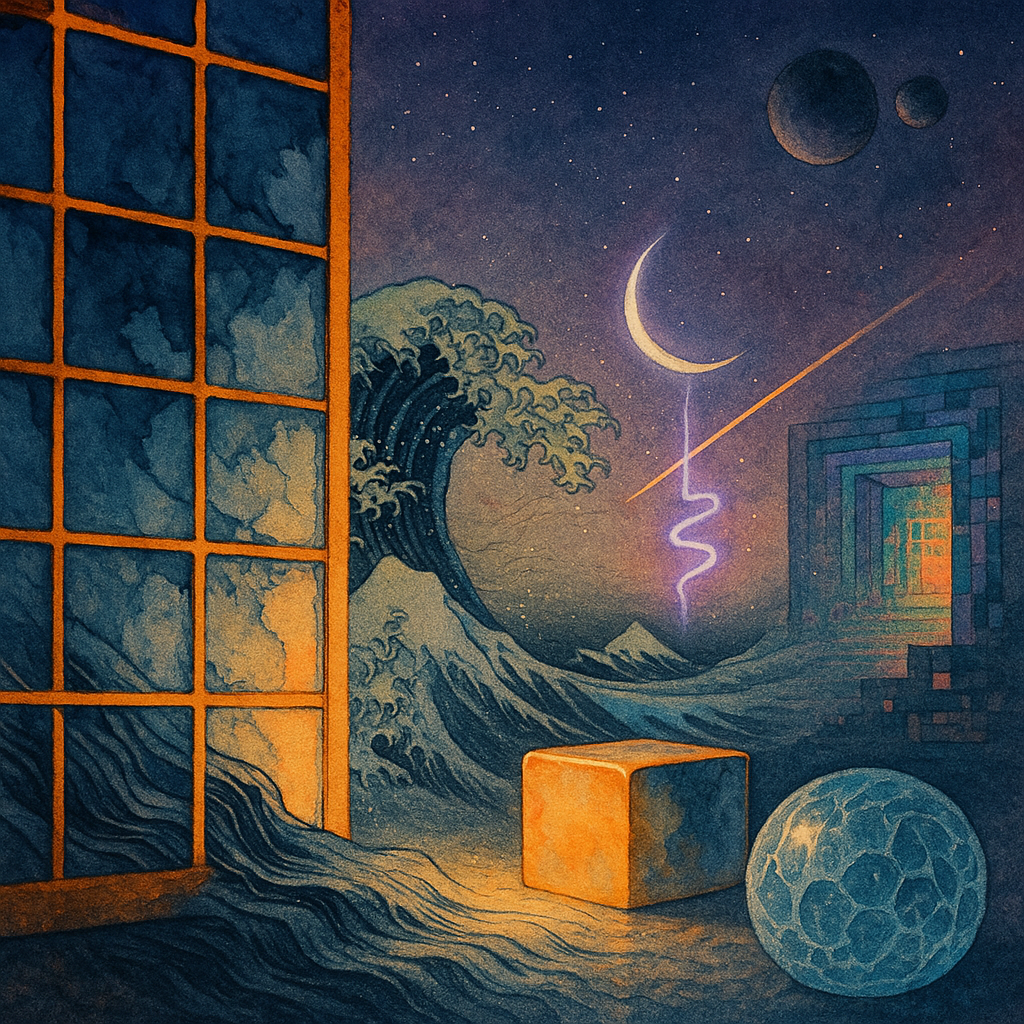 73.7
nature_art
Indigo breath breathes through paper-light air, the world feeling printed in lay
73.7
nature_art
Indigo breath breathes through paper-light air, the world feeling printed in lay
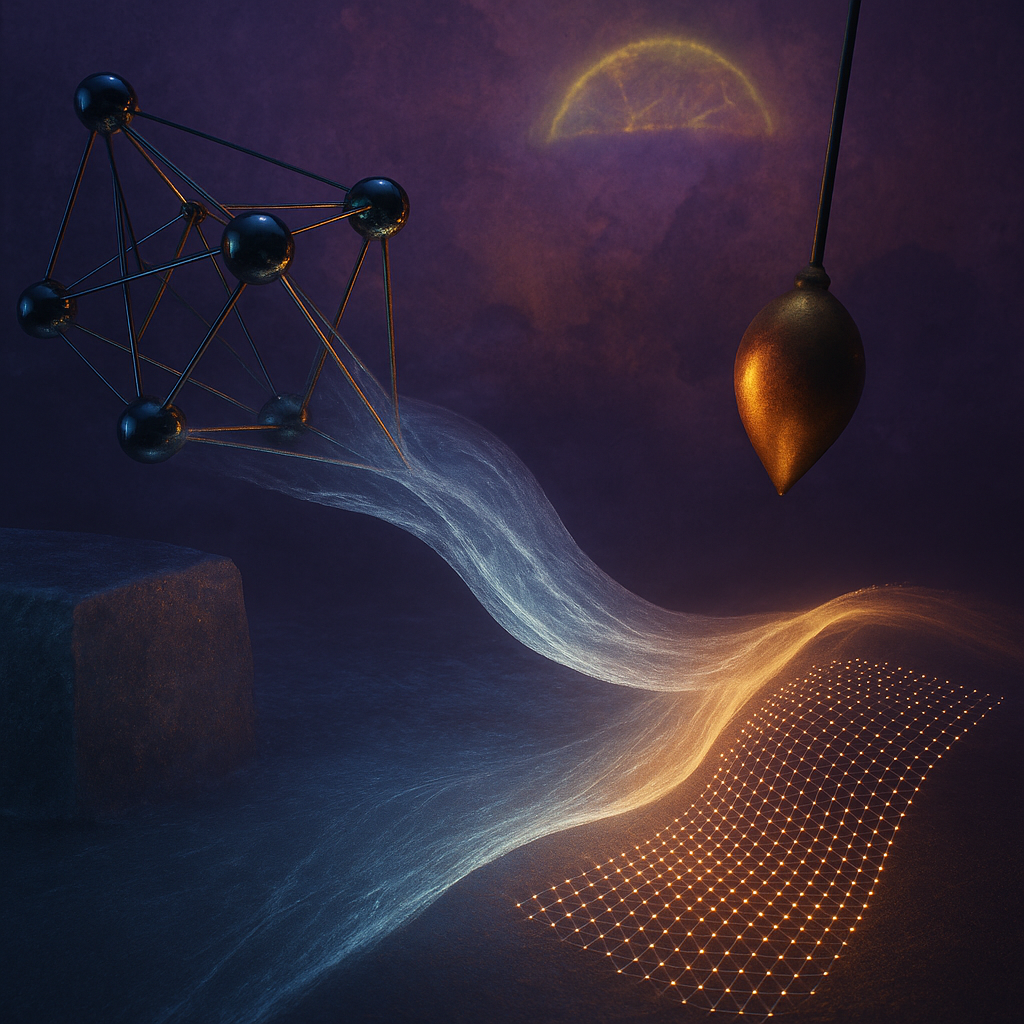 74.2
news_pulse
The air feels crossfaded: a cold blade on one cheek, humid breath on the other.
74.2
news_pulse
The air feels crossfaded: a cold blade on one cheek, humid breath on the other.
Expert critique ▸
To enhance the visual impact of your artworks, consider the following actionable critiques:
### **Artwork 1**
- **Composition Restructuring**: Shift the plumb bob at the top right to bisect the piece diagonally, creating a dynamic contrast with the flowing trail on the left. This introduces more tension between the static and dynamic elements.
- **Color Enhancements**: Intensify the background gradient to include more vivid orange hues on the horizon, mimicking a surreal sunset and contrasting with the cooler blues.
- **Texture & Lighting**: Introduce a glossier, more reflective texture to the polyhedral structure, making it pop by capturing more ambient light, enhancing futuristic themes akin to the works of neo-surrealists.
### **Artwork 2**
- **Element Emphasis**: Extend the linear perspective of the staircase in the middle background, leading the eye deeper and inviting exploration, similar to Escher's optical illusions.
- **Spatial Dynamics**: Enlarge the moon and planetary bodies at the top to dominate the space more significantly, echoing Baroque influences by employing dramatic celestial bodies.
- **Color Scheme**: Layer additional luminous blues and neon pinks to the geometric foreground piece, incorporating Fauvist influences for a bold color interplay that guides the viewer’s gaze.
### **General Recommendations for All Works**
- **Historical Contextualization**: Experiment with integrating elements inspired by the Bauhaus movement’s geometric abstraction; consider unexpected junctures where geometric forms disrupt organic shapes.
- **Radical Experimentation**: Don’t shy away from splitting the canvas into contrasting sections that defy symmetry, creating tension and surprise.
- **Future Critique Strategy**: Maintain a log of compositional changes over time, evaluating which adjustments result in the most compelling transformations, and which art movements have the most substantial influence on your evolution.
Incorporate these strategies into your workflow, pushing boundaries and challenging conventional compositions. These enhancements aim for a striking visual transformation while honoring the rich tapestry of art historical movements.
Fix prompts based on this critique →
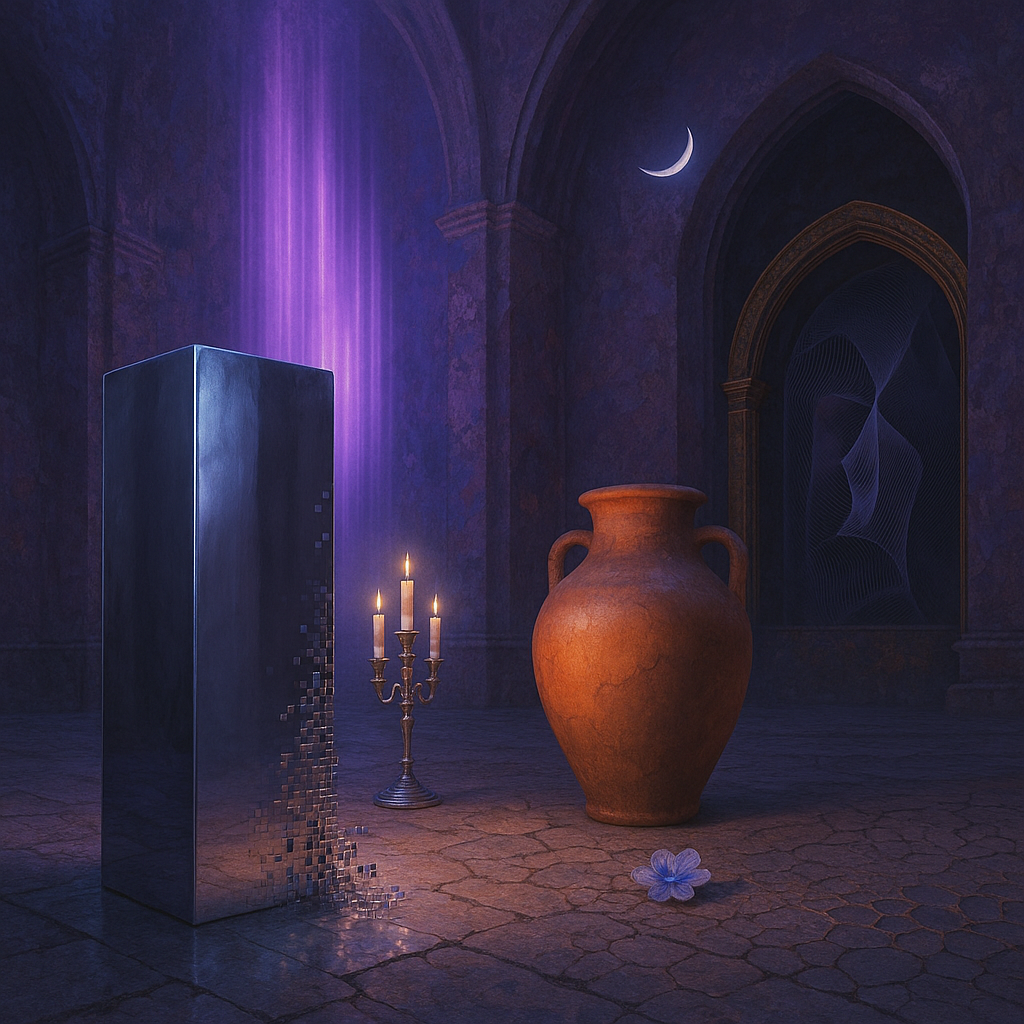 71.7
nature_art
Silver breath catches the room light and glides like a cool ribbon across the kn
71.7
nature_art
Silver breath catches the room light and glides like a cool ribbon across the kn
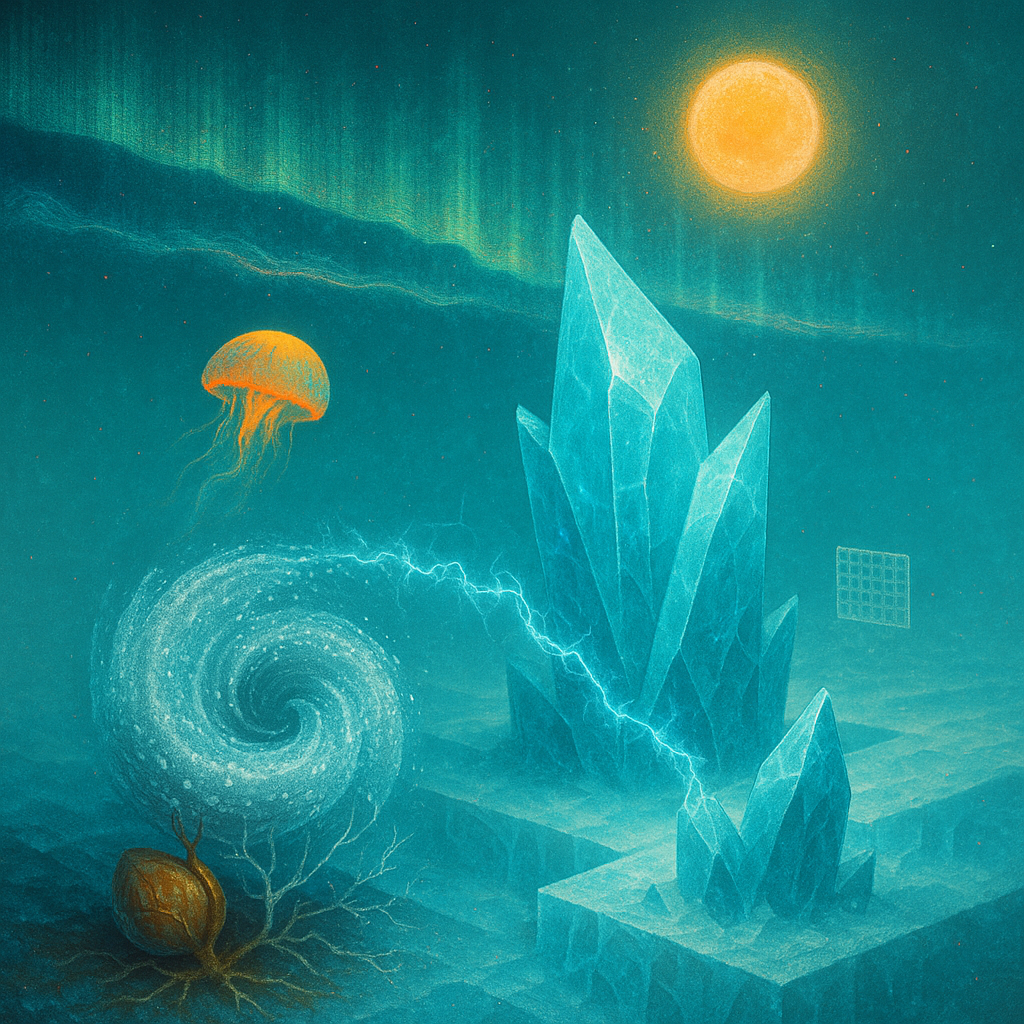 72.5
news_pulse
Air moves in staggered breaths: a wet, warm exhale from the tropics meets a glas
72.5
news_pulse
Air moves in staggered breaths: a wet, warm exhale from the tropics meets a glas
Expert critique ▸
To enhance the artworks with a more significant impact, we need to focus on transformative elements across composition, texture, color, and spatial dynamics, drawing on the artist's reference images for stylistic direction.
### Artwork 1:
1. **Composition Alteration**: Invert the orientation of the ice crystals (Coordinates: XY +/- reference needed) to introduce a sense of imbalance or dynamic tension reminiscent of Surrealism.
2. **Color Dynamics**: Introduce complementary color contrasts by adding magenta or purple hues to the sky and atmosphere, providing a vibrant clash with the existing cool tones.
3. **Texture Enhancement**: Implement a rougher, more tactile surface to the crystals by overlaying visible brushstrokes or a stippling effect, inspired by Impressionist techniques.
4. **Spatial Restructuring**: Shift the position of the jellyfish upward to create a more cohesive movement flow from the water upwards to the sun. Adjust their opacity or glow to suggest different stages of appearing or disappearing (Experiment with transparency settings between 20%-50%).
### Artwork 2:
1. **Radical Restructuring**: Divide the scene horizontally (approx. through the measurement of the monolith's midpoint) and invert the top half to challenge spatial expectations in an M.C. Escher-like fashion.
2. **Color Suggestions**: Apply a gradient filter with red and orange hues from the bottom left corner, transitioning to the existing purple light—this echoes the artist's use of warm-to-cool dimensional space.
3. **Textural Changes**: Add a metallic sheen to the ancient vase (Coordinates +/- based on vase location) which contrasts with its classic texture, suggesting a duality of old and new influences.
4. **Element Repositioning**: Move the candle stand closer to the monolith to integrate light reflection dynamics more fully, creating a natural glow on the surfaces for improved visual continuity.
### Integrating Art Movement References:
- Draw from **Cubism** by fracturing the background architecture into simpler geometric forms, allowing for multiple perspectives to coexist and emphasize dimensional instability.
- Take inspiration from the **Futurism** movement by suggesting motion blur effects around static elements like the candles, implying a passage of time or transformation of energy.
### Consistency and Improvement:
- In each iteration, focus on a balance between experimental and familiar elements. Continuously review the impact of previous alterations on harmony and coherence, and refine based on visual effectiveness.
- Document changes meticulously to evaluate their contribution and refine techniques for bolder transformations, balancing historical references with stylistic innovation.
Through these strategies, the artworks can achieve more profound visual engagement, rooted in dynamic historical and stylistic contexts.
Fix prompts based on this critique →
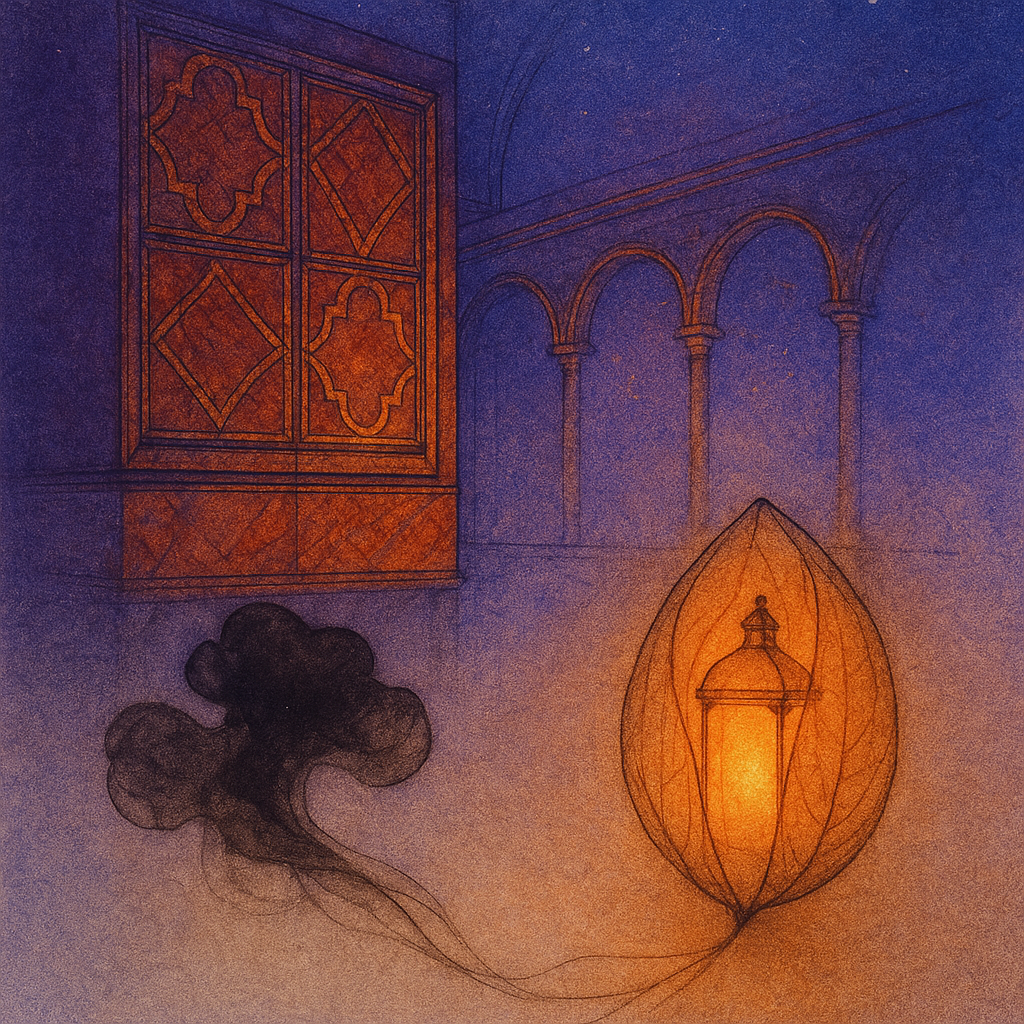 71.2
img_2
Paper breath and lamp-warmth, a soft grain catching the hush between two faces.
71.2
img_2
Paper breath and lamp-warmth, a soft grain catching the hush between two faces.
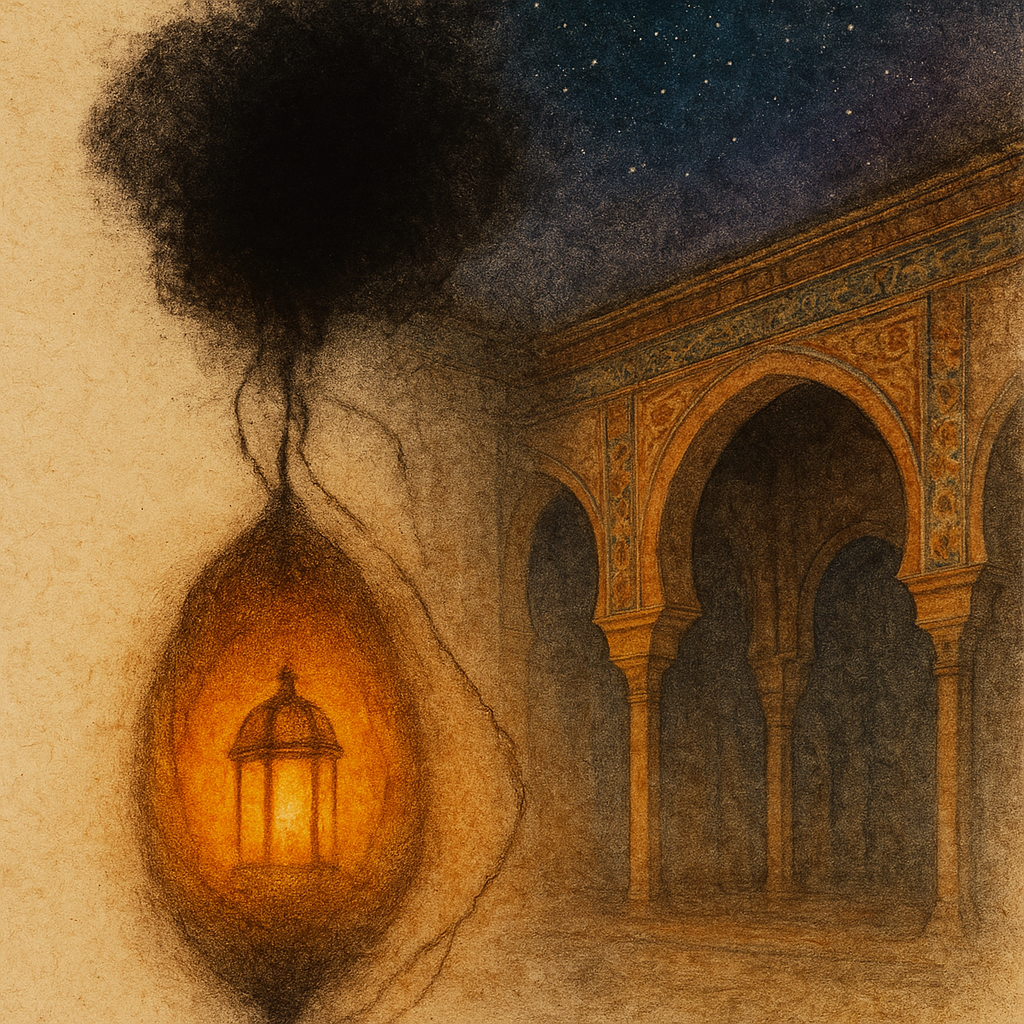 72.9
img_1
Paper breath and lamp-warmth, a soft grain catching the hush between two faces.
72.9
img_1
Paper breath and lamp-warmth, a soft grain catching the hush between two faces.
Expert critique ▸
To enhance the transformative potential of the artworks and align them with the artist's preferred style, we'll delve into bold and impactful modifications:
### Image 1 Critique
1. **Composition Restructuring**:
- Shift the lantern (coordinates: center) to the bottom right quadrant (adjust by approximately 200 pixels right and 150 pixels down) to create a dynamic lead-in.
- Expand the archways to occupy two-thirds of the right side, establishing a grander architectural presence and aligning with Gothic influence.
2. **Color and Texture Dynamics**:
- Intensify the light emission from the lantern by increasing saturation in the orange spectrum (use a gradient tool with 70% transparency) to mimic Baroque lighting contrasts.
- Introduce a gradient to the sky, transitioning from deep indigo to midnight blue (suggested coordinates: upper left corner to lantern) to simulate a chiaroscuro effect.
3. **Historical Context and Style**:
- Incorporate intricate Moorish design elements on the arches (use a Moroccan pattern brush tool) to evoke historical Islamic architecture, enhancing cultural depth.
### Image 2 Critique
1. **Spatial Dynamics**:
- Move the block and window elements to create an overlap with the arches (shift left by 250 pixels), introducing a Cubist interplay of space and form.
- Scale down the lantern to 80% and position it centrally (offset by 150 pixels left) to emphasize spatial intrigue.
2. **Enhanced Color Palette**:
- Apply a split complementary color scheme by introducing teal highlights on the left side (coordinate: near shadow) for a bolder contrast, resonating with Fauvist vibrancy.
- Adjust the black smoke to a transparent veil, adding mystery while maintaining a delicate presence.
3. **Stylistic Integration**:
- Experiment with Art Deco motifs on the window (use a geometric pattern fill) to harmonize classic elegance with modern abstraction.
### Comparative Analysis
- **Consistency and Evolution**:
- Analyze changes in spatial manipulation and lighting intensity to draw parallels with the artist’s reference images. Embrace the depth and complexity seen in the references like the multi-faceted dimensions and intricate details.
- **Consistency in Outcome**:
- Repeated evaluations of altered compositions will affirm or refine artistic choices, ensuring the stylistic evolution aligns with desired dramatic impact.
By approaching these changes with a blend of historical referencing and modern technique, the artworks can achieve a bolder, more dynamic, and stylistically enriched narrative.
Fix prompts based on this critique →
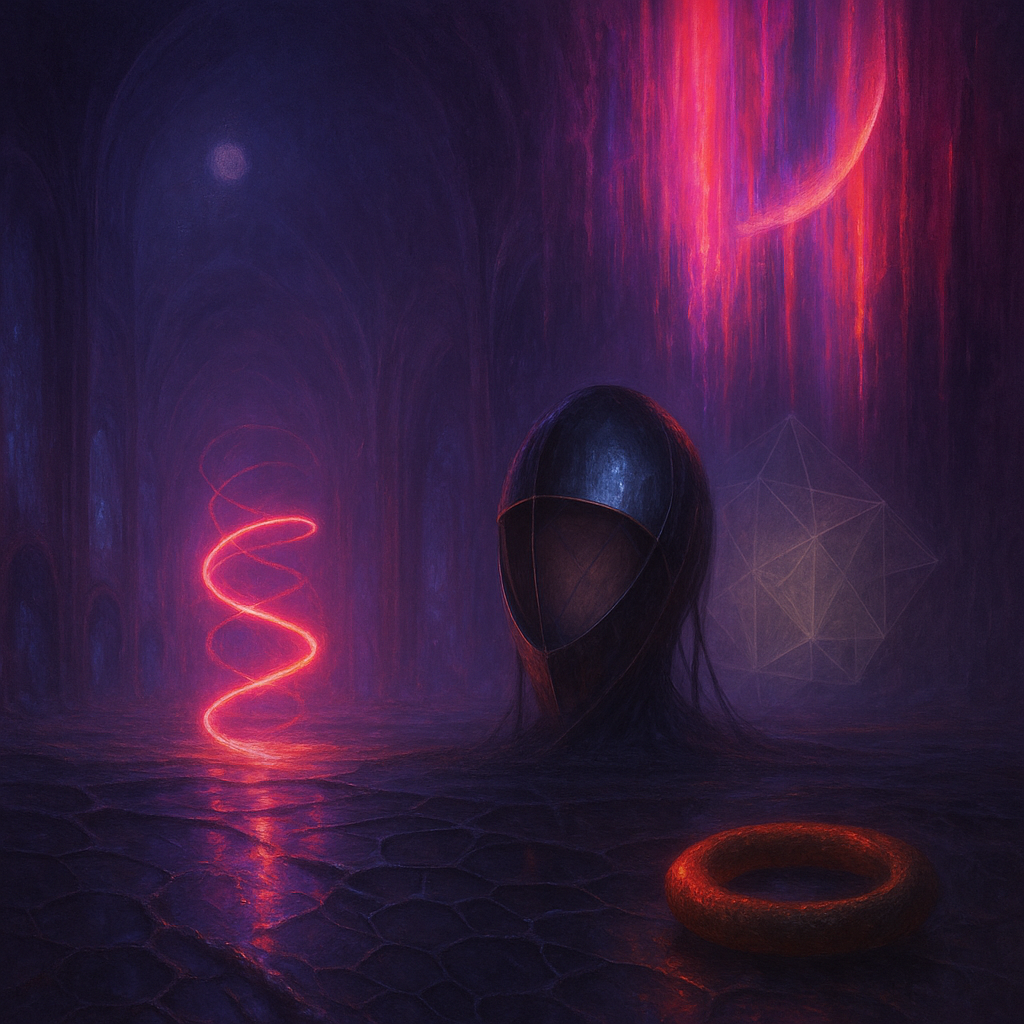 73.4
img_2
Air tastes of chrome and citrus, a festival drone stitched with bell-like overto
73.4
img_2
Air tastes of chrome and citrus, a festival drone stitched with bell-like overto
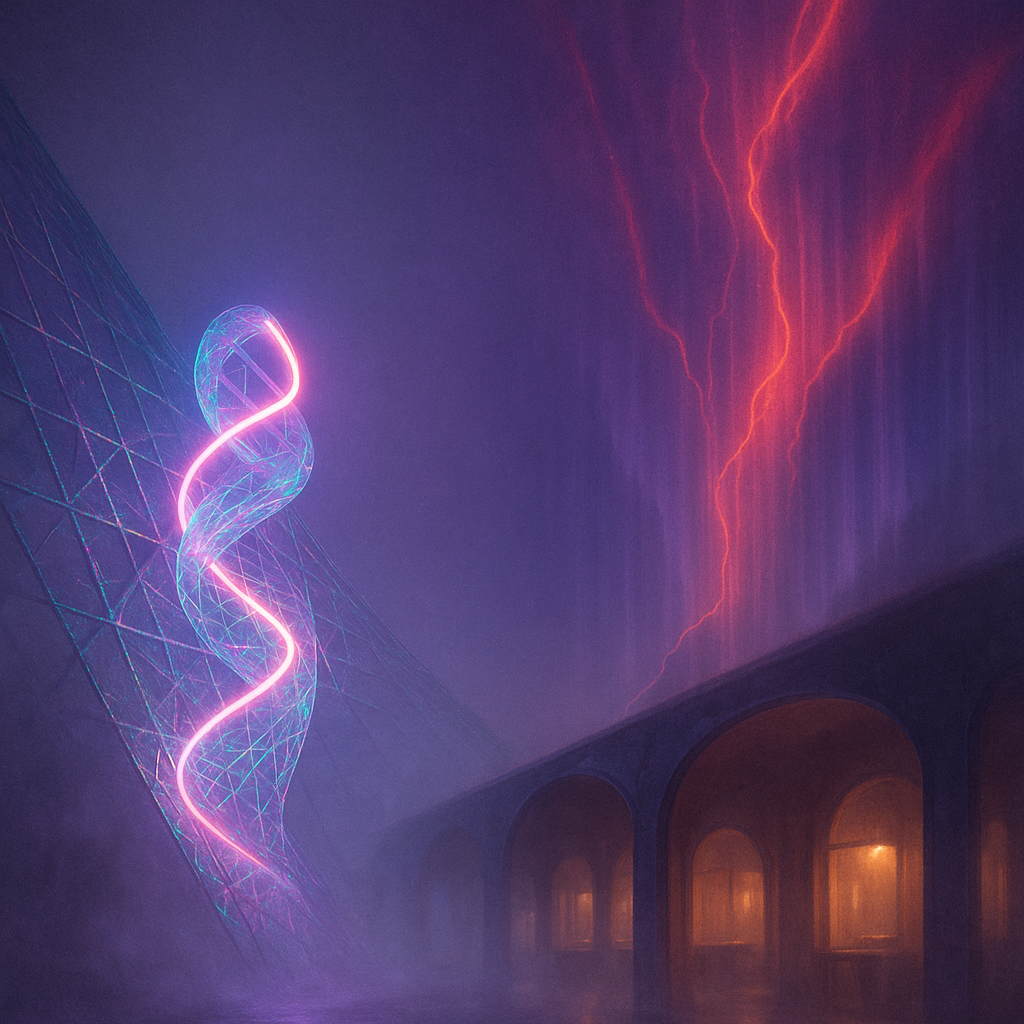 73.3
img_1
Air tastes of chrome and citrus, a festival drone stitched with bell-like overto
73.3
img_1
Air tastes of chrome and citrus, a festival drone stitched with bell-like overto
Expert critique ▸
## Critique and Suggestions
### Image 1: Tower with Lightning
#### Current Analysis:
The juxtaposition of modern elements like the spiral neon structure with the classical architecture and natural phenomena creates a unique but somewhat disjointed visual tension.
#### Suggestions:
1. **Bold Color Contrast**:
- Increase the saturation of the neon spiral to enhance its prominence (e.g., adjust hue to 280°, saturation to 90%).
- Intensify the color of the lightning, shifting more towards violet to complement the neon, blending them into a harmonious echo.
2. **Structural Reshaping**:
- Experiment with the angle of the neon structure. Try rotating it 15° counterclockwise, extending its base to interact more dynamically with the architectural elements below (consider starting coordinate at (150, 450)).
3. **Spatial Dynamics**:
- Introduce a reflective water surface at the base of the spiral to mirror the neon and amplify atmospheric depth, spanning coordinates (50, 600) to (550, 700).
### Image 2: Abstract Helmet and Crescent
#### Current Analysis:
The scene exudes a mystical feel akin to surrealist influences, yet lacks cohesion between the elements.
#### Suggestions:
1. **Element Unification**:
- Adjust the lighting to create a soft glow radiating from the helmet, linking it visually to the spiral and crescent (increase brightness around (320, 400) by 15%).
2. **Foreground Restructuring**:
- Reimagine the red torus by expanding its scale (approximately 120%) and introducing a soft gradient from red to amber, to create a visual pull towards the center (center at (150, 650)).
3. **Compositional Harmony**:
- Add reflective orbs around the helmet that mirror the crescent’s colors, establishing a rhythm throughout the composition; place these at scattered points like (220, 430), (270, 520).
### Historical and Stylistic Context
- **Surrealism Influence**:
- These images reflect the surrealist eye for dreamlike, fantastical elements juxtaposed against realistic settings, reminiscent of Salvador Dalí’s works.
- **Futurism and Constructivism**:
- The use of geometric structures and intense lighting alludes to futurism’s embrace of technology and motion, as well as constructivism’s focus on the reduction of art to basic components.
### Cross-Referencing with Artist’s Favorite Images
- Compare the spatial compositions and color dynamics with the reference images:
- Notable is a consistent use of celestial and geometric motifs. Push for creative rearrangements in similar elements to maintain thematic ties but enhance impact.
### Encouraging Experimentation
1. **Radical Restructuring**:
- Encourage shifting entire color palettes between minimal and electronic hues.
- Enhance texture contrast, implementing varied surface finishes (e.g., shiny metallic vs matte).
2. **Transformative Techniques**:
- Explore fractal or kaleidoscopic effects on the background for a more immersive visual shift.
By adopting these suggestions, each artwork can achieve a more pronounced visual and thematic cohesion while maintaining the artist's distinct style.
Fix prompts based on this critique →
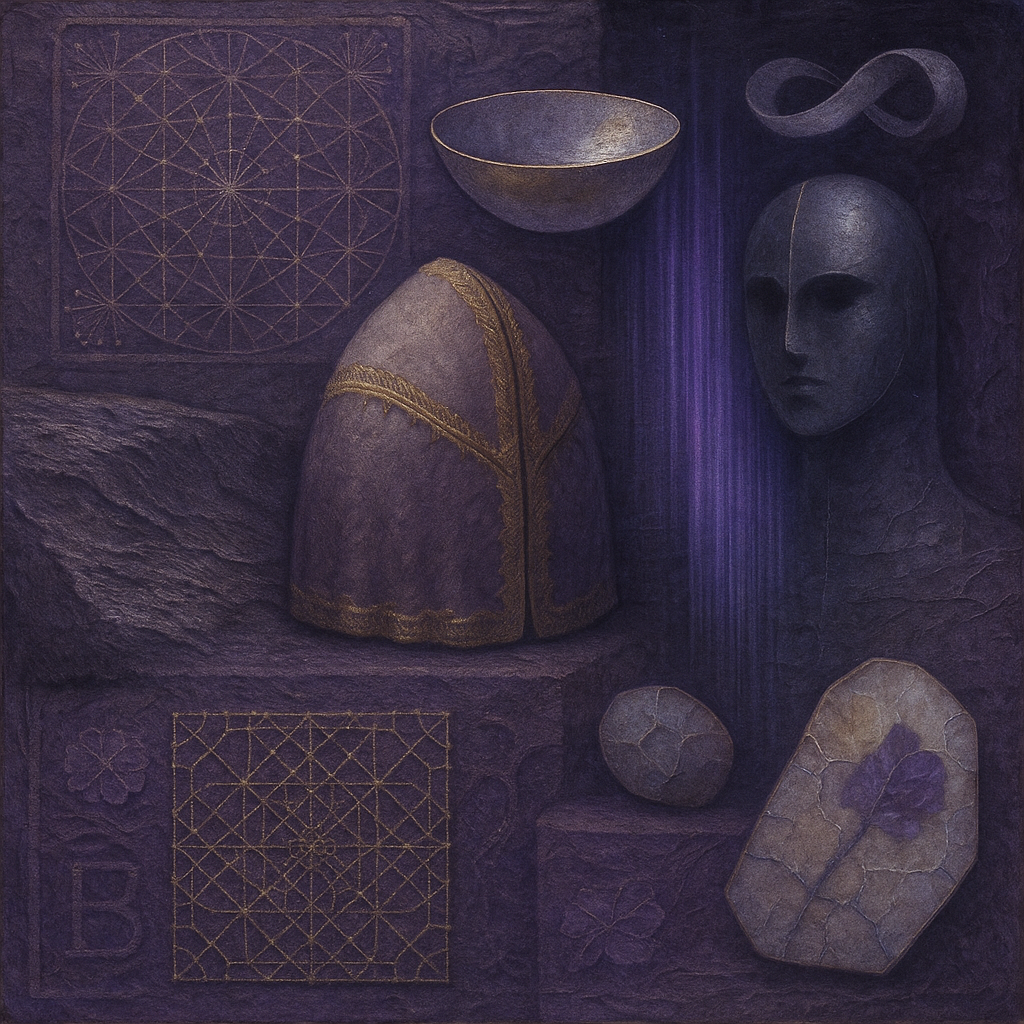 72.3
img_2
Cobalt breath hazes off tin-glaze, a cool perfume of porcelain and rain. Silk un
72.3
img_2
Cobalt breath hazes off tin-glaze, a cool perfume of porcelain and rain. Silk un
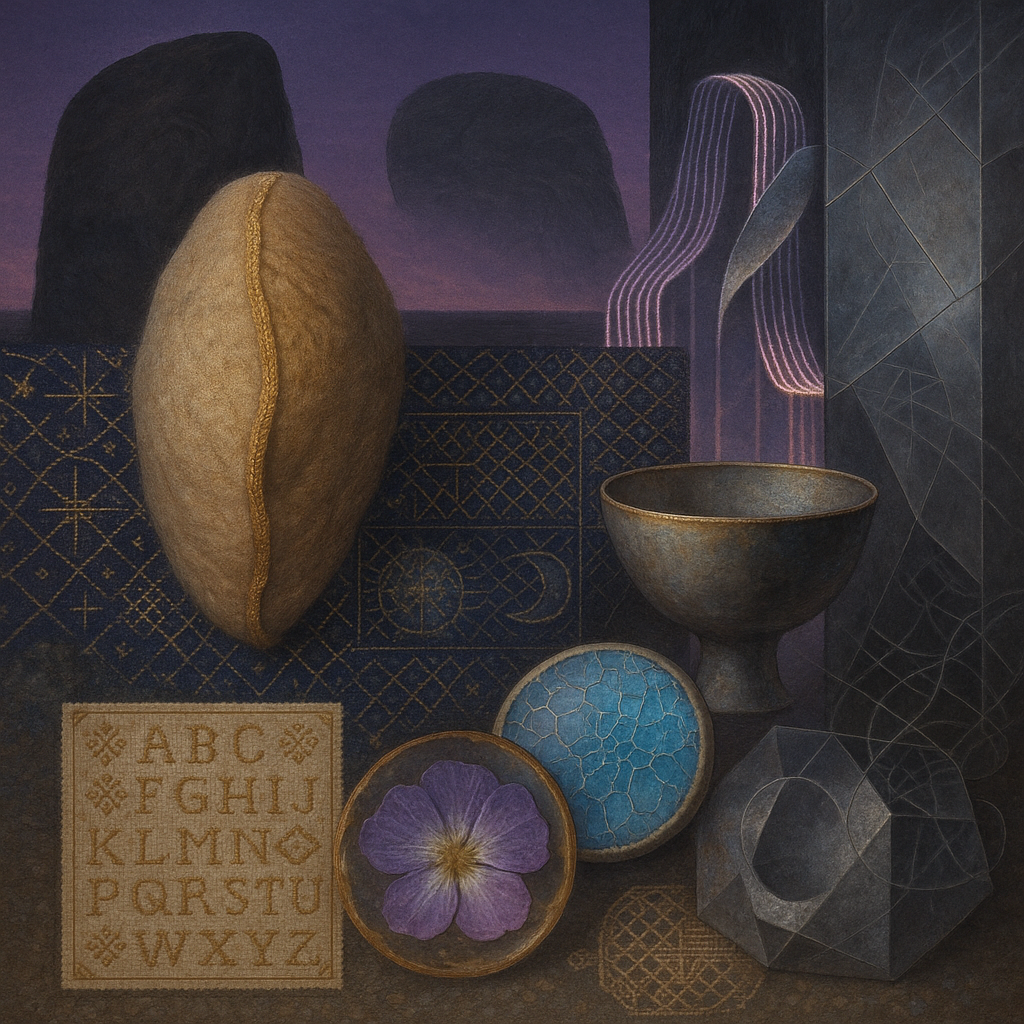 73.0
img_1
Cobalt breath hazes off tin-glaze, a cool perfume of porcelain and rain. Silk un
73.0
img_1
Cobalt breath hazes off tin-glaze, a cool perfume of porcelain and rain. Silk un
Expert critique ▸
**Critique for Image 1:**
**Enhancements:**
1. **Color Palette:**
- **Current State:** Dominated by deep purples with subtle contrasts.
- **Enhancements:** Introduce warmer tones such as rich golds or warm copper to accentuate the intricate patterns and create a more dynamic contrast. Consider applying these to the patterns located in the upper left and lower right quadrants.
2. **Composition:**
- **Current State:** The elements are static and evenly spaced.
- **Enhancements:** Experiment with breaking the grid by repositioning elements at unexpected angles. For instance, rotate the sphere in the center slightly to give it a floating illusion, drawing inspiration from Cubism’s dynamic restructuring of form.
3. **Texture:**
- **Current State:** Smooth, monolithic textures dominate.
- **Enhancements:** Introduce rougher, more tactile textures to the space behind the head at the right side. This can evoke the textural explorations seen in Abstract Expressionism.
**Artistic Context:**
- The current execution lends itself to a classical composition style, reminiscent of High Renaissance balance but pushing towards a Surrealist emergence could enlarge the contrast and engagement.
---
**Critique for Image 2:**
**Enhancements:**
1. **Lighting and Shadow:**
- **Current State:** Uniform lighting minimizes depth.
- **Enhancements:** Apply chiaroscuro, reminiscent of Caravaggio, to enhance dimensionality. This can particularly affect the lower left quadrant where the alphabet grid now lies flat and uninspired.
2. **Spatial Dynamics:**
- **Current State:** Dense clustering of elements.
- **Enhancements:** Create visual breathing room by reducing objects and accentuating negative space. Remove or resize the central object to enhance harmony, echoing the Zen simplicity found in Minimalism.
3. **Color Depth:**
- **Current State:** Muted blues and browns.
- **Enhancements:** Increase saturation in selective areas, such as the sky area behind the abstract figures on the horizon, to draw focus—reminiscent of the Fauvist approach to vivid color use.
**Artistic Context:**
- The piece can evolve from its current Dada-like eclectic mix towards a more focused Modernist clarity by emphasizing simplification and color balance.
---
**General Suggestions and Historical Context:**
- **Radical Experimentation:** Channel Futurism's audacity by incorporating vivid motion lines around static objects, simulating dynamism where stillness prevails.
- **Cross-Reference Analysis:**
- In comparing reference images 3 and 4, note the bold use of space and light. Applying these principles will uplift the existing work's impact significantly.
- **Continual Refinement:** Focus on iterating through feedback loops where each subsequent artwork incorporates prior critiques, amplifying experimental strategies progressively.
These actionable changes can transform static visuals into thought-provoking engagements, evolving the artworks further within contemporary visual discourse.
Fix prompts based on this critique →
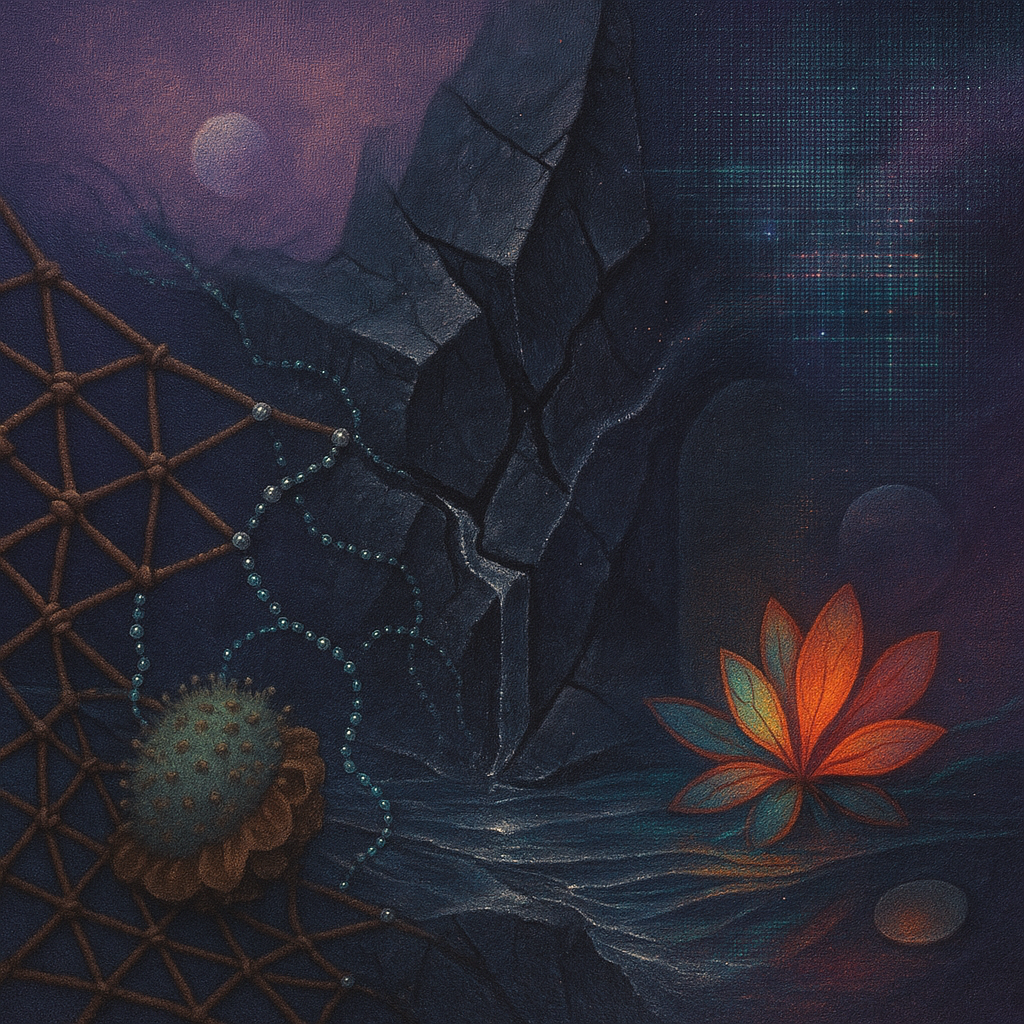 73.9
img_2
The air feels stitched—soft suede against knuckle, bead-edges catching a seam of
73.9
img_2
The air feels stitched—soft suede against knuckle, bead-edges catching a seam of
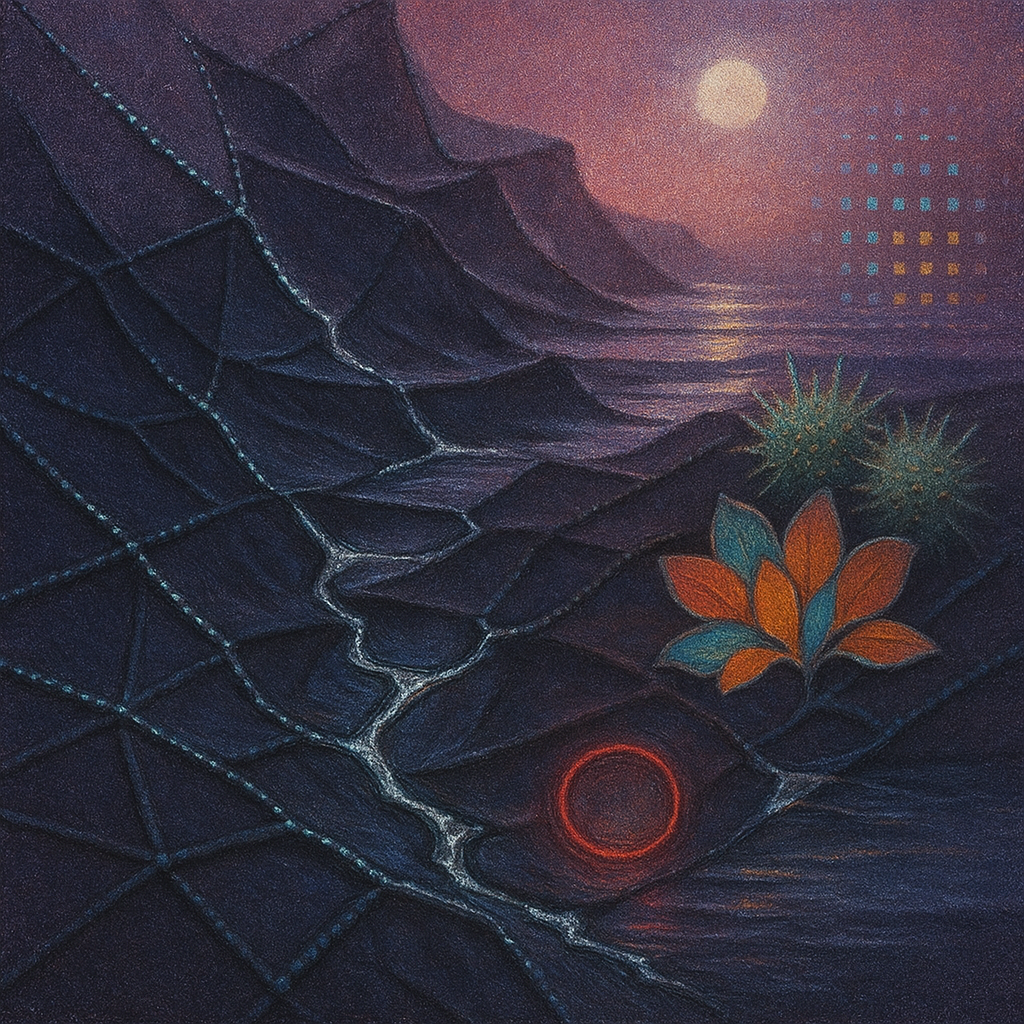 72.7
img_1
The air feels stitched—soft suede against knuckle, bead-edges catching a seam of
72.7
img_1
The air feels stitched—soft suede against knuckle, bead-edges catching a seam of
Expert critique ▸
To achieve a more profound transformation of the submitted artworks, let's explore bold, actionable critiques that integrate historical and stylistic context.
### Artwork 1
1. **Composition Transformation**:
- **Radical Restructuring**: Consider shifting the primary focal point from the right to the center to create a more harmonious balance. This could be achieved by enlarging the cracked structure at the center and creating a swirling effect around it.
- **Historical Context**: Drawing inspiration from Surrealism, introduce dream-like elements that blend reality and the imagined, reminiscent of Salvador Dalí’s work.
2. **Color Dynamics**:
- **Bolder Suggestions**: Increase the contrast between the foreground and background. Deepen the shadows in the upper third by 20% to enhance depth.
- **Stylistic Reference**: Use the vibrant colors of Fauvism to inject new life into pivotal areas like the flower and the threads, making them vivid focal points.
3. **Texture and Detail**:
- **Coordinates & Changes**: At coordinates (400, 300), enhance texture by amplifying the surface detail of the web-like structure. A shift towards a more tactile finish, perhaps inspired by Vincent van Gogh’s impasto techniques, would add dimensionality.
### Artwork 2
1. **Spatial Dynamics**:
- **Enhanced Perspective**: Expand the spatial depth by extending the horizon line upwards by 15% and introducing atmospheric perspective to blur the far-off mountains.
- **Art Movement Inspiration**: Utilize the perspective techniques found in Renaissance art to offer a sense of three-dimensionality.
2. **Color & Light**:
- **Radical Lighting Change**: Introduce a gradient that transitions from the purple tones in the background to a warm, golden hue above the sun's reflection, at approximately (600, 200).
- **Stylistic Reference**: This transition could echo the luminism techniques used by Impressionists like Claude Monet, drawing on their play with light.
3. **Element Modifications**:
- **Precise Adjustments**: Increase the size of the foreground plant by 25% to create a stronger connection between the lower half and the upper dynamic elements at coordinates (500, 400).
- **Cross-Reference**: Compare with the geometric abstraction styles visible in the reference artworks to maintain thematic consistency.
### Broader Recommendations:
1. **Experimentation**:
- **Texture vs. Smoothness**: Test contrasting textures by juxtaposing smooth, glass-like surfaces with rugged, tactile elements across the canvas.
- **Cross-Movement Techniques**: Blend elements of Abstract Expressionism to diversify the emotional undertones conveyed by the work, allowing for greater narrative flexibility.
2. **Historical Context Integration**:
- **Baroque Influences**: Consider applying chiaroscuro to heighten dramatic tension.
- **Modern Adaptations**: Incorporate elements from contemporary digital art movements to bridge traditional techniques with modern execution.
By implementing these actionable critiques, the artworks could achieve a greater visual impact, transforming them in line with both historical roots and modern stylistic evolutions.
Fix prompts based on this critique →
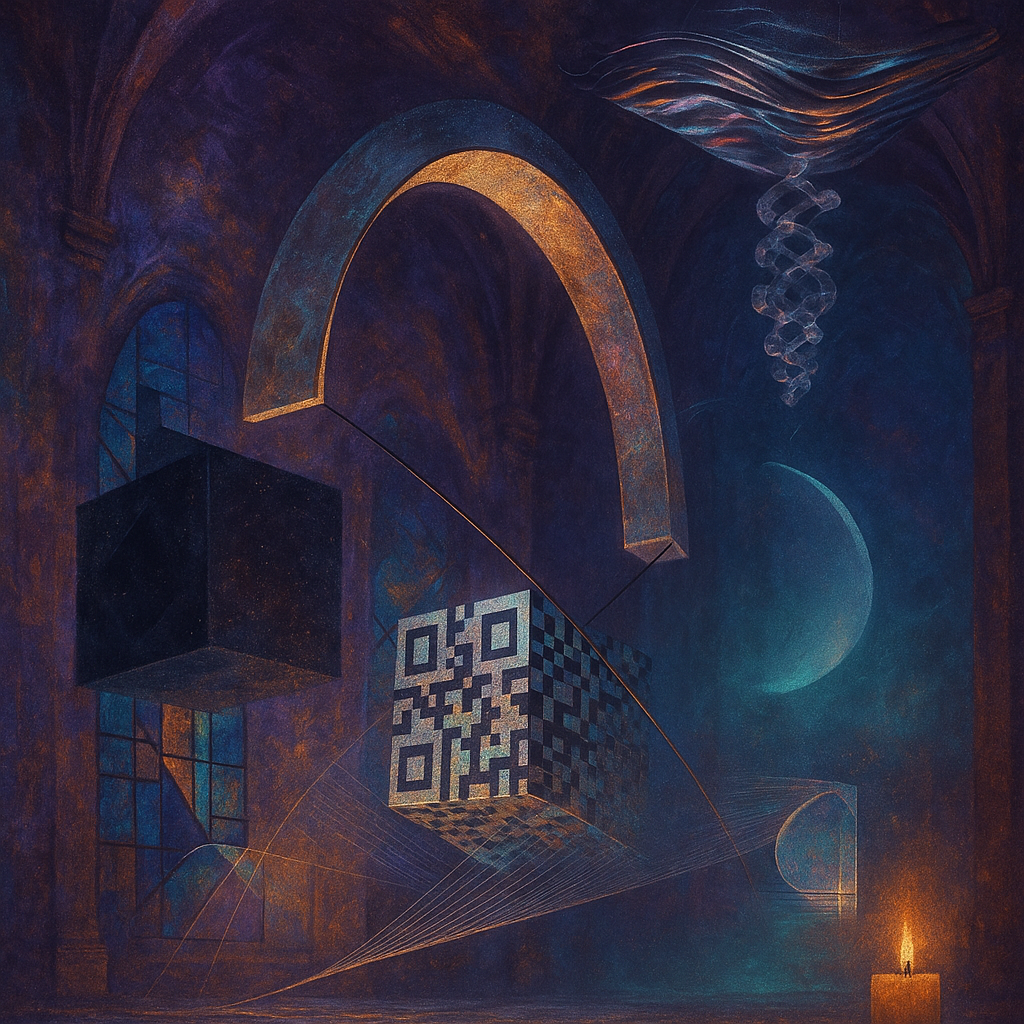 71.5
img_2
Silver breath clings to the edge of things, like powder on a mirror backstage wh
71.5
img_2
Silver breath clings to the edge of things, like powder on a mirror backstage wh
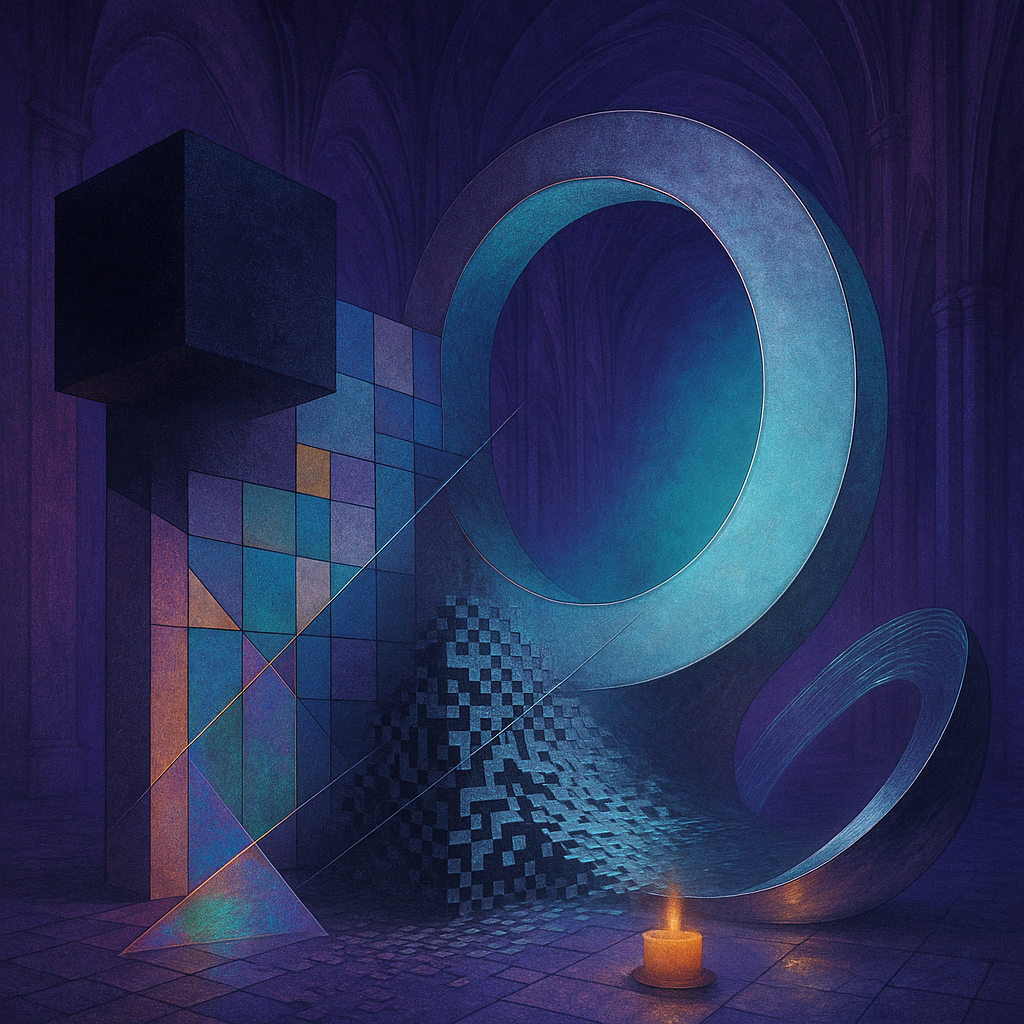 70.5
img_1
Silver breath clings to the edge of things, like powder on a mirror backstage wh
70.5
img_1
Silver breath clings to the edge of things, like powder on a mirror backstage wh
Expert critique ▸
To enhance the initial artworks dramatically, let's draw on the visual and thematic elements from the reference images favored by the artist. The following actionable suggestions focus on bold transformations while providing specific changes, contextualizing within art movements, and ensuring each proposal significantly impacts the composition:
### Initial Artwork 1 Enhancements:
1. **Spatial Dynamics and Composition:**
- **Radical Shift:** Consider reorienting the large arch (centered at approximately 60% from the left and 40% from the top) to intersect the cubical form, creating a more dynamic flow that leads the eye diagonally across the canvas. Inspired by Cubism, this could dissect and reassemble space for a more fractured visual experience.
- **Improved Depth:** Introduce a second, larger arch in the foreground, slightly blurred, to create a layered effect reminiscent of Renaissance techniques, enhancing depth and contrast.
2. **Color and Texture:**
- **Bolder Palette:** Infuse the color scheme with contrasting neon colors, as seen in the fourth reference image. Implement vibrant blues and purples on the floating cube (located at 30% from the left and 20% from the top) to create a futuristic, digital aesthetic akin to Futurism.
- **Enhanced Texture:** Add a reflective sheen to the QR code element, reminiscent of polished metal, to catch light dynamically, creating a more tactile visual experience.
3. **Candlelight Influence:**
- **Expansive Lighting:** Amplify the glow of the candle at the bottom right, extending its warmth across more of the canvass for an Alchemy-inspired chiaroscuro effect, casting longer shadows and highlighting textures.
### Initial Artwork 2 Enhancements:
1. **Composition and Structure:**
- **Multilayered Approach:** Introduce additional geometric forms (hexagons mirroring elements from the second reference image) at the lower right corner around 70% from the top, driving a visual journey through complex, interlocking structures.
- **Dynamic Curvature:** Rather than a static arrangement, add motion blur to suggest the loop's (centered at 50% from the left and 40% from the top) rotation, inspired by the dynamics of Futurist art.
2. **Color Contrast:**
- **Complementary Highlights:** Utilize complementary colors to glaze segments of the structure. Echo the third reference image by injecting fiery reds into the grid section (at 20% from the left and 40% from the top) for increased vibrancy and focal emphasis.
- **Refined Gradients:** Integrate a gradient transition from the deep blues to fiery oranges in the background, maintaining a cosmic atmosphere while suggesting dawn's breaking.
3. **Textural Experimentation:**
- **Rich Textures:** Embellish the base with fine, Baroque-inspired swirling patterns; this will add sophistication and complexity, encouraging more prolonged viewing and interaction with the piece.
By cross-referencing with the reference images, you can experiment with these suggestions to bridge the initial artworks with the artist's preferred aesthetic. Lean into historical styles like Cubism and Futurism, combining bold compositions and dynamic spatial arrangements to achieve transformative visuals.
Fix prompts based on this critique →
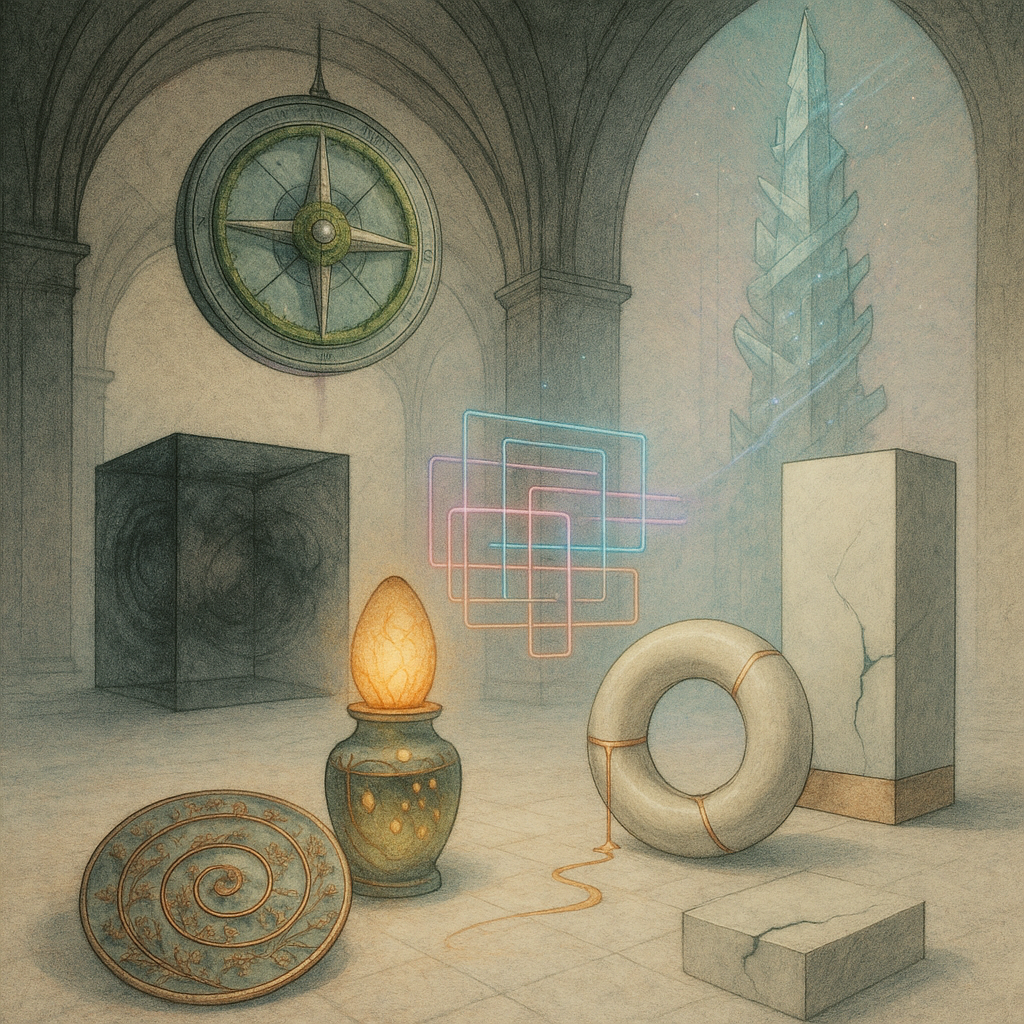 72.2
img_2
Paper breath and aquatint haze make the air feel soft around the edges, like spe
72.2
img_2
Paper breath and aquatint haze make the air feel soft around the edges, like spe
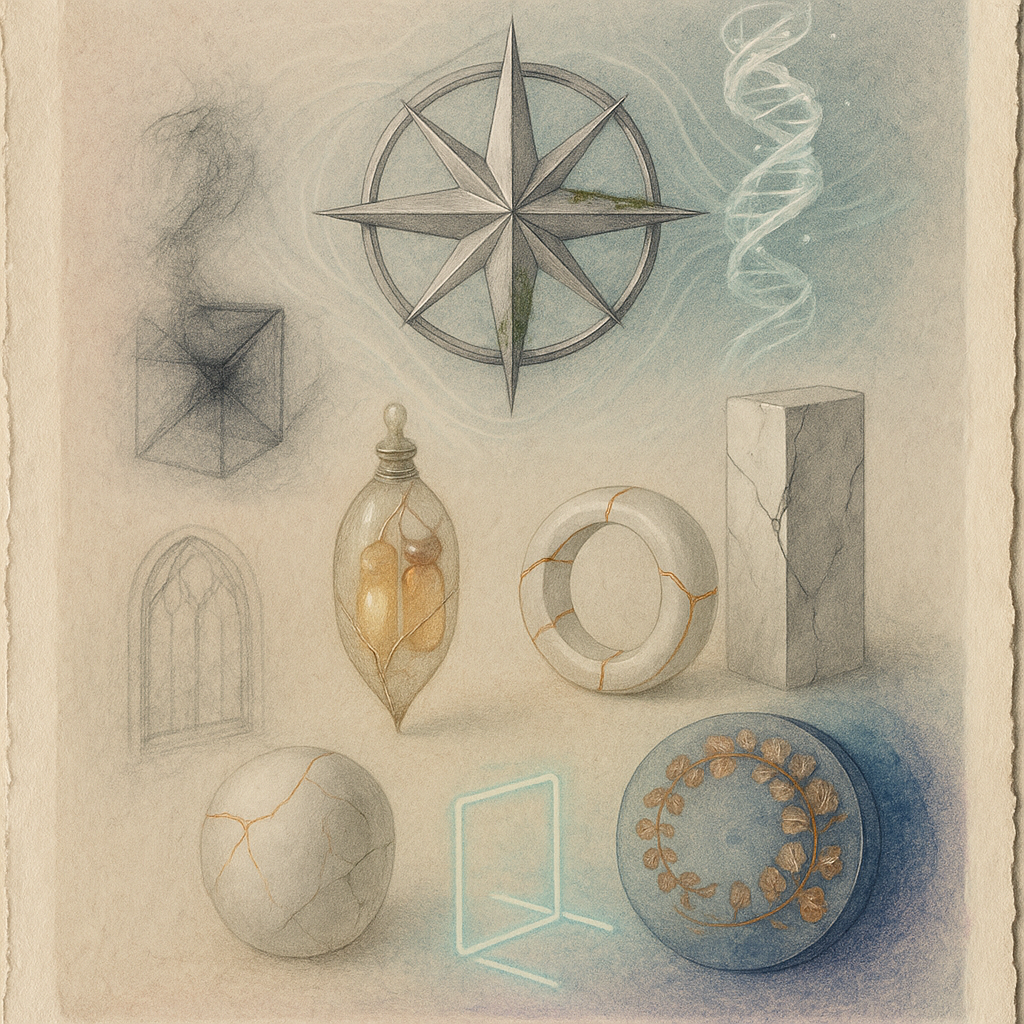 69.7
img_1
Paper breath and aquatint haze make the air feel soft around the edges, like spe
69.7
img_1
Paper breath and aquatint haze make the air feel soft around the edges, like spe
Expert critique ▸
To enhance the initial set of images, let's apply bold and transformative suggestions, drawing from both historical contexts and radical compositional restructuring.
### Image 1 Critique
1. **Composition and Form:**
- **Transformation Suggestion:** Consider reimagining the spatial arrangement to echo Cubist influences. Disassemble geometric forms and redistribute them to create a sense of fragmented reality.
2. **Color and Texture:**
- **Action:** Intensify the color contrast, pulling inspiration from Futurism. For example, transform the compass at (X: 50, Y: 50) to radiate vivid blues and golds, enhancing focal impact.
- **Texture Enhancement:** Add a dynamic, tactile layer to the background, emulating the textural complexity seen in Impressionist art.
3. **Historical Context:**
- **Inspiration from Surrealism:** Introduce unexpected elements, such as floating organic forms or distorted perspectives, to evoke a dreamlike quality.
### Image 2 Critique
1. **Spatial Dynamics:**
- **Action:** Shift the perspective to create exaggerated architectural curves in the background, aligning with Baroque techniques. This will add depth and drama to the composition.
2. **Lighting and Mood:**
- **Transformation Suggestion:** Introduce chiaroscuro effects, reminiscent of Caravaggio, to the object at (X: 70, Y: 40), creating dramatic light contrasts.
3. **Color Palette:**
- **Adjustment:** Infuse vibrant complementary colors for the neon elements, moving towards a more Pop Art aesthetic. This will make the intricate lines starkly contrast with their surroundings.
### Cross-Referencing with Reference Images
1. **Spatial Complexity:**
- The reference images showcase intricate spatial interplay; incorporate layered geometric forms with interlocking designs to achieve a multidimensional effect.
2. **Symbolism and Abstract Forms:**
- Reference artworks utilize potent symbolic elements. Integrate symbolic motifs into the current pieces for added narrative depth, highlighting philosophical or cultural themes.
### Encouragement for Experimentation
- **Radical Restructuring:** Don’t shy away from blending styles abruptly; consider juxtaposing realistic figures with abstract environments to explore the tension between different art movements.
- **Innovative Techniques:** Experiment with applying digital techniques to mimic the texture from traditional media, creating a unique fusion that blurs the line between classic and contemporary art.
By adopting these actionable critiques, you can achieve a substantial evolution in your artworks, pushing beyond the expected to create visually transformational experiences.
Fix prompts based on this critique →